1.
n Africa and particularly in Nigeria, the level of unemployment has been on the increase as the year advances (UNDP 1993). This is because most of the third world countries including Nigeria have been incapacitated to employ workers due to Economic Meltdown and Recession of the 1980s, coupled with the austerity measures that accompanied International Monetary Fund, which undoubtedly led to reduction in public spending and in declining wages as well as high level of retrenchment in the formal sector and private establishments being experienced in the recent years World Employment Report 1998-1999, ILO JASPA 1991). The World Employment Report furthermore established that (1998)(1999), the inadequate provision of jobs in the formal sector of the economy as well as the poor skills in the large part of the labour force has substantially spurred the growth of the informal sector among which most workers are in the low paid employment, under unregulated and poor working conditions. Therefore, increase in public sector retrenchment has continued to swell the ranks of the informal activities beyond the nation"s absorptive capacity (Nwaka, 2005) hence there is resultant and unprecedented growth of informal enterprises in the past two decades in cities of developing countries and in Nigeria in particular (Okeke, 2000Onyebueke 2000and Liimatainen 1998).Besides, the problem of bad economy coupled with bad governance and political instability that has been on the startling rate in the last two decades, is a major underlying factor responsible for the expansion of the informal enterprises (Onyebuke, 2000).
Again, the capacity to generate employments in formal sector has continuously been weakened by several policies and programmes such as Structural Adjustment Programmes (SAP), while others like Vocational Skills Development (VSD), Small Scale Enterprises (SSE), and Family Support Programmes (FSP) among others have promoted the proliferation of informal enterprises. This was equally acknowledged by ILO JASPA (1991) in a remark that workers, in informal enterprises are concentrated in the urban areas because the cut in government expenditure posit a great deal of repercussion in the urban employment situation. Sequel to this, majority of the retrenched urban work force switched over to informal enterprises in order to sustain their livelihood. Consequently, the wage of employment in many countries is reported to have fallen in absolute terms. For instance between 1986 -1990 Central African Republic recorded -33.6 %, Gambia (1979-1986) -27.5 % , Niger, (1980)(1981)(1982)(1983)(1984)(1985),-13.4 % Cote de voire (1980)(1981)(1982)(1983), -8.0% (UNDP 1993, ILO JASPA 1991).
The informal sector consists of very small scale economic activities. This accounts for substantial and increasing share of urban employment in most developing countries where a large majority of the urban poor depend on such activities for their livelihood. The sector has been playing a vital role economic development of nations particularly developing countries like Nigeria (Abolade, 2012 Ijaiya 2002Sethuraman 1997). It has also played a useful role in alleviating poverty through job creation for the ill educated and ill trained (Akerele 2000). The significance of this sector was further emphasized within the contest of the remark made by the former head of state of Nigeria , Ibrahim Babangida in 1991 at the height of Structural Adjustment Programme crises to the effect that the Nigeria economy has defiled all known economic prescriptions ,yet it has not collapsed the reason for the non collapse of the economy is not farfetched . it is the sustaining power and ability of the neglected informal enterprises. In view of this fact, any credible strategy germane towards economic development in this country must pay due attention to this sector (Sethuraman, 1997). It is essential to mention that the choice of this subject for research work is justified owing to its growing importance as a labour sponge In Nigeria, like and African countries, and coupled with the facts that it will indisputably contribute to body of knowledge. This is the major purview of this paper.
Studies in developing countries (Hart 1970, Freudy 1990, Cross 1994, Sethuraman 1997), have shown that informal labour force range from 20%-70% informal employment. This represents half to the threequarters of non-agriculture employment. In many of these countries, the informal sector provides more employment opportunities than formal sector. In developing countries, particularly Nigeria, it has been discovered that one of the factors that has contributed to large number of informal sector is the failure of the formal sector to provide adequate jobs and income generating opportunities for the rapidly growing urban populations (UN- HABITAT, 2006). This assertion was equally maintained by Fideler and Webster (1996), and Obadan et al (1996) that urban informal enterprises is a major provider of employment and income to the unemployed. This was supported by (Onyechere 2011) that the proportion of urban informal sector employment is highest in Africa; this is followed by Asia, South East Asian. In South Asian cities, the work force in the work force is around 50-60% (Rukmana 2007 cited in Onyechere 2011) while in selected leading African countries, the contribution of urban informal in employment provision ranged from 95% in Republic of Benin,20% in Djibouti, 65% in Kumasi and Lagos 50% (ILO 1985). Again (ILO, 2002), reported that in sub-Saharan Africa, the informal sector accounts for about 78% of all non-agriculture employment. Similarly in Kenya, informal sectors were estimated to be about 5.5 million compared to about 1.7 million wage earners in formal establishments. The reason for this significant difference (i.e. between formal and informal employment) is because majority of skilled and educated people not employed in formal employment shift to informal activities to sustain their livelihood.
A survey of the informal manufacturing sector in Nigeria revealed that most of such enterprises appear profitable for their owners but generate little employment through firm growth. It was established further that they are very small and under-capitalized and have minimal transaction with larger formal sector companies (CBN/NISER/FOS 2003). However, studies (Onyechere 2011Sethuraman 1997, Ijaiya 2004) have shown that a strong relationship exists between the informal and formal enterprises. These have been viewed in several ways. For instance, Ijaiya (2004) reported that the linkages among the informal sector operators in terms of supply of labour, technical services, finance, raw materials among others have helped to improve the quality of goods and services produced by the operators, thus making them to compete favorably with the formal sector. Similarly, interaction in this domain has contributed significantly to the economic development. Market links exist through the trade of goods, raw materials, tools and equipment and acquisitions of skills and know-how. Informal actor provides services to formal actors on a sub-contracting basis. In addition, individuals can participate both in the formal and the informal economies. Current debates have equally shown that urban informal economy played a significant role in stimulating the growth of the market economy, promoting a flexible labour market and absorbing retrenched labour from the formal sector. Others claim that informal labour has become a convenient means of pursuing the global agenda of privatization and liberalization On the other hand; Abumere (1995) remarked that many large scale enterprises from trading companies to manufacturing enterprises are engaged in sub-contracting to the formal sector. Ijaiya (2004) also noted that many of the goods sold by informal sector petty traders and street hawkers are from formal sector factories and whole sale enterprises.
There are three main schools of thought regarding the relationship between the formal and informal economies .First, the dualists posits that informal economy is a separate marginal economy not directly linked to the formal economy, providing income or a safety net for the poor (ILO 1972). The structuralists maintained that informal economy is subordinated to the formal economy. Thus to reduce costs, privileged capitalists seek to subordinate petty producers and traders (Castells and Portes 1989), while the legalists put forward that informal work arrangements are a rational response by micro-entrepreneurs to overregulation by government bureaucracies (de Soto 1989). There is overwhelming evidence to suggest that urban poverty and informal employment are closely related (Sethuraman, 1997, Onyechere (2003Ijaiya and Umar 2004). According to Cartaya (1994), 46.7% of the extremely poor in urban areas in 1987 were in the informal sector in contrast to 37% in the category of the poor while 28.9% are non-poor. Pollock, (1989) remarked that in urban Costa Rica in 1982, 75.8 % of the poorest among the poor were in the informal sector compared with 53 .5% of the not-so -poor and 31.7 % of the non-poor.
Harris and Harris (1988) and Humphrey (1994) reported that there is a strong correlation between labour market status and poverty in India and Sao Paulo. They further established that people with stable job are less likely to be poor than people who have an unstable casual job. Furthermore, Weeks (1975) reported that earnings per worker are low in the informal sector. The indication of all these findings suggests that the poor have higher probability of being found in the informal sector.
Consequently, the incessant widespread of urban informal sector in developed and particularly developing nations has continued to play a significant role in poverty reduction. Onyechere (2003) remarked that the importance of informal enterprises lies in its contribution to national economy. According to UNCHS (Habitat, 2001), the informal sector has continued to provide opportunity to earn an income for millions of people in many developing world cities and towns. For instance Ijaiya, et al (2004) reiterated that informal activities are known to have contributed to job creation, apprenticeship training, income generation, asset accumulation, and the provision of credit facilities and social services. Again, World Employment Report (1998 -1999), established that in Africa as a whole, informal employment accounts for over 60% of total urban employment. The report established further that informal sector is a major provider of urban jobs. Carr, et al (2002) also recognized the inevitability of informal sector activities and their poverty reduction potential. Fideler and Webster (1996) established that urban informal enterprises have been able to provide job for three categories of socio-economic groups. This includes survivalists, the self-employed and very small businesses. The survivalists comprise the very poor people who work on part time in informal enterprises, the self-employed are those who produce goods for sale and re-sell it or offer services while the very small business are those that operate from fixed location with regular hours.
Ibadan city is a traditional urban centre founded in 1820"s. It is the largest indigenous urban centre in Africa south of the Sahara (Udo, 1994, Adeboyejo et al 2002).
The growth of Ibadan city started in 1893 when a trend of peace was signed by the British government and the residents. This incidence marked the beginning of the emergence of the city as a major commercial and administrative centre. The construction of railways in 1901 enhanced commercial activities which attracted the European and the Lebanese to establish firms and hence the establishment of modern business centers and the European reservation area. This development marked the beginning of large scale immigration of various ethnic groups like the Ibos, Ibibios, Edos Urohobo, Fulani, Hausas, Nupes, Ebiras into the city. All these contribute to the growth of Ibadan city.
According to Ayeni (1994), the growth of the city became more rapid in 1946 when it was made headquarter of the defunct western region of Nigeria. He remarked that the city became centre of attraction for more expatriates and Yoruba sub ethnic groups, which boosts the civil service and ever increasing range of opportunities in the city including informal activities. Consequently, the city began to witness remarkable growth even beyond the city walls.
Just like any other African towns, agricultural activities remained the vigor and major economic activities in Ibadan region until 1953. This is followed by fewer proportion (21%) who were engaged in trading and clerical work while 9% were engaged in administrative and professional engagements (Gbadegesin, 1991). With the birth of civilization and unprecedented growth in industrial activities coupled with rapid urbanization, the proportion of populace who engaged in agricultural practices began to reduce drastically. For instance, the Federal Office of Statistics cited in Gbadegesin, (1994) established that by 1963, the percentage involved in the various agricultural activities dropped to 20.5% while those engage in trading and clerical work increased to about 38.5%. Consequently the second half of the 20th century witnessed a disappearance of agricultural activities within the city. This was characterized with disappearance in farm lands and forest resources within the city during the 1960s.
The sitting of railway line connecting Lagos to Kano encouraged commercial and trading activities particularly agricultural produce (cotton, timber, rubber palm oil kolanuts among others) this promoted distributive trade. Again, as noted by Filani (1994) the passage of the railway through Ibadan made a significant effect of transforming the city into the most important collecting center for agricultural products from an extensive region to the west and east, north and south. This development gave birth to many industries among which are printing and publishing, food and beverages, sawmilling, rubber and plastic products. Some of these industries operated on a large scale thereby providing employment opportunity most especially to skilled labour. On the other hand some operated on a small scale since the number of the workforce is smaller compared to large scale industry. Most of these small scale industries employ less than ten person and majority of such are found in this
( D D D D )category. According to Alokan et al (1994) most of these small scale industry that employ less than ten person is predominant in the study area and as a matter fact their Figure has continue to be on the increase. These comprises informal enterprises like craft industry, block industry, soap making industry, among others. As noted by Alokan et al (1994), this category of economic unit is often exempted in official inquiry and recorded because industries of this capacity are not properly registered with appropriate organization. Yet they have continued to proliferate the entire region and each of such contributes considerably to economic progress of the region.
Multistage method of sampling was employed for collection of primary information.
For questionnaire administration (i.e. operators and residents around the areas where informal enterprises are carried out) both stratified and systematic random sampling techniques were employed for the research. The existing spatial structure of Local Government Areas in the region was used.
The inventory of localities or communities in each of the local government areas was compiled from National Population Commission. The localities within each of LGAs were further stratified into three residential densities: high, medium, and low. These residential densities show variation in population density, socioeconomic and environmental characteristics among other variables that describe the study area. This method of sampling is more appropriate and applicable for this particular study because it allows each unit of investigation equal chance of being chosen in a complete list or file of population (Blalock 1959, Singleton et al, 1989and Afon, 2005).
Fifty percent (50%) of the localities in each LGA in Ibadan metropolitan region were selected while twelve and half percent (12.5%) of localities in other LGAs in the suburb were equally selected and adopted for the survey. The reason for this variation is consequent on the fact that more informal activities are concentrated in the metropolis or "Ibadan core" compared to suburban areas or "Ibadan less city". Again, it is justified because it is a good representation of the total localities in the metropolis and villages in the suburb. This selection further enhanced the objectivity of the questionnaire distribution within the selected areas.
For the purpose of this study, it is hypothesized that population size affects land use as well as distribution of informal enterprises (Cohen, 2004,) Also hypothesized is a linear relationship between traffic volume and concentration of informal enterprise hence transport system and informal enterprises are intricately connected (Adedibu and Jelili 2005). That landuse type and intensity affect concentration of urban informal enterprises (Ijaiya, 2004) and close link exist between proliferation of informal activities and urban economy. Consequent on these assumptions and for the purpose of the field survey especially within Ibadan metropolis, roads within localities where the traffic is concentrated, localities with highest population size, and residential quarters with highest intensity of land use were selected for the sample. While in the suburb, localities with major commercial center or market were selected for survey. This is based on the fact that not all localities have concentration of informal enterprises. It was also observed during the reconnaissance survey that some
LGAs such as Egbeda, Ona Ara, Lagelu are predominantly agrarian communities.
To determine the sample size for survey, the population size of each local government for 2006 population census Figure were extracted from National Population Census (NPC) and adopted for sampling.
2. Based on the variations in population size of the eleven
LGAs and in view of the fact that population density in each residential density differs, 0.08% of the population size in each LGA was determined and employed. The, total number of three thousand, four hundred and forty four (3444) questionnaires representing one thousand, eight hundred and six (1806) questionnaires administered to the operators and one thousand, six hundred and thirty eight (1638) to residents around areas where informal enterprises are carried out were successfully completed and returned for analysis. For the categories of residents in residential densities selected, the questionnaire was distributed in ratio 3: 2: 1 for operators and residents in high, medium, and low residential densities respectively. This method is in line with the generally believed pattern of population distribution within residential areas.
Using systematic sampling technique, questionnaires were administered to operators of informal enterprises in shops sited on the both sides of the streets and residential units used for informal enterprises on both sides of the selected roads. In order to enhance the systematic distribution, the researcher adopted the use of constant distance (distance between two electric poles 50m) along different categories of roads selected as unit of measurement to capture the distribution pattern and variation of categories of urban informal enterprises within the selected areas. (This method was adapted from Adedibu and Jelili 2005). The second set of questionnaire was administered using the same sampling technique for residents in various residential densities with special attention to houses that are not used for informal enterprises but that are close to the vicinity where informal enterprises are practiced. Systematic sampling technique was adopted for the three categories of residential quarters and operators of informal activities on road axis. An interval of 2 was used to select operators and residential unit in each quarter. This is considered appropriate because it will enhance maximum coverage of operators in the categories of road selected. This was done by selecting the first operator randomly and/or one resident in the first building selected randomly and subsequent units at interval of 3rd, 5th and 7th as the case may be were chosen from the complete list of the population in Ibadan region.
To examine resident"s perception on the effects of informal enterprises on the economy, this was measured through likhert scale range from Not agreed at all (1), Not Agreed (2), Somewhat Agreed (3), Agreed (4), Very much agreed (5). The questionnaires were subjected to descriptive and nonparametric analysis.
3. a) Employment in Urban Informal Enterprises
The profile of workers employed within categories of urban informal enterprises is presented in Table 1. As shown in the table, petty trading and commercial enterprises majorly (51.1%) manage the business on their own, while some operators employ services of members of the household (24.3%), some (20.4 %) still employ services of other workers combined with the services rendered by members of household and 12.3% of the petty traders employ workers alone to run the business for them. On the other hand, those in cottage industry employ basically services by household and other workers (30.5%) while few household members make use of services of household members only (19.7%), and yet still some (12.1%) employ the services of workers only to work for them.
Again, as indicated in the Table , 13.5% of those in tertiary services mostly employ services of members of their household and other workers for their operation while few depend only on household (8.5%) and workers (13.5%).However, majority operates the services on their own (49.5%). This observation is expected because according to the report given by one of the operators in Beere, young adult especially children of today are not willing to learn again, many have become Okada rider in order to make quick money. Result of chi square shows that with a p value of 0.00 a significant relationship exist between workers employed and categories of urban informal enterprises as shown in Table . The findings on the type of workers employed in provision of services to categories of urban informal enterprises is not surprising since most of the operations involved in the activities do not necessarily require skilled labour. The owner of the business can still manage independently provided the scale of business is relatively small. The evidences from literatures on the subject of discuss have vividly shown that informal enterprises provide alternative source of employment outside the government owned establishment. The extent to which the small enterprises generate employment is measured by number of people who otherwise would have been unemployed but find employment in informal enterprises. The results of analysis of both male and female workers are summarized in Table 2. The result of analysis showed that majority of male worker employed are dominated in commercial and petty trading (269 or 63.0%).This is followed by larger proportion employed by cottage industry (89 or 21.4%) and tertiary services (65 or 15.6%).
The range of workers employed showed a similar pattern for all the categories of urban informal enterprises. This range between 1-2.This is followed by
( D D D D )those that employ 3-4 workers. Very few employ more than 5 workers while majority (77.0 %) did not respond to this question probably because they don"t employ any worker but rather manage the business on their own.
Comparison on the number of female worker employed as shown in the table reveals similar pattern. Most female worker employed fall within the range of 1-2 followed by those who employed between 3-4 workers. A careful examination of number of female worker employed among commercial and petty trading, cottage industry and tertiary services also reveals similar pattern. Other range of workers employed is not significant. Generally, most operators prefer to employ female probably because female gender are more trustworthy, and accountable compared to their male counterpart. 3 reveals that significant number of male apprentice are employed in cottage (90,15.9%) and tertiary service (213,37.6%) compared to female apprentice in cottage (72,14.6%) and tertiary services (106,21.5%). On the contrary more female apprentice (316, 64%) are employed in petty and commercial compared to number of male (264, 46.0%). This variation in number of apprentice employed is expected since more female are dominant in commercial and petty trading compared to male. Similarly, more male in cottage and tertiary services is equally expected because of the skill required in their operation.
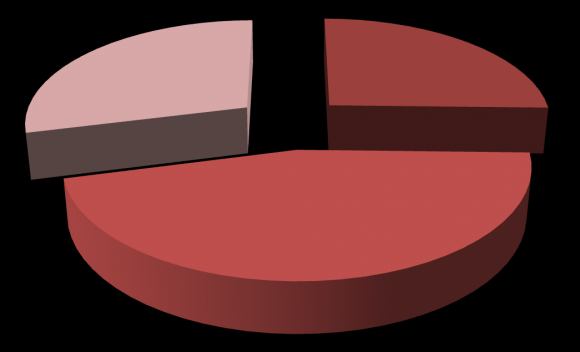
Further analysis reveals that there is a significant relationship between numbers of female worker employed among categories of informal enterprises even though the number of male apprentice employed are more (567 against 416) when compared with male workers. This suggests that the operators employ the services of apprentice than workers probably because their services will attract lesser remuneration. This observation was also remarked by Omisakin (1999) that paid employee is generally a minor component of the labour force in small scale enterprises. He established further that apprentices play a dominant role in small scale enterprises. Further analysis, with chi-square as presented in Table 4, shows a significant variation between gender of workers and apprentice of different categories of urban informal enterprises. The sustenance and continuity of the various categories of urban informal enterprises is, to some extent, dependent on provision of training services for interested apprentices especially those in cottage industry and tertiary services. The result of analysis as illustrated in Figure 1 where out of the entire informal operators interviewed, a larger proportion (45.7%) offers training services while 25.4% did not. Further analysis reveals that a larger proportion of those in cottage industry (59.6%), tertiary services (63.0%) and petty trading (34.7%) offer training services. This may be applicable to those who operate on a larger scale like Cloth seller, patent medicine store, provisions and the likes. Those that indicated that they do not offer training services could be as a result of level of scale of their operation. Result of chi square analysis shows that with p value 0.000, there is a significant relationship between categories of urban informal activity and provision of training services (see Table 4). One of the major areas of urban informal enterprises is the fact that they provide avenue for youths to acquire skill through apprenticeship, and that, if given the necessary support such as easier access to loan, the sector will create important role in creating more employment opportunities for youths in the country.
4. Global Journal of
Again, analysis was conducted to examine the duration of training for the categories of urban informal enterprises and it was revealed that out of those that responded, majority spend one year (15.2%) or two years (11.7%) and in some cases three years (9.1%).Those that spend more than two years probably did so as a result of inability to establish their own business after completion of their period of training and so remain with their trainer as apprentices or employees. Further verification on duration of training for each category of urban informal enterprises revealed the same pattern of distribution ( i.e. for commercial /petty trading 12.6%, cottage industry (17.9%) and tertiary services (19.6%) for those who spend one year and the proportion of distribution decreases as the number of year increases. 5, it is revealed that with RAI of 4.34 larger proportions of urban informal enterprises provide job for people. It was also strongly perceived (4.32) by respondents that the location employed for operation of business especially around building premises makes daily goods and services readily available to residents instead of going to central markets for purchase. It was equally strongly perceived (RAI 4.29) that it increases the income of operators especially those that engage in the business with the aim to support livelihood. Other variables on economic impact with lower deviation about the mean include, it prevents youth from indulging in criminal activities RAI 4.04 and reduces transport cost (RAI 3.71). This is because most of the goods are readily available at neighborhood even though some people prefer to go to central market for shopping and to purchase in bulk. This may be economical when compared with prices and transport cost that will be incurred when the goods are purchased at neighbourhood shop. The variance recorded is 0.05796 while standard deviation and coefficient variation is 0.240748831 and 5.81% respectively. V Version I The paper has established that urban informal enterprises contribute to the growth and urban economy through provision of job mostly to survivalist migrants and more importantly is the empirical evidences particularly on the estimation and contribution of the sectors to Ibadan city economy. It is therefore concluded that informal enterprises should be given adequate attention by government by incorporating it to the fabric of the city as formal institute and institutionalizing the sector will also serve as a tool to further solve the problem of unemployment in Nigeria most especially since formal sector cannot absorb the larger share of the unemployed. This will also boost the economy of the nation, reduce poverty and consequently improve the standard of living of the populace. In addition, formulation of policy and programmes that will promote its future developments should be given utmost priority by the government as well as its proper implementation. More importantly necessary attention should be given to it through proper registration, easy access to loans and other available financial assistance. V Version I E
5. No training

| Workers Employed | Urban Informal Enterprises | Total | ||
| Petty/ | Cottage | Tertiary | ||
| Commer | Industry | Services | ||
| cial | ||||
| Nobody | 457 | 84 | 351 | 894 |
| 51.4 | 9.5 | 39.5 | ||
| 42.0 | 37.7 | 19.4 | 49.5 | |
| Workers only | 138 | 27 | 43 | 208 |
| 66.3 | 13.0 | 20.7 | ||
| 12.3 | 12.1 | 8.5 | 11.5 | |
| Workers/Household | 219 | 68 | 68 | 355 |
| 61.7 | 19.2 | 19.2 | ||
| 20.4 | 30.5 | 13.5 | 19.7 | |
| Household only | 262 | 44 | 43 | 349 |
| 75.1 | 12.6 | 12.3 | ||
| 24.3 | 19.7 | 8.5 | 19.3 | |
| Total | 1076 | 223 | 505 | 1806 |
| 59.6 | 12.3 | 28.0 | 100 | |
| Source : Author"s Field Survey (2010/2011) | ||||
| b) Gender Profile of Employees | ||||
| Number of Workers | Male | Female |
| Employed | ||
| Petty/Commercial | ||
| 1-2 | 182 (69.5) | 269 (75.2) |
| 3-4 | 51 (19.5) | 74 (19.9) |
| 5-6 | 27 (10.3) | 18 (4.9) |
| 7-8 | 2 (0.8) | 10 (2.7) |
| Total | 269 (63.0) | 371 (69.1) |
| Cottage | ||
| 1-2 | 42 (47.2) | 68 (80.0) |
| 3-4 | 35 (39.3) | 13 (15.3) |
| 5-6 | 5 (5.6) | 2 (2.4) |
| 7-8 | 7 (7.9) | 2 (2.4) |
| Total | 89 (21.4) | 85 15.8) |
| Tertiary | ||
| 1-2 | 39 (60.0) | 64 (79.0) |
| 3-4 | 39 (60.0) | 13 (16.0) |
| 5-6 | 22 ( |
| Year 2013 |
| 2 20 2 12 |
| V Version I |
| Volume XIII Issue |
| D D D D ) |
| ( |
| Human Social Science |
| Workers Employed | Computed Value | Degree of | P -Value | Remark | ||
| (X 2 ) | Freedom | |||||
| Offrg Traing/UIE | 131 | 4 | 0.000 | Significant | ||
| Workers Employed | 132.726 | 4 | 0.000 | Significant | ||
| Male Workers | 34.238 | 6 | 0.000 | Significant | ||
| Female Workers | 132.726 | 8 | 0.000 | Significant | ||
| Male Apprentice | 27.004 | 8 | 0.001 | Significant | ||
| Female Apprentice | 34.026 | 6 | 0.000 | Significant | ||
| Source : Author"s Field Survey (2010/2011) | ||||||
| e) Urban Informal Enterprises and Urban Economy | ||||||
| Urban | Informal | Enterprises | contribute | |||
| significantly to the urban economy. This assertion was | ||||||
| established by several authors (Menyah 2009, | ||||||
| Onyechere 2011, | ||||||
| Economic Impact | VA | A | SA NA NAA SWV TOTA | RAI | (X-X) | (X-? ) 2 | ||||
| 5 | 4 | 3 | 2 | 1 | L | |||||
| Provide job for people | 748 | 734 118 | 26 | 6 | 7088 | 1632 | 4.34 | 0.2 | 0.04 | |
| Makes daily needs and | 715 | 744 158 | 16 | 1 | 7058 | 1634 | 4.32 | 0.18 | 0.0324 | |
| goods readily available | ||||||||||
| Increases income of | 695 | 749 170 | 15 | 6 | 7017 | 1635 | 4.29 | 0.15 | 0.0225 | |
| operator | ||||||||||
| Prevent youth from | 578 | 781 227 | 43 | 6 | 6599 | 1635 | 4.04 | -0.1 | 0.01 | |
| indulging in criminal | ||||||||||
| activities | ||||||||||
| Reduces Transport Cost | 558 | 414 243 370 | 12 | 5927 | 1597 | 3.71 | -0.43 | 0.1849 | ||
| Source : Author"s Field Survey (2010/2011) | ||||||||||