1.
It was a landmark decision that challenged controversial laws regarding interracial marriages in America. The Supreme Court case of (1967) declared anti-miscegenation laws (laws banning interracial marriages) to be unconstitutional. The Court unanimously held that prohibiting and punishing marriage based on racial qualifications violated the Equal Protection and Due Process clauses of the Fourteenth Amendment (Alonso, 2000).
The case revolved around the interracial marriage of Mildred Jeter and her new husband, Richard Loving. The newlyweds had recently taken their vows in nearby Washington, D.C., and were happy to begin their new life together in Virginia. However, the year was 1958, and Virginia was one of 16 states that prohibited and punished interracial marriages. Mildred was African American, and Richard was Caucasian. Four months into their married life, they were indicted by a grand jury. This incident spawned a legal battle, catapulting their case all the way to the Supreme Court (Mangum 2007).
Decades later, in the 21st century, Black-White interracial marriages are quite common (Lewis & Yancey, 1977). The number of interracial couples has doubled every decade since 1960 (Killan, 2002). A 2010 Census report indicates one in 10 American marriages have partners of a different race or ethnicity (Lai, 2012). However, interracial marriage remains a "source of quiet debate over issues of identity, assimilation, and acceptance" (Mangum, 2007, para. 15). Bell and Hurd (2006) project that by the year 2020, the U.S. population
Author : E-mail : [email protected] will undergo a significant restructuring of its "ethnic" proportions. The White population is expected to decrease from 76 to 50 percent, while the Black population is poised to increase from 12 to 15 percent (Cordell, Betz, & Green, 2002).
We live in an era that reflects the historic 2008 election of America's first President of African American heritage, Barack Obama (Yates, 2012). Our Commander in Chief has openly shared stories about his life growing up in an interracial family, with a White mother and Black father. Elsewhere, in the media, reflections of this diverse, melting pot (Nichols & Schwartz, 2001) are evidenced in television shows and commercial advertisements (Petersen, 2013). A 2013 Cheerios ad featuring an interracial family sparked considerable controversy via the Internet. It featured a Black-White interracial couple and their biracial daughter. Negative comments posted on Cheerios' Web site and on YouTube did not impact General Mills' decision to keep the commercial intact. Negative comments were disabled on YouTube, as a wave of favorable posts applauded the organization for maintaining its stance (Stevens, 2013).
With the landscape of America changing as interracial marriage becomes more prevalent (Jayson, 2011), does this guarantee approval by others or the ability to cope within the confines of one's marriage? Absolutely not! Meanwhile, how does faith factor into the equation? Could it play a significant role? The purpose of this qualitative research study is to analyze Black-White Christian couples, focusing on how faith has impacted their marriages. Five couples have agreed to candidly share various aspects of their lives, including triumphs and struggles. Therefore, this paper will explore: (a) literature pertaining to the topic; (b) present a theoretical framework; (c) introduce a methodological approach; (d) discuss findings; (e) and explore possibilities for further research.
2. I.
Literature Review n recent decades, new research has emerged, revealing detailed information about interracial marriages. A 2012 Pew Research Center study found that "8.4% of current marriages were between spouses of a different race, up from 3.2% in 1980" (Lai, 2012, para. 4).The research also concluded that interracial marriages were more prevalent in Western states, with more than 26% in those areas being mixed. As a precursor to marriage, studies pertaining to interracial dating have also emerged. Choi (2001) conducted a ( )
3. C
Faith and Black-White Interracial Marriages survey comprised of both young and old Blacks, Asians, and Latinos. His research found that roughly 40% said they had dated someone of another race. Nearly 30% reported serious relationships. Asian-American men and women, including Black men, were "most likely" to have dated members of other racial groups. Research indicates that for some, these dating practices also lead to marriage (Jayson, 2006). a) Black-White Interracial Marriages Among interracial marriages, the Black-White couple mixture does not occur as often, but has faced the most criticism (Childs, 2005;Lewis & Yancey, 1995;Spickard, 1989). In contrast, the Black male-White female combination has elicited the highest level of all interracial discrimination (Scott, 1987;Davidson, 1992). Regarding marital satisfaction among younger couples, Crester and Leon (1982) attest there are fewer teenage marriages among interracially married Black-White couples because a high percentage of Black husbands, in this case, have been married before.
Although tolerance for interracial couples has increased, Dainton (1999) notes how there are still powerful forces that make Black-White unions hard to endure. Many Black-White interracial couples report they face discrimination from members of their own race (Orbe, 1999). Based on interviews with 50 interracial couples, Luke and Carrington (2000) explored the many struggles interracial couples have when going public with their relationships. Some areas impacted were their choice to marry interracially, including strained relationships with family members, friends, and coworkers. Gullickson (2006) conducted a study using micro-level Census samples, which traced the trend in Black-White interracial marriages from 1850-2000. The results showed the growth of the Jim Crow racial state in the South and segregation in the North led to a drastic decline in the frequency of interracial marriage from 1880 to 1930. The frequency of interracial marriage increased with the waning of this system between 1930 and 1940, but only began to increase at a steady rate in the post-civil rights era. When disaggregated by region, the results suggested a process of "latent" racism in the non-South and one of unequal gender suppression in the South. Bramlett and Mosher (2002) explored the longevity of interracial marriages in the United States. Data collected through the National Center for Health Statistics revealed that 41% of interracial couples divorced by the 10th year of marriage, compared to only 31% of same-race couples. Their findings suggest that, although entering an interracial marriage tends to carry less social stigma, these relationships are less likely to remain intact.
Bratter and King (2008) used the 2002 National Survey of Family Growth to compare the likelihood of divorce for interracial couples to that of same-race couples.
Their research across marriage cohorts revealed that overall, interracial couples have higher divorce rates, particularly for those marrying during the late '80s. Compared to White-White couples, White female-Black male, and White female-Asian male marriages were more prone to divorce. In contrast, those involving non-White females and White males, including Hispanics, had similar or lower risks of divorce.
b) The Faith Factor In terms of faith and marriage, Robinson (1994) conducted a study that explored the role of religion in long-term marriages. The author posited that enduring marriages are shaped by the religious commitment of the spouses due to the "impact their faith has on moral guidance, including social, emotional, and spiritual growth" (p. 216). Robinson (1994) based her study solely on faith-based marriages. She admitted it would be difficult to gauge how non-Christians cope with problems.
However, she argued that marriage enrichment programs at churches could play a significant role in keeping Christian couples together, but emphasized she was unaware of any specific impact the programs may have had on the subjects she studied.
Another research study examined the significance of faith in African American marriages and families. Loren, Tanner, Nesterik, Chaney, and Baumgartner (2012) found that spiritual beliefs also impact the lives of wives, husbands and their families.
In their qualitative analysis of parents and children, the authors concluded that while religion is considered important for most African American families, it is admittedly the focal point for many. Heaney-Hunter (1997) explored a different approach by examining possibilities for creating environments that nurture "active faith" in marriage, regardless of race. She researched ways Christian families can comprehend what a healthy marriage entails from a biblical perspective, while gaining a true understanding of how family life can be enriched in the process.
A 2011 Pew Center Report revealed that only 51% of adults in the United States are currently married, a record low in comparison to 50 years ago. The Association of Marriage and Family Ministries believes a decline in faith among young Americans may be a reason for the downward trend (Zaimov, 2011). Eric Garcia, President of the Association of Marriage and Family Ministries, shared a key factor in this downward spiral. "Young people have grown up seeing two generations of failed marriages. They have been exposed to broken relationships in their own homes and in their grandparents' homes, and they are not seeing why they should want to join such an institution" (as cited in Zaimov, 2011, para. 4). Garcia added that if
4. ( )
5. C
churches and other places of faith emphasized the importance of marriage as a union that God brings together, there could be a turnaround in dwindling success rates. He stressed that restoring faith in America from a Christian perspective would greatly help rebuild the entire institution.
The National Marriage Project conducted research focusing on what it deems, "the worrisome decline of marriage in America" (Trumbell, 2012, para. 15). The organization's findings concluded that from a faith-based perspective, many younger Americans are postponing marriage, and it is not because they devalue its importance. Rather, they are fearful the high divorce rates they witness with their parents may subject them to failure. According to a 2012 Pew Research study, 41% of newborns live in single parent homes with mothers that are either divorced or unwed. From a faith-based perspective, the organization's overarching concern was the rapid decline of two-parent, heterosexual households (Trumbell, 2012).
6. II.
7. Theoretical Framework
Anxiety-Uncertainty Management Theory (AUM) will be used within the context of this qualitative study. It emphasizes the relationship between knowledge, stereotyping, and prejudice.
It also posits the understanding that "the development of healthy interethnic relations and flexible interactions require a high degree of intergroup communication, and at the same time, a high degree of out-group communication" (Matusitz, 2012, p. 89).
William Gudykunst (1995) developed AUM to explain effective face-to-face communication. Based on the research of Charles Berger and Richard Calabrese's Uncertainty Reduction Theory (1975), AUM was intended to be a practical means to improve the quality of intergroup and interpersonal relations. It focuses on the "intercultural and interethnic encounters between ingroups and out-groups, and assumes that individuals attempt to reduce uncertainty during initial interactions with strangers" (Matusitz, 2012, p. 94). The theory also contends that effective communication is the process of minimizing misunderstandings and increasing knowledge (Gudykunst, Nashida, & Schmidt, 1989).
Littlejohn and Foss (2011) discuss how interethnic encounters between people where obvious differences exist often trigger doubt and fear. Gudykunst (1995) stresses how uncertainty is our lack of understanding and ability to predict outcomes, while anxiety is the feeling of being uneasy, tense, or apprehensive about what might happen (Gudykunst, Chua, & Gray, 1987). Mindfulness is the process of thinking in new categories, being open and receptive to new information and multiple perspectives (Griffin, 2012). Gudykunst (1995) admits that in order to avoid miscommunication, which oftentimes leads to stereotyping and prejudice, people need to communicate more effectively. He contends it can only be achieved by consciously thinking about our communication and continually working at what we do in order to become more effective during interethnic encounters.
8. III.
9. Justification for Study
Although scholars have conducted research focusing on interracial marriages, in general, there has not been specific emphasis placed on faith as it pertains to Black-White unions. A lot of prior research has emphasized interracial marriages among other ethnicities such as Asians (Fujino, 1997), teen dating relationships (Grove, 1991)
10. Methodological Approach
This qualitative study will employ an applied research method, which Patton (2002) describes as "a means to illuminate a societal concern" (p. 213). He adds the rationale is to "contribute knowledge that will help people understand the nature of a problem in order to intervene, thereby allowing human beings to more effectively control their environment" (p. 217). Within the context of this study, an overarching emphasis is how Black-White interracial couples can address marital issues and build lasting unions, using examples set forth by those interviewed in this study.
11. a) Sample Size and Participants
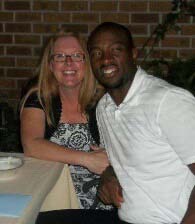
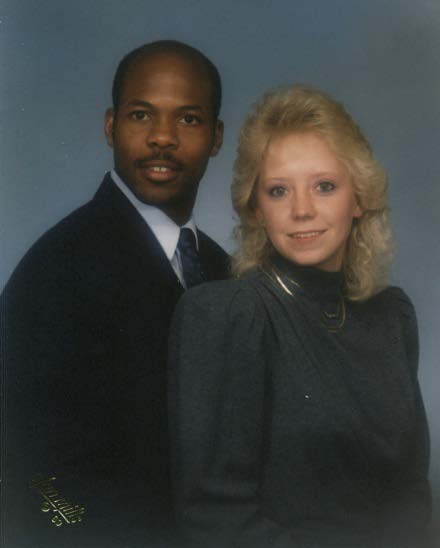
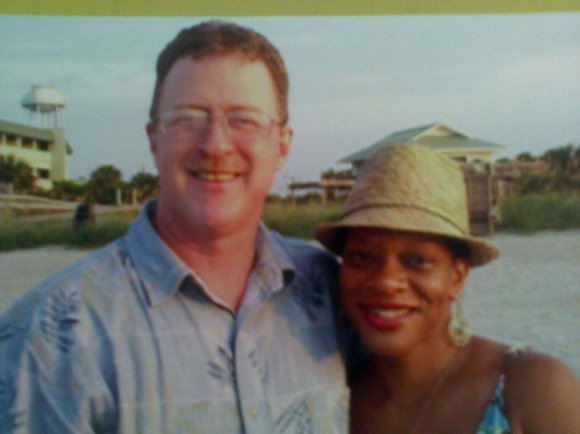
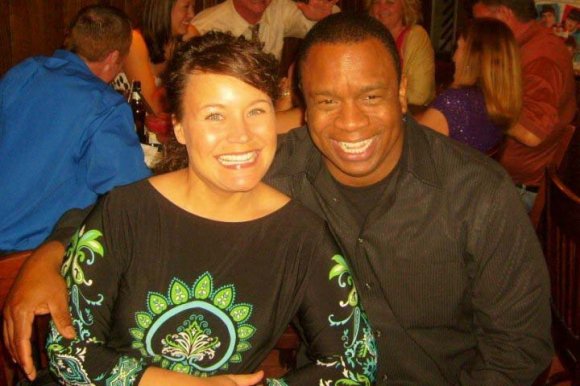
Purposeful sampling was utilized within the context of this study. The sample size consisted of five married heterosexual couples. Specific characteristics are listed in Table 1. The Black-White unions also shared another characteristic, their Christian faith. They were interviewed both individually and collectively. Some of the participants attend the same church, while others are professional acquaintances of the researcher. Each couple received a $50.00 cash incentive.
12. b) Instrument
All in-depth interviews were audiotaped. Extensive notes were taken during each session and transcribed within a 24-hour period. Since flexibility was a major factor, all couples selected interview locations that suited them. Participants were also given the option to exercise anonymity, which they chose not to do. All subjects stressed they wanted their names to be revealed and agreed to have their stories shared extensively, should the document be submitted for publication. As a researcher, my voice will resonate within the context of this study. Why? The Black-White interracial marriage topic hits close to home because I am a female of African American heritage, and my husband, Arthur, is Jewish ? of Hebrew descent. We have been married 12 years, and I couldn't have dreamed of a better mate. With that said, we have endured our share of struggles and triumphs, but have stayed in the race together. As we explore the lives of the five couples interviewed in this study, personal elements from my experience will be integrated in an italicized format.
13. ( )
14. d) Couples: A Formal Introduction
After weeks of making personal connections and receiving referrals, the time had finally arrived. My momentum was high, as I recollected initial conversations with couples regarding meeting times and locations. Everything was in place, and I could finally begin the interview process. Of the five couples, three were interviewed in their personal homes, while one met me in the workforce. The last connection was made via telephone.
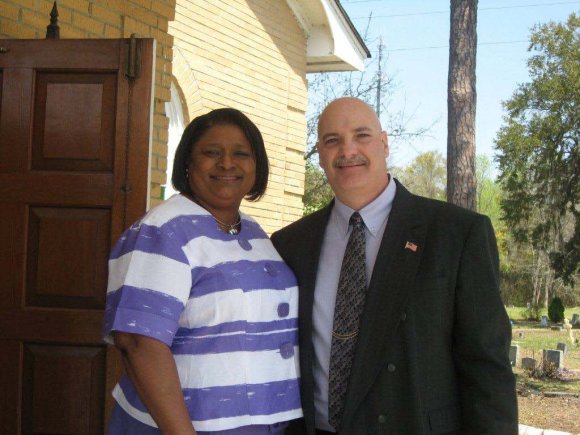
Michael and Stacey Scott: It was a bright, sunny day with barely a cloud in sight. The Scotts gave me impeccable directions to their Summerville, S.C., home. Their neighborhood was flanked with lush landscaping, a palatial golf course, and manicured lawns as far as the eye could see. As I approached their driveway, a white gazebo in the backyard caught my eye. Michael greeted me at the front door with a huge smile and hearty handshake. As I entered the sitting room, Stacey gave me a big hug and said, "Hey girl."
As fellow parishioners at World Harvest Community Church in Charleston, S.C., we were not strangers. The Scotts have been married 18 years, and for them, it has been a rewarding experience. Their house was immaculate. When I turned around to get a full scope of my surroundings, I immediately noticed pictures of their three girls near the staircase. As their dog scurried to another location, we all sat down to begin the conversation.
Brice and Dawn Chandler: I have known Dawn since high school, but we became reacquainted when I started attending World Harvest Community Church in 2001. After 24 years of marriage, the Chandlers have two girls who are both in college. They own a print shop called "The Numbers Game," a business that produces a vast array of items for clients ? everything from books, to raffle tickets, etc. Their North Charleston, S.C., business is nestled behind a small strip mall. As I approached the gravel driveway, I could see Brice standing outside. He shook my hand and said, "C'mon in." The foyer looked like a hospitality suite, with beverages and treats neatly aligned for clients and
15. 20 19
Faith and Black-White Interracial Marriages ( ) C workers. A humming noise from the printing press resonated in the background, as Brice grabbed some Windex to clean the table. I could hear Dawn doling out instructions in the background before joining us in the conference area. At first glance she said, "Whew! I'm excited about this interview."
Bill and Cecilye Kuhn: Cecilye and I have known each other since high school. Of all the couples, the Kuhns have been married the longest, 25 years. She and Bill have two girls, one entering high school and the other poised for college. Their Goose Creek, S.C., home is located in a quiet neighborhood.
As I approached the two-story house, I could see children riding their bicycles on the sidewalk, chatting with their friends. When Cecilye greeted me at the door, the aroma of spaghetti filled the air, a scent that immediately made me hungry. I said, "I hope I didn't interrupt something here." She chuckled, "Not at all." As Cecilye led me through the foyer, I embraced an expansive living/dining area that was quite inviting. She was preparing a men's supper for the church to be held later that evening. In the meantime, we snacked on some ice cream until Bill arrived home from work.
Kevin and Elizabeth Porter: This was the only couple I did not interviewin person. A close friend referred them to me. Kevin and Elizabeth Porter live in San Antonio, Texas. Therefore, I recorded their conversation via telephone. When I dialed Elizabeth's cell phone number, she asked if I would mind being placed on speaker. I replied, "No problem." I immediately noticed the warmth in both of their voices. The Porters do not have any children yet, but look forward to starting a family in the near future. Of all the couples interviewed, they have been married the least amount of time, five years. As I shared part of my personal experience and chatted briefly with them before we began the interview process, I could envision them sitting on a cozy couch, holding hands, anticipating which questions would be asked of them. After I explained they would be interviewed both individually and collectively, they were eager to begin.
Paul and Tonya Misuraca: As a colleague, Tonya and I have known each other for almost a decade. When asked about contributing to the study, she immediately agreed to take part. She and her husband, Paul, have been married 19 years. They have three children, two of whom are adopted. As I prepared myself to visit their Hanahan, S.C., home, I relied on GPS navigation because it was an unfamiliar area. The neighborhood was located near a busy thoroughfare. As I pulled into the cul-de-sac, their home was situated directly in the middle. The cool, exterior paint and dark blue shutters made the house stand out-in an aesthetically pleasing way. When I rang the doorbell, Tonya smiled and whisked me indoors. Visions of flat screen televisions loomed in my head as I noticed two HD TVs-one on the floor, the other in an adjacent seating area. While Tonya turned on a few lamps, Paul emerged from the stairwell and immediately asked if I was thirsty. After handing me a cup of ice for my bottled water, we all sat down in the den to begin the interview process. I was seated in front of a huge glass table that displayed numerous family photos. I paused to give the Misuracas a warm smile before turning on the digital recorder.
V. All five couples shared interesting stories about how they met. Four agreed there was no initial love connection between both parties. Some even admitted they were perturbed with the other person. However, for the Kuhns, sparks flew quickly. As Cecilye put it, "My friend invited me to a cookout a lot of the military guys attended. Since Bill was in the Navy, she knew he would be there with his pals. She wanted me to meet him." Cecilye was just getting out of a bad relationship and did not want to have her heart broken again. "I thought he was cute," she added. Although they had not met beforehand, Bill was smitten the first time he saw her. He said, "I wanted to meet that girl. I didn't want my other Navy buddies to beat me to the punch. I wanted to get to know her."
16. Findings and Discussion
In contrast, from a single party perspective, the Scotts and Chandlers had specific recollections. Stacey Scott shared how she and Michael worked for the same company. That was when she realized he had an eye for her. She noticed his stares, but in her opinion, he was too young. After receiving a note with a check "yes or no for a possible date," she laughed, crumpled it up, and thought nothing of it. Dawn Chandler shared how she met Brice, a firefighter at the time, after a terrible blaze. Although their relationship was cloaked under "friendship status" for several months, she continued to drop hints until he realized she was interested in becoming an exclusive couple.
From an aggravation standpoint, the Misuracas shared a riveting story. When Tonya first met Paul, he 20 2 20 ( )
CFaith and Black-White Interracial Marriages was her superior at the Sheriff's office. She was not happy when he sent her on a search and rescue mission to find a deceased woman. She complained it was not her job, and that it should be left to firemen and/or other authorities. She later proclaimed, "I finally had to let that go. We found the body, but I wasn ' All five couples agreed it took some time to realize their mates were marriage material. It did not happen overnight. All shared the common theme of how their spouses made them laugh and feel special. The humorous factor of being able to have fun and enjoy one another's company resonated throughout the scope of each interview. However, they all revealed more qualifications were necessary to move their significant others into the realm of potential spouses.
Although Elizabeth Porter was initially upset after being stood up for a date, she later forgave Kevin, and the rest is history. Kevin added, "I was the church playboy, but not in a bad way. I was a ladies magnet, but I had prayed about what I wanted in a mate, and Elizabeth met the bill. I had to change my ways. She was the one for me." The Scotts shared a heartwarming story of how they knew they were destined to be together.
Stacey candidly shared how she was previously involved in an abusive relationship. Her trust for men had waned. Since they worked for the same company, one day when it was very hot outside, she gave Michael a ride home because he had no other transportation. He made her laugh the entire time. Shortly thereafter, they started dating. She proclaimed, "We were not saved at the time. We were living together, and every morning, when I tried to get up, he would grab my hand and ask me not to leave. I had never felt that much love and compassion before from another person. For me, that was when I knew he was the one."
The Misuracas discussed how they"struck gold" with each other. For Paul, he admitted how Tonya did sweet things his ex-wife had never done. Of all the couples, Paul was the only participant who had previously been married. He gushingly shared, "I could see her inner beauty, her morals. One of the reasons I decided to interview each spouse individually was to gauge if their responses differed in any way, while comparing similarities and differences. Remarkably, in the area of marital bliss, all five couples were right on target. From the Kuhns, who have been married the longest at 25 years, to the Porters who have been married five years, they all agreed that if they had it to do all over again, they would never entertain the idea of turning back the clock and choosing another mate.
17. d) The Word ? Race
Researcher: What are you? For some reason, I am asked that question a lot. My genealogy is quite expansive, so I just have to smile. When it happens, I say, "I am part of the human race." As the product of a military family, I have traveled a lot, meeting people from all walks of life. I don't let the word 'race' consume me. I look at the different shades of melanin and say, "Wow! God has such a creative imagination, and I like it." When it comes to the word race, there was a common theme among those couples who had been in the military or had grown up in such households. Three of the five couples fit this description. The Porters described how their lives never revolved around the word. As an anthropology major in college, Elizabeth stressed, "It's not a real factor in our marriage. No one really talks about it because there is a lot of diversity where we live in San Antonio, Texas." She said the only time she witnessed an inkling of anything associated with race was when she took her husband, Kevin, to a The Misuracas and Kuhns both have Navy affiliations. Their families have never seemed to have issues with the word race. The Misuracas shared how their diverse lifestyles as children into adulthood helped shape them into the "color blind" people they are today. Paul argued, "I grew up in Boston, and there were some racist people there. I got along with everybody. I don't see black or white, red or yellow. When someone uses the n-word, I see it as plain ignorance." Tonya's dad was a trucker who traveled a lot. She recalled a touching story of family gatherings. "My dad had all kinds of people come to the house. Daddy would eat off the same plate as the white guys. We were all family. My parents taught me that we are all one race, no differences. That's how I was raised." The Kuhns admitted that when they started dating, the word never came up in conversation. Cecilye added, "When other people mention the word race, they may have their differences, but Bill and I don't. When we got married, it was not about making a statement. We both went into it with our eyes wide open. We come from loving families, and there were no reservations on either side." As a Navy veteran, Bill mentioned how he thought a lot of people had problems with the word because they had never experienced relationships, whether personal, professional or dating, with people outside their own race. He added, "When the word race is mentioned, I don't really think about it."
In contrast, the Chandlers shared a different perspective, one that did not include overarching love and compassion from friends and loved ones. When the Chandlers started dating, they experienced severe images of the "race card" on many fronts. Brice grew up in a rough section of North Charleston, S.C. As a child, he was told, "We stay over here; you stay over there. Mixing of the races ? no. That didn't happen." When he and Dawn started dating, people would chide him and say, "Can't you find someone in your own race, brother? You don't need to be with her. There are 'sisters' out there." For Dawn, the word race reminds her of the Confederate flag. She gets emotional when it impacts her children. Dawn shared a story of how her oldest daughter, Morgan, was brazenly overlooked by her teachers at the private school she attended. "Morgan complained that her teachers would not call on her. She was the only black girl in the class. Of course, they knew her parents were interracial. If they had any beef with us, they should have come to us directly. We eventually took her out of that school." e) Race and Family Decisions Researcher: As a married couple with no children, Arthur and I have been blessed with never having been subjected to blatant racism face-to-face (e.g., at public gatherings, etc.). That doesn't mean it hasn't happened behind our backs. We both share the belief that trusting in God in every aspect of our decision making will yield the best results ? all the time. If we try to do it ourselves, we are bound to fail. Two of the five couples agreed race does play an important factor when making family decisions such as travel, dining, etc. The remaining three stressed how such decisions are not impacted by their race at all. For the Chandlers and Scotts, stories about how they have carefully determined life's decisions resonated within the context of their interviews.
First, the Chandlers described how family safety has been an overarching concern. Brice explained, "The first thing a man thinks about is his family's safety ?going places like the mountains, beach, and other areas. There is division. The world is still growing." He mentioned how he is always mindful of where he takes his family because there have been several altercations. "Some guys have come up to my wife, Dawn, and asked her if I was bothering her. That's not just on the outside. It has also happened in Christian circles." Dawn talked about her oldest daughter, Morgan, and the touching question she asked one afternoon. "When Morgan was six, she asked me why there were not any black kids in the television commercials she was watching. She wanted to know if she was good enough. She also wondered why there were no black teachers at the private school she attended. That really affected her." Dawn said that when she asked why there was no diversity in the teaching staff at Morgan's school and did not get a straight answer, she admitted, "That was the last straw. Yeah! That's when we decided to put Morgan in another school."
Next, the Scotts stressed how they exercise careful consideration, especially through prayer, when it comes to making family decisions. Michael explained, "I am more sensitive to the feelings of protecting my children, family, where we live, eat, or travel. I don't want to take the children where they have been mistreated. Fortunately, God has shielded us in that area." Stacey discussed how race impacted their decisions when they moved from various states to new locations. She added how it impacted the communities they selected.
In contrast, the Kuhns, Porters, and Misuracas shared how their family decisions did not factor race into the equation. The Kuhns stressed that since both come from diverse, military backgrounds, nothing really comes as a shock to them because they have lived in numerous areas. The Porters explained that since they live in a city that is a diverse melting pot, San Antonio, Texas, people do not tend to give it a second thought. Kevin added, "It is not looked upon as a disgrace or issue." The Misuracas interjected a humorous twist. Paul stressed, "Wherever we go, we hold hands. When we were dating, I even had her riding in my police cruiser with me. When people would see us kiss and stare at us, looking at us funny, I would laugh. They knew they couldn't come at me, even if they wanted to." Tonya shared the touching story of how Paul worked four jobs so she could earn a graduate degree. "That was a decision that impacted the entire family. The children didn't see much of Paul at the time because he was working to pay my tuition. I would cook meals on the weekend and freeze them so he could have something to eat during the week." All five couples shared a common theme regarding challenges and triumphs in their lives. They stressed the importance of support from their spouses and a strong dependence on their faith to get them through the tough times. One of the five couples admitted they had received an occasional stare or two, but no significant challenges that had caused any strain on their marital relationship. In contrast, the remaining four shared specific accounts of compelling moments in their lives that appeared as challenges initially. However, they were later translated into the realm of significant triumphs.
fThe Kuhns shared how they had not encountered major challenges in their marriage that had direct ties to their race. They attested that a lot of the curiosity comes from others, but they do not let it affect them. Cecilye commented on some of the things people mentioned when she and Bill discussed starting a family. "People wanted to know about the children, wondering how they would look. There are so many trivial and petty things.
People should learn to appreciate the differences and celebrate them. I am blessed because we don't have that problem in my family or Bill's."
In contrast, the remaining four couples shared their accounts, stirring a sea of emotion. The Porters stressed that although they do not face personal challenges as a couple, outside forces have tried to impact their marriage in a negative way. Kevin candidly discussed how his mother had a hard time accepting his engagement and marriage to Elizabeth. He admitted his father had no problem, but his mother and sisters could not embrace Kevin's decision. Kevin explained, "That was in the beginning. When you start to know people, there is a different perspective. They are looking forward to having a baby. My father has helped bring the family closer." The Scotts recalled a black history program at his mother's church in Michigan. As she fought back tears, Stacey revealed, "The guest speaker chose a topic that dealt with people who were white, and everything was about the white man and how they were bad. I was the only white person in the audience, and it was hurtful. I rushed to the parking lot and started bawling. Michael followed me outside, and we left." Michael added, "That situation brought us closer together because it reminded us that there is still a great deal of ignorance in this world. We are strong, but people need to overcome their hatred."
The Chandlers revealed how derogatory comments made against them and their children have been challenging, but have seemed to bring their family closer together as one "united front." Brice argued, "On my former job as a fireman, people were always coming up against me because of Dawn. I was denied promotions, docked in pay, and given bad reviews. The hard knocks have just made me stronger." Dawn interjected, "Our kids see his strength. They put him on a pedestal. They're proud of their dad."
The Misuracas have a resounding motto: "What makes you hurt will only make you stronger." Paul admitted how he was obsessed other men were looking at Tonya when they first got married. As he described it, "I had a terrible jealous streak, partly because she's so beautiful and younger than me." The Misuracas went through a trying time nearly eight years ago. Another woman liked Paul, and as Tonya said, "I wasn't having that. Instead of hitting the woman, I hit Paul. We separated for a short spell, but the love of our families and Christian counseling helped get us through that rough patch.
It was painful going through that experience, but our family is much stronger now."
18. g) Christian Faith and Enduring Marriage
Researcher: As a married couple, Arthur and I have been thrown numerous curve balls. One incident involved his favorite uncle, Jack. He refused to come to our wedding and later severed ties with Arthur and his own sister, my mother-in-law. That was 12 years ago. Our prayer is that he will reconnect with the family. This has pained Arthur tremendously. As a Christian couple, we are weathering the storm together. One Bible verse we reflect on a lot is John 16:33 (KJV) which states, "These things have I spoken unto you, that in me ye might have peace.
In the world, ye shall have tribulation: but be of good cheer; I have overcome the world."
All five couples are Christians, but that was not the case when several of them started dating. The
19. Global Journal of Human Social Science
Volume XIII Issue V Version I Year 2013
20. C
Scotts and Chandlers received Jesus as their personal savior after their wedding dates. In the Misuraca household, Paul dedicated his life to Christ after meeting Tonya. In contrast, The Kuhns and Porters were saved before they got married. Regardless of when they became Christians, the resounding familiarity is ? they are now. All admitted their Christian faith has helped them get through the good times and the bad.
The Scotts emphasized their accountability as believers. Stacey contended, "I feel like my husband and our interracial marriage has helped people to be accepting because we are loving. We are Christian, and I think people have learned from us. We are just regular people like they are. We just look different." The Chandlers attest they have had faith ever since they were married. Dawn shared, "I was not raised in a religious home. In a nutshell, Brice and I edify one another, and our girls, too. We are in our Bible every day." The Kuhns note the importance of being on the same page, spiritually. Bill adds, "That scripture about being equally yoked talks about faith, not skin color. As a married couple, Cecilye and I walk in unison as one."
The Porters shared how their faith in God has encouraged them during a time when they are trying to start a family. Kevin proclaimed, "I believe God will give us what we want, a family. Elizabeth has been distraught for some time, but our church has been having classes for married couples. God is giving us wisdom and knowledge on how to handle the situation." The Misuracas share the belief that God never makes mistakes. During his first marriage, Paul recalled how he had a vasectomy. When he married Tonya, he had it reversed, but it took more than a decade for her to conceive. After adopting two children, Nicholas and Yolanda, little Nia came shortly thereafter. Tonya sighed and said, "I want to remind everyone to hold on to their faith. Your blessings may not come when you expect them, but continue to trust in the Lord. I am a living example. He has never failed me. Put your trust in the Lord." h) On a Lighter Note Researcher: Several years ago, Arthur and I visited one of his good friends in Richmond, Indiana. Eddie and his wife, Charlotte, have a young daughter named Ariel. As we all sat at the dinner table one evening, Ariel turned to me and said, "My! You have big lips." As I gazed at her dad, who had literally turned 20 shades of red, I paused for a moment. I then leaned over to Ariel and replied, "Better to kiss you with, my dear." I planted a huge kiss on her cheek and started laughing. Eddie's face turned from flaming red to its natural complexion. I had diffused the situation in a comedic way. All five couples shared the common theme of laughter when mentioning memorable moments with their spouses. The Scotts recalled a story from their early days of marriage. As Michael explained, "I can think about a blonde moment she had. Stacey was at work and thought her key fob was broken, so she called me for help. She was frantic because she didn't know how she was going to get home. I told her to stick the key in the door and turn it. Man, I thought that was funny." The Chandlers reminisced about their youngest daughter Randi's first day at college.
As Dawn explained, "Brice hated cell phones, so he didn't know how to text. Randi had been asking him to learn for the longest. Brice finally broke down and wrote his first text so he could communicate with his daughter. It was comical, but so touching."
For the Porters, Elizabeth's after-church choir renditions make Kevin want to put her voice on mute. "The songs carry over into the car and at home ? until she gets tired, but then she sings louder to counter her tired state." The Misuracas could barely keep their composure as they talked about the pre-wedding rehearsal of their"first dance." Tonya chuckled, "Paul forgot what to do, so he started crying. We all got a good laugh from that." The Kuhns shared how they lost their car at Disney World and got caught in a torrential downpour. According to Cecilye, "We went back to what we thought was the parking lot. No one could find the car. We thought someone had stolen it. Turns out, we were in the wrong lot. I was fuming! Meanwhile, Bill was standing there grinning and laughing the whole time." i) A Collective Front: Advice and Additional Comments It was interesting to hear what all five couples shared from an advice perspective for Black-White interracial couples who are dating or considering marriage. A resonating theme among all of them was the fact that listening to others' advice can be good, but if it is unfruitful and does not have any edifying characteristics, it should not be applied
21. Ideas for Further Research
As a researcher dealing with a limited time frame, there were avenues for possible exploration that were not addressed in this study. Although couples from Colorado and various parts of California were invited to participate, extenuating circumstances prevented them from contributing. Therefore, an idea for further consideration would be to conduct a similar qualitative study involving Black-White interracial marriages from various regions of America, which would provide a greater geographical representation of these couples, in general. Since social media platforms and ( )
22. C
Faith and Black-White Interracial Marriages advanced technological capabilities have taken the world by storm, an additional approach would be to conduct a qualitative study involving Black-White interracial couples around the world (e.g., Europe and Africa). The goal would be to gauge similarities and differences from a faith perspective. This research would not only pertain to Christians, but also include participants such as Muslims, Buddhists, atheists, etc.
23. VII.
24. Summary
In 2007, forty years after the landmark Loving vs. Virginia Supreme Court ruling, Mildred Loving shared her 21st century perspective. "My generation was bitterly divided over something that should have been so clear and right. But I have lived long enough now to see big changes. The older generation's fears and prejudices have given way, and today's young people realize that if someone loves someone, they have a right to marry" (as cited in Sullivan, 2007, para. 9). While researching scholarly information for this study, it was apparent that a faith-based, Christian perspective regarding Black-White interracial marriages had not been explored.
Therefore, this qualitative study will serve as a much-needed addition to the current body of research.
Throughout the context of the paper, several themes arose that were reflective of Gudykunst's (1995) Anxiety-Uncertainty Management Theory. The Chandlers' accounts of work hostility and derogatory encounters with people in passing emphasized the breakdown in intergroup and interpersonal relationships, as evidenced in this study. Familial relationships described by the Scotts, Kuhns, and Misuracas demonstrated that effective in-group and out-group communication can yield positive intercultural and interethnic encounters (Matusitz, 2004). Even during situations where at least one family member was not receptive to a Black-White interracial union in the beginning, as evidenced with the Chandlers and Porters, attempts to avoid miscommunication were addressed over time. Meanwhile, to give readers a broader scope of the research process, a transcript from the Scotts' interview is located in Appendix B.
25. Appendix B
Interview Transcript: Michael and Stacey Scott June 20, 2013 Rameca: Michael and Stacey, thank you very much for agreeing to participate in this research. It means so much. I think a lot of people, both Christian and non-Christian, can learn a wealth of information from this study. That is why I am so grateful for your assistance. This is going to be a laid back interview process. I will be interviewing each of you separately and then be bringing you back as a couple for some collective questions. Who would like to go first? Michael: I will.
26. Michael (Individual Interview)
Rameca: How and where did you meet this lovely lady, Stacey? Michael: Actually, we met the first time when we were much younger, around 12. I saw her from afar. We officially met at a phone technology company when I was on summer break from college. She and I were both employees. Plus, we grew up in the same city, Lexington, North Carolina.
Rameca: What made you realize Stacey was "the one" for you? Michael: I actually liked her when I saw her, the physical aspects. Did I know she was the one when I first saw her? No. We dated for three years. It was after a year I realized she was the one. I can't really say there was an "aha" moment. We spent a lot of time together from the time we started dating until we were married. We actually lived together before we got married. We were not saved at the time. We gave our lives to Christ the same year we were married, after our wedding day. Michael: When the word is mentioned, there is not actually an emotion that comes with it because when I see her, I do not see color, and when she sees me, she doesn't, either. When I see other interracial couples that I don't know ? in church or other places, I don't have any specific thoughts that come to mind because they are people, part of God's creation. Race does not seem to be a factor at all in my mind.
27. Rameca:
In what ways has race impacted your decisions as a married couple? Michael: The primary way it has impacted our decisions is with moving. We have moved to three different states, North Carolina, Michigan, and South Carolina. It has impacted where we live, like the neighborhoods we choose. We know with communities, you will have people that will fill a certain way no matter where you go. Specifically, neighborhoods, God has given us clarity, we have prayed for discernment, walking through a home and praying for God's will. We know that people have been persecuted. It affected our moving to Summerville, S.C., where we live now. We were told it was predominately white, and that black people there should not go out after dark. We were glad we let the Lord lead us instead of other people. He has protected us, and we have not seen that.
Rameca: What circumstances, if any, have challenged your marriage?
In contrast, which circumstances have brought you closer together as a couple?
Michael: A negative aspect as it pertains to racial things ? well. A predominate challenge would be just how the world sees races and differences-mixing races, like some of the things they say or do. Voting is another example. Since I am an African-American male, a lot of people look at me and assume I am a Democrat, but I am actually a Republican. They assume I am a Republican because my wife is Caucasian. I hear things people say. For example, friends of the family liked to throw in their two cents. My mother's friends would say things. She would tell my brother and me that we were "color struck." My brother is married to a lady who has a fair complexion, but is not white. When Stacey and I started dating, some people at the Baptist church we attended made hurtful remarks, but we decided to ignore them. I have had people that have not been a fan of mine, but that's their problem. Okay, now for the positives. I think just being best friends, having great attitudes, and believing we can conquer the world together. As long as we have God and each other, we can accomplish anything. The things we endured together, we could not have done alone.
Rameca: What specific role has your Christian faith played within the context of your marriage? Michael: We were married, before we became Christians, as I said before. I have always known God has had his hand on my life since I was a child. I gave my life to God at age 11. It was in a forced way, during a church service. I was nudged into doing it with no in my life when I could have been killed or injured, like my motorcycle accident. I knew since I was not killed, there must have been a purpose for my life, but I was not ready yet. It wasn't because of anything like wanting to drink do drugs or act crazy ? because I never had an interest in those things. I never thought I was good enough. I thought I had to clean my life up and be good before I could accept Jesus as my personal savior. A lady at work told me something different when I was at work in the cafeteria. She told me God wanted us to come as we were. A day or two later, Stacey and I were at home, lying in the bed, and with tears, I gave my life to Christ, and she gave her life to Christ as well. We did it within 12 hours of each other. How it has affected our marriage in an amazing way was is that we remember if we do not let God down, we cannot let our family down. I cannot afford to fail because of my commitment to God, our marriage, and family. It could also affect my family's future walk with God. As a youth pastor, I do want to be a negative influence on the kids. We are to seek God's kingdom first. I try my best to live the life every day. Our Christian faith has affected our marriage, so the word divorce is not in our vocabulary. Sleeping on the couch is not an option. If we are upset with one another, we do not let the sun go down without making things right. We discuss our problems. Rameca: Michael, can you think of a humorous story about Stacey you would like to share? Michael: I can think of a blonde moment she had. Stacey is actually a red head. That is one of the things I love about her. One day, she was at work. At the time, we lived in Michigan, and I worked for Chrysler. She was working for an engineering company and called to let me know she couldn't get into the car because the key fob wasn't working. I asked her if she was sure. She said she was. Stacey was frantic because she didn't know how she was going to get home. I told her to stick the key in the door and turn it. She sighed and said, "Okay! Bye." Man, I thought that was funny.
28. Stacey (Individual Interview)
Rameca: Stacey, how and where did you meet Michael?
Stacey: I did know him a little because my sister and his sister were friends. Then, he started working at the phone technology company, the same place I was employed. He stared at me a lot. He would make crazy eyes at me. He looked like a little boy to me. He was younger. I did not pay attention. Plus, I was coming out of a very abusive relationship. So, I was not looking to date. He wrote a note, asking me if I would go out with him. It had two boxes, and he wanted me to check yes or no on the paper. I laughed, crumpled it up and threw it away. I didn't go out with him. One day, he needed a ride home because it was very hot outside. He made me laugh the entire time. So, he asked me out in person, and I said yes. I had a three and a half daughter from a previous relationship at the time. We started dating, and coming out of a very abusive relationship. I wasn't used to being treated like a lady. I almost had to learn to behave and to be a lady because I wasn't used to being treated like one.
Rameca: What made you realize Michael was the one? Stacey: Like I said, we were not saved before we got married. We were not in church to the point of having made a commitment. We lived together, and in the morning, he would grab my hand and not want me to get up. He never wanted to let me go. I had never been treated like that before. That is what made me realize he was the one. Stacey: I am more sensitive to the feelings or protection of my children, even the protection of my whole family-where we live, where we go eat, where we travel. I am always constantly thinking of that. I don't want to take my children anywhere when they can be mistreated.
Rameca: Have you ever had a situation where that has happened? Stacey: No. I think it is the covering or hand of God over our lives. I know the Lord is our protector, and He will keep us and our children. I have people compliment me and tell me how beautiful my children are ? and our family.
Rameca: What circumstances, if any, have challenged your marriage?
In contrast, which circumstances have brought you closer together as a couple?
Stacey: The challenge to me was our move from Michigan to South Carolina. We had been members of that church for eight years. We were warned about Summerville, S.C., and moving here. We were told that in South Carolina, people still fly the rebel flag. In the past, sometimes we would go to church with 20 2 30 ( )
CFaith and Black-White Interracial Marriages Michael's mother. I am kind of naïve and gullible. I do not see hatred all the time. I remember during black history month, there was a speaker who spoke against people with white skin. Everything was about the white man, and I was the only white person sitting there. I got up, made it to the parking lot and started crying. That experience was absolutely heartbreaking. Michael came outside, and we left. The things that have brought us closer together as a couple ? he surprised be for my 40th birthday. He wrote the sweetest letter to celebrate me. He invited friends and family from many places to come celebrate. He had somebody take me shopping. When I came home, I had family and friends I had not seen for years. Some had traveled for days.
Rameca: What specific role has your Christian faith played within the context of your marriage? Stacey: It guides what I am supposed to do as a wife. I know how much he loves the Lord. I know every decision we make, we will pray about it, and God is going to direct him. It helps me as a mother, and also with the daily decisions we make as a family. For our children, most of the time, it is hard because every note I write to the teacher, and everything we do, will acknowledge the Lord. We stand strong. We live for the Lord, not for the school system. They do play music we do not like or approve of at the middle school. I cannot force them to change it. We can only stay after our three girls and tell them what is right and wrong. Rameca: Stacey, can you think of a humorous story about Michael that comes to mind? Stacey: He makes me laugh every single day. If we don't laugh, then I'm concerned. I know he's tired sometimes, so I have to give him space.
He has ministries at church, and that is a lot of responsibility. I can't really think of one particular story.
29. Michael and Stacey (Collective Interview)
Rameca: Now that you have answered questions separately, it is time to bring both of you back as a couple. My first question is: What advice would you give Black-White interracial couples who are currently married or considering it? Stacey: They have to live for God, and be wholeheartedly sold out. Michael: That is imperative. One thing that I would add is not to idly pass by advice from people because of the things they say.
They sometimes mention things because they do love you. God has given us a person he has for us, and you need to be aware of that. Be aware that there will be obstacles. If the advice is not scriptural, it is opinion. Be able to distinguish between the two.
Stacey: Some people take the unequally yoked scripture and say it is for interracial people, speaking against those marriages. People use that to build their hatred. If you need to bring that out, you have an issue.
Michael: God created the human race. We are all his children. Rameca: This is the last question. Can you think of anything we have not discussed that you would like to add? Stacey: I feel like my husband and our interracial marriage has helped people to be accepting because we are loving people. We are Christian, and I think people have learned from us. We are just regular people like they are. We just look different. I think our relationship has affected people who may not have approved because we live for the Lord and are sold out. There are friends whose opinions have changed because he adores me and I adore him. It is strange for people. It brings us closer together as an interracial couple. We depend on each other.
Michael: It brings us closer. We teach our children that when it comes to race, there is no race. We do not allow them to say black, white, or yellow when referencing people, in general. We try to get them not to automatically default to race. As parents, we teach our children. They only know what they are taught and observe. We see kids repeat what they learn.
Stacey: Michael's first cousin said he thought it was amazing that he was black and I was white. The kid said he thought it was awesome. I tell my kids to accept who they are because created that beautiful skin with that beautiful hair. I have to remind myself of that because there are some things we do not like about ourselves. I have to remind myself that we are each a beautiful creation from God.
Rameca: Michael and Stacey, I enjoyed the time we spent together this evening. Thank you very much for participating in this research. If you have any questions, please feel free to contact me. In the meantime, I will inform you when the study is finalized.

| b) The One! |
| Researcher: As a news anchor/reporter working |
| Year 2013 |
| 2 20 2 21 |
| Volume XIII Issue V Version I |
| ( ) |
| of Human Social Science |
| Global Journal |
| VI. |