1. INTRODUCTION
n Sudan, with more than ten million people do not have adequate access to water supply, twenty million inhabitants are without access to sanitation, and a very low proportion of domestic sewage being treated. The investment, which is needed to fund the extension and improvement of these services, is substantial (Omer, 1995). Most governments in developing countries are ready to admit that they lack the financial resources for proper water and sanitation schemes. Moreover, historically, bilateral and multilateral funding accounts for less than 10% of total investment needed. Thus the need for private financing is imperative.
Many water utilities in developing countries need to work in earnest to improve the efficiency of operations. These improvements will not only lead to better services but also to enhanced net cash flows that can be re-invested to improve the quality of service. Staff productivity is another area where significant gains can be achieved. Investment and consumption subsi-Author : Energy Research Institute (ERI), UK. E-mail : [email protected] dies have been predicated on the need to help the poor to have, access to basic services and to improve the environment. Failure of subsidies to reach intended objectives is due, in part, to lack of transparency in their allocation. A key element to successful private participation is the allocation of risks. How project risks are allocated and mitigated will determine the financial and operational performance and success of the project, under the basic principle that the risk should be allocated to the party, which is best able to bear it. Many developing countries (Sudan is not an exception) are encouraging the participation of the private-sector as a means to improve productivity in the provision of water and wastewaters services. Private-sector involvement is also needed to increase financial flows to expand the coverage and quality of services. Many successful private-sector interventions have been under taken. Private operators are not responsible for the financing of works, nonetheless they can bring significant productivity gains, which would allow the utility to allocate more resources to improve and extend services. Redressing productivity, subsidy and crosssubsidy issues before the private-sector is invited to participate, has proven to be less contentious. I have previously thought to encourage more private-sector involvement (Omer, 1995).
Sudan is geo-politically well located, bridging the Arab world to Africa. Its large size and extension from south to north provides for several agro-ecological zones with a variety of climatic conditions, rainfall, soils and vegetation. Water resources available to Sudan from the Nile system, together with groundwater resources, provide a potential for thirty years increase in the irrigated sub-sector. There are also opportunities for increased hydropower generation. The strategy of Sudan at the national level aims at the multi-purpose use of water resources to ensure water security for attaining food security, drinking-water security, fibresecurity, hydro-energy security, industrial security, navigation, waste disposal and the security at the regional levels within an environmentally sustainable development context and in harmony with the promotion of basin-wide integrated development of the shared water resources (Noureddine, 1997). The government has continued to pay for the development and operation make the user communities pay water charges. In order to ensure the sustainability of water supplies, an adequate institutional and legal framework is needed. Funds must be generated (a) for production, (b) for environmental protection to ensure water quality, and (c) to ensure that water abstraction from groundwater remains below the annual groundwater recharge. At present, there are private-sector providers who do not have an enabling environment to offer the services adequately. There is a need for the government to have a mechanism to assist in the regulation and harmonisation of the private-sector providers. Privatisation is part of a solution to improve services delivery in water and sanitation sector. At present, there is a transitional situation characterised by: (i) A resistance to water charge; (ii) Insufficient suitable law/law enforcement; (iii) Insufficient capacities; and (iv) Inadequate interaction between actors.
In a country with a relatively sparsely populated, there are extreme pressures on water and waste systems, which can stunt the country's economic growth. However, Sudan has recognised the potential to alleviate some of these problems by promoting renewable water and utilising its vast and diverse climate, landscape, and resources, and by coupling its solutions for waste disposal with its solutions for water production. Thus, Sudan may stand at the forefront of the global renewable water community, and presents an example of how non-conventional water strategies may be implemented. In Sudan, more than ten million people do not have adequate access to water supply, twenty million inhabitants are without access to sanitation, and a very little domestic sewage is being treated. The investment needed to fund the extension and improvement of these services is great. Most governments in developing countries are ready to admit that they lack the financial resources for proper water and sanitation schemes. Moreover, historically, bilateral and multilateral funding accounts for less than 10% of total investment needed. Thus, the need for private financing is imperative. Water utilities in developing countries need to work in earnest to improve the efficiency of operations. These improvements would not only lead to better services but also to enhanced net cash flows that can be re-invested to improve the quality of service. Staff productivity is another area where significant gains can be achieved. Investment and consumption subsidies have been predicated on the need to (a) help the poor, which have not an access to basic services and (b) improve the environment.
Failure of subsidies to reach intended objectives is in part, from lack of transparency in their allocation. Subsidies are often indiscriminately assigned to support investment programmes that benefit more middle and high-income families that already receive acceptable service. Consumption subsidies often benefit upper-income domestic consumers much more than low-income ones. Many developing countries (Sudan is no exception) are encouraging the participation of the private-sector as a means to improve productivity in the provision of water and of wastewaters services. Private sector involvement is also needed to increase financial flows to expand the coverage and quality of services.
A key element to successful private participation is the allocation of risks. How project risks are allocated and mitigated determines the financial and operational performance and success of the project, under the basic principle that the risk should be allocated to the party, which is best able to bear it. Many successful private-sector interventions have been undertaken. Private operators are not responsible for the financing of works, nonetheless they can bring significant gains in productivity, which would allow the utility to allocate more resources to improve and extend services. Redressing productivity, subsidy and cross-subsidy issues before the private-sector is invited to participate, has proven to be less contentious. I have previously sought to encourage more private-sector involvement (Omer, 1995).
This study comprises a comprehensive review of water sources, the environment and sustainable development. It includes the renewable water resources, water conservation scenarios and other mitigation measures necessary to reduce climate change. This is still very much lacking particularly under developing countries conditions.
2. II.
3. WATER RESOURCES
Sudan is rich in water (from the Nile system, rainfall and groundwater) and lands resources in Table 1. Surface water resources are estimated at 84 billion m 3 and the annual rainfall varies from almost nil in the arid hot north to more than 1600 mm in the tropical zone of the south. The total quantity of groundwater is estimated to be 260 billion m 3 , but only 1% of this amount is being utilised. Water-resources assessment in Sudan is not an easy task because of uncertainty of parameters, numerous degrees of freedom of variables, lack of information and inaccurate measurements. However, according to seasonal water availability, Sudan could be globally divided into three zones: (a) areas with water availability throughout the year are the rainy regions (equatorial tropical zones); (b) areas with seasonal water availability; and (c) areas with water deficit throughout the year, which occupy more than half the area of Sudan. The ground water quality is suitable for animal and human consumption as well as for agriculture and other uses. The potential renewable ground water suitable is estimated at 6 x 10 9 m 3 . The most important research and development policies which have been adopted in different fields of water resources are: (i) the water resource; (ii) irrigation development; (iii) the re-use of drainage water and groundwater; (iv) preventive and canal maintenance; (v) aquatic weed control and river channel development, and (vi) protection plans. The physical and human resources base can provide for sustainable agriculture growth and food security for itself and for others in the region. Failure to do so in the past derives from several causes and constraints, which are manageable. These include misguided policies, poor infrastructure, low level of technology use, recurring droughts and political instability. Perhaps the biggest challenge is that of finding resources for capital improvements in the light of changing water-quality regulations and ageing systems (James, 1994).
( D D D D )The desert environment is fragile and highly affected by human activities. Disturbances in the balanced ecosystems are apt to take place causing serious problems to the environment, and consequently, initiating geotechnical hazards. Urbanisation, climatic conditions, and geomorphic and geologic setting are usually the controlling factors influencing the types of these hazards. One of the potential geotechnical hazards that may occur under desert conditions is sand drifting and dune movement. The problem of sand drifting and dune migration is of special interest in Sudan as moving sand covers approximately one-third of the country. Because sand poses natural erosionaldepositional hazards on the existing structures, such as roads and urbanised areas, it become necessary to study the behaviour of the sand forms in the different parts of the country.
Although deserts are known to be simply barren areas, they are scientifically defined in terms of water shortage or aridity, soil type, topography and vegetation. Anon, 1979 presented a map showing the distribution of deserts in the world. Accordingly to this map, most of the Middle Eastern countries lie within the semi-arid, arid, and hyper-arid desert zones, with an aridity index (ratio between annual precipitation and mean annual potential evapotranspiration) ranging between 0.03 and 0.02. Most of the geotechnical hazards are associated with desert environments. The desert environment, being a fragile ecosystem, needs to be treated with care. Intercommunications between different national and international agencies and education of the layman should help to keep the system balanced and reduce the resulting environmental hazards. In addition, any suggested remedial measures should be planned with nature and be engineered with natural materials.
4. III. WATER AND SANITATION MANAGEMENT
Community water supply and sanitation management is a new form of cooperation between support agencies in the water and sanitation sector and communities.
It involves a common search to identify problems with the local water supply and sanitation systems, to establish the possibilities for, and constraints on, management by communities, and to find possible solutions that may be tested. Some fundamental principles of community water and sanitation management are: (i) Increased management capacities are the basis for improved water and sanitation systems, and each community must develop its own specific management systems; and (ii) Communities own the process of water charge; facilitators and local researchers participate in the community's projects, not the other way around.
Through this approach, the support agency is no longer the provider of technical goods or solutions, but the facilitator of process to enhance the capacity of the community to manage its own water and sanitation systems. Constraints include:(i) A lack of funds or substantial delays in allocating funds for essential requirements such as operation and maintenance of irrigation and drainage projects; (ii) Deterioration in datacollection activities; (iii) A lack of appropriate and consistent policies for water development for both largeand small-scale projects; (iv) Serious delays in completing water projects after major investments such as dams and other hydraulic structures, and main secondary canals not being completed; (v) An absence or inadequacy of monitoring, evaluation, and feedback at both national and international levels; (vi) A lack of proper policies on cost recovery, and water pricing or, if policies exist, absence of their implementation; (vii) A shortage of professional and technical manpower, and training facilities; (viii) A lack of beneficiary participation in planning, implementation, and operation of projects; (ix) Inadequacy of knowledge, and absence of appropriate research to develop new technologies and approaches, and an absence of incentives to adopt them; (x) General institutional weaknesses and a lack of coordination between irrigation, agriculture, energy, healthy, environment, and planning; (xi) Inappropriate project development by donor agencies, e.g., irrigation development with drainage, supporting projects which should not have been supported; and (xii) A lack of donor coordination resulting in differing approaches and methodologies, and thus conflicting advice.
As developing nations strive to provide a safe and reliable drinking-water supply to their growing and increasingly urbanised population, is becoming more evident that new approaches to this problem will be needed. To meet this challenge, new methods of reclaiming and re-using water have been developed in cost-effective and environmentally sound ways (ODA, 1987;Seckler, 1992;and Salih, 1992).
Despite the constraints, over the last decade the rate of implementation of rural and peri-urban water supply and sanitation programmes has increased considerably, and many people are now being served more adequately. The following are Sudan experience in water supply and sanitation projects: a) At community level ? Participatory approaches in planning, implementtation and monitoring.
? Establishment and training of water tap committees.
? Clear ownership of improved water supply and sanitation systems.
? Technology and service level selection by consumers.
? Sensitive timing of hygiene and sanitation education.
5. Global Journal of Human Social Science
Volume XIII Issue IIW I Version I
( D D D D ) 2 16Year 2013 ? Establishment and training of reliable financial and maintenance management.
6. b) At district and national level
? Integrated multi-sectoral approach development.
? Training approach and material development for district and extension staff.
? Continuing support from integrated multi-sectoral extension team.
? Establishment of technical support system.
? Multi-sectoral advisory group including training and research institutions.
? Development and dissemination of relevant information for district and extension staff.
7. IV. WATER RESOURCE MANAGEMENT SYSTEMS
Water is a substance of paramount ecological, economical, and social importance. Interrelationships inherent in water use should encourage integrated water management. Water resources are to be better managed to:
1. Ensure more reliable water availability and efficient water use in the agricultural sector. 2. Mitigate flood damage. The emerging water crisis, in terms of both water quantity and quality, requires new approaches and actions. Priority areas needing concerted action in various sectors are:
(a) Water use efficiency, (b) Flood control, (c) Management of scarce water resources, (d) Water quality management and provision of safe drinking water, and (e) Coordination and integration of various aspects of water management, and water management with other related resources and societal concern. The following are recommended: ? Community must be the focus of benefits accruing from restructures, legislature to protect community interest on the basis of equity and distribution, handover the assets to the community should be examined; and communities shall encourage the transfer the management of water schemes to a professional entity.
? The private-sector should be used to mobilise, and strengthen the technical and financial resources, from within and without the country to implement the services, with particular emphasis on utilisation of local resources.
? The government should provide the necessary financial resources to guide the process of community management of water supplies. The government to divert from provision of services and be a facilitator through setting up standards, specifications and rules to help harmonise the private-sector and establish a legal independent body by an act of parliament to monitor and control the providers. Governments to assist the poor communities who cannot afford service cost, and alleviate social-economic negative aspects of privatisation.
? The sector actors should create awareness to the community of the roles of the private-sector and government in the provision of water and sanitation services.
? Support agencies assist with the financial and technical support, the training facilities, coordination, development and dissemination of water projects, and then evaluation of projects.
The development of new, modern, and complete water-resources-information systems is one of the basic needs for the implementation of the waterresources-management system. The decision process in drought or flood conditions, and also in overexploitation cases, can only be correct if based on a reliable information system. A complete and comprehensive database on water availability, users, water quality monitoring, current technologies (like geographical information systems), is certainly the way to produce an efficient framework for decision-making. Lack of information is one of the most critical points regarding the development and implementation of the new management system (FAO, 1999). The types of data related to flood management include:
? Topographic data (elevations, land use, soils, vegetation, and hydrography).
? Administrative data (political boundaries, and jurisdictional boundaries).
? Infrastructure data (roads, wells, utilities, bridges and culverts, hydraulic structure, properties, facilities) and imagery (satellite images and aerial photographs).
? Environmental data (threatened and endangered species, critical aquatic and wildlife habitat, archaeological sites, and water quality).
? Hydrometeorology data (stream flows, precipitation, temperature, wind, solar radiation, soil water, discharge rating curves, flood frequency, and flood plain delineation).
? Economic data (stage-damage relationships, insured values, and industries), and ? The government should provide the necessary financial resources to guide the process of V.
8. THE POLICY REGIME IN WATER QUALITY MANAGEMENT
Apart from effluent regulations, and sometimes, national water quality guidelines, a common observation is that few developing countries (Sudan is not an exception) include a water-quality-policy context. Whereas water supply is seen as a national issue, pollution is mainly felt at, and dealt with at, the local level.
With few exceptions, national governments have little information on the relative importance of various types of pollution (agriculture, municipal, industrial, animal husbandry, aquaculture), and therefore, have no notion of which is of greatest economic or public health significance.
Usually freshwater quality management is completely divorced from coastal management even through these are intimately linked. Consequently, it is difficult to develop a strategic water quality management plan or to efficiently focus domestic and donor funds on priority issues.
A national water-quality-policy should include the following water quality components:
? A policy framework that provides broad strategic and political directions for future water-quality management. ? A strategic action plan for water-quality management based on priorities that reflect an understanding of economic and social costs of impaired water.
This plan should include the following components:
? A mechanism for identifying national priorities for water-quality management that will guide domestic and donor investment.
? A plan for developing a focused and cost-effective data programme for water quality and related uses, as a basis for economic and social planning.
? A consideration of options for financial sustainability including donor support, public/private-sector partnerships, and regional self-support initiatives.
? A regulatory framework that includes a combination of appropriate water-quality objectives (appropriate to that country and not necessarily based on Western standards) and effluent controls. This includes both surface and groundwater.
? A methodology for public input into goals and priorities.
? A process for tasking specific agencies with implementation so that accountability is firmly established and inter-agency competition is eliminated.
? Specific mechanisms for providing drinking water monitoring capabilities, at the community level if necessary.
? National data standards that must realistically reflect national needs and capabilities. Nevertheless, the objective is to ensure reliable data from those organisations that provide information for national water management purposes and at the community level for drinking water monitoring.
The design criteria in any water-quality programme are to determine the management issues which water quality data are required. Generally, there are four categories of data objectives:
? Descriptive data that are typically used for government policy and planning, meeting international obligations, and for public information.
? Data specific to public health.
? Regulatory concerns, and
? Aquatic ecosystem health. The last category is not normally included in many developing countries for reasons of cost and complexity. In most developing countries, countries with transitional economies, and some developed countries, the technology of monitoring has changed little since 1970s, yet some of the largest advances in monitoring in recent years involve technical innovation that serve to reduce costs and increase efficiency. Admittedly, not all of these are inexpensive; however when deployed appropriately, they may eliminate traditional monitoring, or reduce costs by increasing the efficiency of more traditional approaches to chemical monitoring. Types of innovation include: biological assessment, use of surrogates, use of enzymatic indicators, miniaturisation, automation, and simplification of laboratory analytical methods.
9. VI.
10. SUSTAINABLE DEVELOPMENTS
In the past decade, sustainability has increasingly become a key concept and ultimate global for socio-economic development in the modern world. Without a doubt, the sustainable development and management of natural resources fundamentally control the survival and welfare of human society. Water is an indispensable component and resource for life and essentially all human activities rely on water in a direct or in direct way. Yet supplying water of sufficient quantity and safe quality has seldom been an easy task. Although sustainability is still a loosely defined and evolving concept, researchers and policy-makers have made tremendous efforts to develop a working paradigm and measurement system for applying this concept in the exploitation, utilisation and management of various natural resources. In water resources arena, recent development has been synthesised and
11. Global Journal of Human Social Science
Volume XIII Issue IIW I Version I
( D D D D )presented in two important documents published by (ASCE, 1998) and (UNESCO, 1999), which attempt to give a specific definition and a set of criteria for sustainable water resource systems. When considering the long-term future as well as the present, sustainability is concept and goal that can only be specified and implemented over a range of spatial scales, of which urban water supply is a local problem with great reliance on the characteristics and availability of regional water resources. ? Calculation of energy consumption (no extreme conditions are required)
? Design purposes (extremes are essential), and
? Predicting the effect of climate change such as increasing annually average of temperature.
This results in the following requirements:
? Relevant climate variables should be generated (solar radiation: global, diffuse, direct solar direction, temperature, humidity, wind speed and direction) according to the statistics of the real climate.
? The average behaviour should be in accordance with the real climate.
? Extremes should occur in the generated series in the way it will happen in a real warm period. This means that the generated series should be long enough to assure these extremes, and series based on average values from nearby stations. Agriculture is largely subsistence with a wide range of food crops including: maize, sorghum, millet, root crops, banana, pulses, tea, and coffee. Because of the marked fluctuation between the flood discharge and the low season period in the Nile system, storage reservoirs in Sennar, Rosaries, Girba and Jebel Aulia were constructed to ensure the availability for water during the recession period. Designing and implementing a sustainable energy sector will be a key element of defining and creating a sustainable society. In the electricity industry, the question of strategic planning for sustainability seems to conflict with the shorter time horizons associated with market forces as deregulation replaces vertical integration. Sustainable low-carbon energy scenarios for the new century emphasise the untapped potential of renewable resources. Rural areas can benefit from this transition. The increased availability of reliable and efficient energy services stimulates new development alternatives. It is concluded that renewable environmentally friendly energy must be encouraged, promoted, implemented, and demonstrated by full-scale plant especially for use in remote rural areas (Figure 1). This is the step in a long journey to encourage a progressive economy, which continues to provide us with high living standards, but at the same time helps reduce pollution, waste mountains, other environmental degradation, and environmental rationale for future policy-making and intervention to improve market mechanisms. This vision will be accomplished by: ? 'Decoupling' economic growth and environmental degradation. The basket of indicators illustrated shows the progress being made (Table 5).
Decoupling air and water pollution from growth, making good headway with CO 2 emissions from energy, and transport. The environmental impact of our own individual behaviour is more closely linked to consumption expenditure than the economy as a whole. ? Focusing policy on the most important environmental impacts associated with the use of particular resources, rather than on the total level of all resource use.
12. GOALS AND CHALLENGES
Sudan needs assistance in developing and implementing (a) river-basin management, (b) diffuse source pollution, (c) environmental restoration, and (d) urban storm drainage.
At present the international, bilateral donor agencies, and relevant United Nations bodies provide such assistance. The international associations constitute an additional, but as yet untapped, source of assistance. The solution, which should be seriously explored, is the forging of partnerships with bodies such as the World Bank and the appropriate United Nations agencies.
Advanced research and technology contribute to resolving water shortage and sanitation problems, and non-conventional reliable water supplies cannot be provided unless the environmental impacts are taken into consideration. Looking to the future, Sudan has a set the following priorities for water-resource research and development until the year 2020: a) Increase overall water-use efficiency to the maximum limit. This could be achieved by (a) improving the irrigation system and assure its flexibility to cope with modern farm irrigation system, (b) developing the farm system, (c) drawing up a proper mechanism for water charges; The water quantity situation is highly variable in Sudan reflecting different levels of development and different needs for water quality programmes in Table 6.
The conventional paradigm of water quality monitoring is not suitable for the Sudan being too expensive, inefficient, and ineffective. Financial and sustainability issues include cost avoidance and cost reduction, local and accountability frameworks that encourage good business practices by senior programmme managers, the use of new cost-effective technologies for monitoring, and a variety of donor/public/ private-sector linkages that focus on commercial benefits that permit the transfer of certain parts of water quality programmes to the private-sector.
From a visual investigation of the River Nile in Table 7, the major sources are industrial effluents, crude sewage from blocked, broken or overloaded sewers, sewage effluents, surface runoff, and solid wastes which have been dumped into the river.
Therefore remedial and improvement measures must be taken before the environment becomes further polluted and the natural resources are completely overexploited (Omer, 2000).
The challenges facing and enhancing the ecology in the twenty-first century are as follows: while planning for a balanced development in the future; (f) The concept of the ecosystem (involving education and interpretation of the natural environment) must be promoted.
Environmental pollution is a major problem facing all nations of the world. People have caused air pollution since they learned to how to use fire, but manmade air pollution (anthropogenic air pollution) has rapidly increased since industrialisation began.
13. Full cost of boreholes Regressive
Many volatile organic compounds and trace metals are emitted into the atmosphere by human activities. The pollutants emitted into the atmosphere do not remain confined to the area near the source of emission or to the local environment, and can be transported over long distances, and create regional and global environmental problems. The privatisation, and price liberalisation in energy fields has to some secured (but not fully). Availability and adequate energy supplies to the major productive sectors is needed. The result is that, the present situation of energy supplies is for better than ten years ago.
14. THE CHALLENGE OF OVERCOMING THE COUNTRY'S DIVERSITY
Sudan is a federal republic of 2.5 million km 2 located in the eastern Africa. The country is divided into 26 states and a federal district, in which the capital, Khartoum is located. Sudan is known as a country of plentiful water, with highest total renewable fresh water supply in the region. Table 8 shows some of the most significant regional diversities concerning water issues.
Adequate water management is essential to sustain development. Competing needs for this beneficial resource include municipal supply, industry, and agriculture, among others. The National Water Act of 1994 (Law No. 1155) defines the objectives, principles, and instruments of the National Water Resources Policy and the National Water Resources Management system. The law establishes the institutional arrangement under which the country's water policies are to be implemented. The National Water Resources Policy was proposed to achieve:
? Sustainability: to ensure that the present and future generations have an adequate availability of water with suitable quality.
? Integrated management: to ensure the integration among uses in order to guarantee continuing development.
? Security: to prevent and protect against critical events, due either to natural causes or inappropriate uses. To achieve such objectives, water management must be implemented according to the following principles:
? Water is a public good, and it is a finite resource that has economic value.
? The use of water required to meet people's basic needs shall have priority, especially in critical periods.
? Water management shall comprise and induce multiple uses.
? The river basins are the appropriate unit for water management, and water management shall decentralise, with the participation of government, stakeholders and society. ? Basin-wide management plan has been drafted.
? Natural mitigation strategy in place.
? Basin-wide coordination and communications strategy instituted.
? Trained emergency management staff coordinating at the regional level.
? Effective regulatory policies that address floodplain occupancy.
? Decentralised decision-making with a high degree of local autonomy.
? Evidence of an updated national response plan.
? Bilateral response agreements.
? Evidence of regional preparedness and response training.
? Some trained emergency management staff at the local and/or national level. ? Evidence of some regulatory policies designed to address floodplain occupancy. ? Attempts to decentralise decision-making, moderate local discretion.
? No existing flood response plan.
? No evidence of mitigation-related activities.
? Poor local-and national-level coordination and communications.
? Little or no evidence of flood preparedness and response training.
? No regulatory policies addressing floodplain occupancy.
? Centralised decision-making, no evidence of local autonomy.
Water resources plans are developed to guide future decisions and are to be developed for each river basin and state, as well as the country. The objective is to coordinate efforts and establish guidelines and priorities for water allocation and water pricing. The priorities established for water allocation will be used in critical drought conditions. Water pricing is the single most controversial instrument of the law. The pricing system is also the most difficult step to implement. The pricing system recognises the economic value of water, as stated in the principles of the policy. The development of a new, modern, and complete water resources information system is one of the basic needs for the implementation of the water resources management system. The decision process in drought or flood conditions, and also in overexploitation cases, can only be correct if based on a reliable information system. A complete and comprehensive database on
( D D D D )water availability, users, water quality monitoring, and current technologies (like geographical information systems), is certainly the way to produce an efficient framework for decision-making. Lack of information is one of the most critical points regarding the development and implementation of the new management system. The institutional framework provides the basis by which all actions are taken, and an assessment of its functional character helps determine the collaborative potential. The resulting criteria for measuring a given community's institutional capacity can be found in Table 9.
15. IX.
16. WATER SCARCITY IMPACTS AND POTENTIAL CONFLICTS
The failure of water resources to meet the basic requirements of society has a host of social, economic, environmental, and political impacts. Water scarcity is man-made phenomenon brought about by the increasing demands of the population for water. The imbalance in the population-water resources equation strains society and has an adverse impact on domestic hygiene, public health, and cost of domestic water, and could impart political problems as a serious as bringing down government. On the social side, water scarcity adversely impacts job opportunities, farm incomes, credibility and reliability of agricultural exports, and ability of the vulnerable to meet the cost of domestic water. Economically, the adverse impact is displayed in the loss of production of goods, especially agricultural goods, the loss of working hours because of the hardships society faces as a result of water scarcity. The impacts of water scarcity on regional stability are addressed with reference to water in the Middle East Peace Process, taking into account the serious impacts of conflicts and potential water war.
Conditions of scarcity propel an increase in competition among the different sectors of water use with results, invariably, at the expense of irrigated agriculture. Pure market forces create a gradient under which water flows from the poor to the rich. Tough decisions await politicians, and the consequences are expected to displease one or more parties, and please others. The scene of domestic politics becomes as fluid as water itself, with politicians shifting positions continuously in response to domestic pressures. The political fallout from water resources scarcity on the domestic scene is parallel to the impact the scarcity has on domestic households in terms of basic needs for drinking and food preparation, on domestic hygiene, and on public health. Other important factors have a delayed response to water scarcity, and these pertain to the integrity of the environment, and deterrence it imparts on development investment and economic credibility of the country. The cost of mitigating these problems and of the provision of services to the increased urbanisation could very well be beyond the ability of government to bear. The political consequences resulting from this will not be in favour of domestic stability, and social explosions can be anticipated. A bilateral agreement was reached between Egypt and the Sudan in 1959 by which the two countries share the Nile flow: 55.5 billion cubic meters to Egypt, 18.5 billion to Sudan, and 10 billion were allocated to evaporation. Hopes are high for achieving a more extensive participation by the other riparian parties in what could be a multilateral treaty on the Nile encompassing the other riparian states in addition to Egypt and Sudan. The above agreement is not complete; it lacks the entry of other legitimate riparian states, lacks water quality components, and tends to focus on quantity measures, and miss important management issues. It is to be noted that regional relations, including those among the riparian parties, are connected to the political, economic, and trade network of international relations. Water is not the only determinant factor in shaping the nature of bilateral, regional, or international relations. Water relations can be transformed into a positive sum game by which all parties can be made to win. One common gain to all is the environmental protection of the common watercourse or water body. Lack of cooperation and agreement will most likely lead to environmental neglect and water quality degradation, which is loss to all. International encouragement to attain cooperation can, therefore, be brought to bear on the regional parties, and efforts of international lending agencies can be called upon to pool with the regional and international efforts to achieve this objective. It has been stipulated by many that under conditions of scarcity, water conflicts can lead to hostile actions between riparian parties. Experience in the region indicates that water, in its own right, has not been the cause of any of the wars that have broken out in the region.
Today's advanced societies heavily depend on energy. The principal sources of energy and electricity generation today are solar, wind, biomass, hydropower, and fossil fuel. Energy from hydropower is short of meeting the current or future energy requirements, and the fossil fuel resources, being depleted with time, will eventually run out. For human civilisation to continue at its natural pace, new forms of affordable and clean energy will have to come on line. Failure of human civilisation to introduce new forms of energy will render that civilisation doomed, and the quality of life will deteriorate. If this unlikely scenario actually takes place, the requirements will decrease because the mechanism of making it available for use (pumping) diminishes.
The more likely scenario is more optimistic one, and it is that a new form of energy generation will be introduced in which case water desalination becomes affordable and its pumping from the coastal desalination plants become possible at reasonable cost.
17. Global Journal of Human Social Science
Volume XIII Issue IIW I Version I
( D D D D )The way out of the looming water crisis rests, therefore, in the invention of new forms of energy generation that will make possible the reliance on desalination and in the recycling of wastewater for reuse in agricultural production and for environmental reasons. Integrated management of the three resources of water, energy, and the environment, will result in better results with a positive sum for society.
X.
18. COMMON LANGUAGE AND CULTURE
A common language and similar culture simplify communication and reduce the potential for misunderstandings. In the Nile basin where several languages are spoken, an international language, English, is used with some success by multijurisdictional basin management authorities.
19. a) Primary Factors Promoting Data and Information
Exchange Data and information exchange is more probable when needs are compatible and when there is potential for mutual benefit from cooperation in Table 10. Where countries are working on developments that are beneficial to both countries as well as other riparians, there is little incentive to hide project impacts. This means that since data and information exchange is unlikely to lead to pressure from surrounding countries that might restrict developments, countries have less reason to restrict access to their data and information resources. It is important, therefore to be no perceived clash of interests in development plans and needs. An example of this might be in developing their part of the basin primarily for hydroelectric development, while the lower riparians are more interested in developing the irrigation potential of their portion of the basin. By constructing large storage dams in the upper part of the basin, the river Nile seasonal flow might be evened out, reducing flooding downstream while increasing irrigation water supplies and even making downstream run-of-theriver hydroelectric projects more profitable. Ecosystem effects would have to be considered. Sufficient levels of economic development across a basin are needed to permit joint funding of cooperative processes, particularly data collection and dissemination. Although countries with differing levels and forms of economic development may, at times, have more complementary needs than countries with similarly structured economies, the overall level of economic development is still significant. A wealthier country in a river basin may be able to assist with the funding of data collection activities in the neighbouring country with much needed data and helping to build confidence between the two countries.
20. c) Increasing Water Resources Stress
As per capita water resources availability decreases as shown in Table 11, tensions between riparian nations may rise and make cooperation difficult. Stress may, therefore, reduce cooperation and data sharing rather than strife.
The historical background of the basin may have a lasting effect on current negotiations. Past conflicts can have a deleterious effect on the prospects for establishing cooperative practices, such as data sharing. Where there is a history of conflict between two nations, both nations may view the present situation primarily as competitive and focus on conflicting rather than common interests. Democracies may find it easier to negotiate cooperative arrangements with other democracies. Political differences can lead to legacies of mistrust developing between countries.
21. DISCUSSIONS a) Water Stress in Sudan
Water stress refers to economic, social, or environmental problems caused by unmet water needs. Lack of supply is often caused by contamination, drought, or a disruption in distribution. In an extreme example, when Sudan split four years ago between the rebel-led west and government-ruled north, the conflict led to unpaid water bills, which precipitated a dangerous health threat in the region, increasing the risk of waterborn diseases such as cholera. Some analysts believe the disruption of distribution was a political ploy to put pressure on the rebel-led west.
While water stress occurs throughout the world, no region has been more afflicted than sub-Saharan Africa. The crisis in Darfur stems in part from disputes over water: The conflict that led to the crisis arose from tensions between nomadic farming groups who were competing for water and grazing land-both increasingly scarce due to the expanding Sahara Desert. As Mark Giordano of the International Water Management Institute in Colombo Sri Lanka says, "Most water extracted for development in sub-Saharan Africadrinking water, livestock watering, and irrigation-is at least in some sense 'transboundary'". Because water sources are often cross-border, conflict emerges.
Improving water and sanitation programmes is crucial to spurring growth and sustaining economic development. Because it takes time to develop these programmes, a paradox emerges: poor economies are unable to develop because of water stress, and economic instability prohibits the development of programmes to abate water stress. Developments in water storage could have prevented that drought from significantly affecting Sudan's economy. Hydropower can also spark economic development. Accordingly, some transboundary water agreements also play a clear role in fostering development, for example, by facilitating investment in hydropower and irrigation.
22. b) The Role of Agriculture in Water Stress
Agricultural development has the potential to improve African economies but requires extensive water supplies. These statics from the Water Systems Analysis Group at the Institute for the Study of Earth, Oceans, and Space at the University of New Hampshire reveal the urgent need for sustainable agricultural development:
? About 64 percent of Africans rely on water that is limited and highly variable; ? Croplands inhabit the driest regions of Africa where some 40 percent of the irrigated land is unsustainable; ? Roughly 25 percent of Africa's population suffers from water stress; ? Nearly 13 percent of the population in Africa experiences drought-related stress once each generation.
Another aspect of water-related stress is the relationship between water, soil, and agriculture. Improved access to quality water is a long-term goal that requires more than humanitarian funds.
? Because sub-Saharan Africa is subject to more extreme climate variability than other regions, it needs improved water storage capacity. Some experts say that large dam projects would create a more sustainable reserve of water resources to combat the burden of climate fluctuations, but other disagrees, stating the harmful environmental impact of large dams.
? Many experts say more water treaties are needed.
The transboundary water agreements have cultivated international cooperation and reduced the "probability of conflict and its intensity".
? Better donor emphasis on water development is needed. Small-scale agricultural improvements also offer a solution to water stress, including the harvest of water in shallow wells, drip irrigation for crops, the use of pumps, and other technological innovations.
Farmers can access green water through drip irrigation systems that slowly and consistently deliver water to plant's root system, supplemental irrigation (supplementary to natural rainfall rather than the primary source of moisture during periods of drought) and rainwater harvesting (the collection of rainwater for crops, which reduces reliance on irrigation). Crops can grow poorly even during periods of rainfall, and most farms in Africa suffer from nitrogen and phosphorus depletion in soil.
One way to assuage water stress in terms of food scarcity is to increase water-holding capacity with organic fertilisers that would increase availability and efficacy of green water.
23. c) Water Supply Problems in the Butana Region -Central Sudan with Special Emphasis on Jebel Qeili Area
The Butana region of central Sudan is famous for its animal wealth and extensive pastures. Yet scarcity of water resources in the area especially during the dry seasons handicaps the proper utilisation of these pastures. The area is occupied by non-water-bearing basement rocks and the only source of water is from direct run-off.
Thus large numbers of small-size water reservoirs, "haffirs", were constructed, but these are inadequate to provide enough water for the growing human and animal population. An all-year lake is here proposed to be constructed utilising the ring-structure the Jebel Qeili igneous complex, central Butana. This lake is expected to solve the present water problem and meet the future demand of central Butana at the present rate of human and animal growth (Omer, 2001).
24. d) Southern Sudan
World Vision began its work in Sudan in 1972 through a partnership with the African Committee for Rehabilitation of the Southern Sudan (ACROSS) to provide emergency relief aid to war-effected families. Efforts included the reconstruction of the Rumbek community hospital and surrounding buildings, the provision of medicine and supplies, and education in preventative health care. Other projects during this period focused on training health and social workers in general medical aid and child welfare and instruction in water development, agriculture, handcrafts, and literacy (Omer, 2004). The 1980s brought constant turmoil to the Sudanese people as the civil war raged on and severe drought parched the country. In 1983, approximately 1,500 refugees entered Sudan daily from violence-torn neighbouring countries, straining the already limited food supply. World Vision, through the ACROSS Refugee Settlement Project, responded by distributing blankets, grain, cooking oil, medical kits, and shelter to more than 50,000 people. Supplemental feeding for children also was provided.
25. Global Journal of Human Social Science
Numerous development projects were initiated during this time that assisted communities in improved crop production, animal husbandry, health care, clean water collection, infrastructure repair, and literacy. In 1989, World Vision became a founding member of Operation Lifeline Sudan (OLS), a partnership of nongovernmental organisations (NGOs) and the United Nations (UN) agencies designated to coordinate the southern relief efforts.
During the 1990s World Vision conducted operations in all major regions of southern Sudan. Project objectives included primary health care, water provision, agriculture, local grain purchase, enterprise development, and emergency relief efforts. World Vision focused on an integrated work approach that involved peace and advocacy, gender development, church support, and environment and natural resource initiatives. Some specific projects included:
? The Kapoeta Medical Supplies Project provided health and educational assistance to more than 200,000 people to help reduce incidences of disease and suffering.
26. e) Beja People's Problems
The Beja, a semi-nomadic group of people, who live in rebel-held areas of eastern Sudan, need a huge amount of humanitarian assistance, a representative from the International Rescue Committee (IRC). Although Beja can be found throughout northeast Africa, tens of thousands are currently trapped in an area of eastern Sudan near the Eritrean border, held by Sudanese rebels since the late 1990s. Only two NGOs, both based in Eritrea, are able to access the 15,000 sq km area at the moment, one of which is the IRC. The organisation estimates the Beja population in the area to be between 45,000 and 186,000 people (Omer, 2008).
Although it did rain in the area in 2004, a shortage of water had also posed serious problems. "Fresh drinking water is incredibly hard to come by. All the settlements have just focused around dry river beds, in which people dig hand-dug wells". Locusts would eat the foliage that usually sustains the Beja's goats and camels-upon which the Beja utterly depend for survival. A few immature locust swarms have formed in northeast Sudan near the Red Sea and the border of Egypt, the UN Food and Agriculture Organisation said in March 2004. Moreover, Beja grazing areas have been severely restricted by a front line between rebel forces and Khartoum government soldiers, the second to be opened by southern rebels during Sudan's 21-year-old civil war.
Sudan is an example that projects the environmental plight of Africa, south of the Saharadrought and desertification, floods, deforestation, loss of biodiversity, tribal and ethnic conflict and poverty are only too common. As a result, interest and commitment to environmental impact assessment practices have become mandatory by donors when executing new development projects. The ecological zones of Sudan in 1998 as:
? Deserts: cover almost 30% of the northern parts.
Annual precipitation is less than 50 mm; soils are sandy. Sparse vegetation grows on seasonal 'Wadis' and the banks of the Nile.
? Semi deserts: cover above 20% south of the desert belt. Rainfall ranges from 50 to 300 mm. It is speckled with few Acacia trees and thorny bushes and zerophytes.
? Low rainfall woodland Savannah: covers about 27% of the area of Sudan with rainfall less than 900 mm, with a nine-month dry period. Annual grasses are dominant. Heavy clay soils lie on the east of the Nile and the west is sandy. Most of the 36 million feddans of rain-fed agriculture and the 4 million irrigated lands fall within this heavily populated belt.
? High rainfall woodland Savannah: 13% of the area with rainfall more than 900 mm and with broadleafed trees in the southern parts of Sudan.
? Swamps: are probably the largest in the world and cover about l0% and fall in three main areas around the tributaries of the White Nile.
? Highlands: are less than 0.3% of the areas of Sudan and are scattered along the Red Sea coast, the south and the west of the country.
? The Red Sea Coast-Marine ecosystem, mangrove swamps, coral reefs and associated fauna. Environmental problems include:
? Horizontal expansion in rain-fed and irrigated agriculture;
? The complete absence of the environmental dimensions in policies, strategies, plans and programmes of management of resources;
? Development is random and environmental evaluation does exist before or after execution of projects;
? The economy and society, in spite of the centurylong attempts at 'modernisation' are still dominated by subsistence way of living;
? The economy is still affected seriously by the yearly, seasonal and geographical variability of rainfall for crop and livestock production;
? Dependence on imported seeds and agricultural chemicals has increased cost of production;
? Loss of land productivity and marketing policies decreased cash surplus;
? The civil war in the south has grave economic and social costs;
? Population distribution and rural-urban migration due to desertification and civil strife has led to deterioration of natural resources, indigenous knowledge and loss of local culture and dignity;
? Problems of poor sanitation, limited industrial pollution and food hygiene have become more complex;
? The energy crisis is aggravating desertification and affecting climate charge;
? Vast water resources are badly managed;
? Environmental education has only been recently incorporated in school curricula; and
? Laws and legislation concerning the environment are not effective and law enforcement measures are not integrated.
27. f) Western Sudan
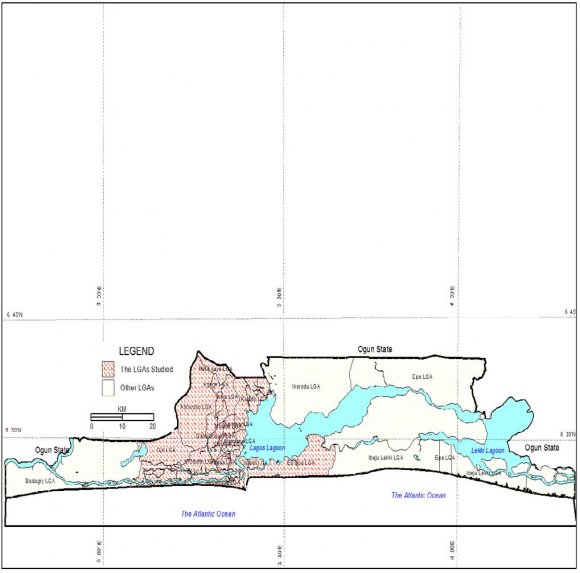
El Fasher, Darfur region, Sudan, 24 August 2005 -Torrential rains have caused severe flooding in this city of 400,000 people and in nearby Abu Shook, a camp for people forced to flee their homes as a result of the ongoing Darfur conflict (Figures 2-3). The floods have destroyed hundreds of homes and have made El Fasher's water supply largely unsafe (WHO, 2006).
UNICEF is mounting a concerted effort to restore basic services to those affected by the flood, and to prevent the outbreak of disease. Since the flood, UNICEF has assisted with the following:
? Reinstalling pipes in Abu Shook and restoring the water supply by linking boreholes with pumps.
? Testing the water quality each day. No bacterial contamination has been found.
? Rebuilding 156 latrines and 88 bath stations.
? Renting five tankers to deliver more water.
? Repairing damaged schools and child-friendly spaces.
? Providing daily door-to-door hygiene-promotion trainings.
? Distributing jerry cans, soap, tarps, and mosquito nets. Year 2013 B Sustainable Water Resources Management, Future Demands and Adaptation Strategies in Sudan also easier and more transparent. The communities should be fully utilised in any attempts to promote the local management of water supply and sanitation systems. There is little notion of 'service, invoice and move on'. As a result, there are major problems looming with sustainability of completed projects. A charge in water and sanitation sector approach from supply-driven approach to demand-responsive approach calls for full community participation. The community should be defined in terms of their primary role as user/clients. Private-sector services are necessary because there are gaps, which exist as a result of the government not being able to provide water services due to limited financial resources and increase in population. The factors affecting the eco-environmental changes are complex, interrelated, and interactive. The deterioration problems of water and sanitation have attracted some attention in recent years. There is an urgent need to study possible rehabilitation measures to ensure a sustainable and excellent water quality and improved sanitation. Water resources plans are developed to guide future decisions and are to be developed for each river basin and state, as well as for the country. The overall objective is to coordinate efforts and establish guidelines and priorities for water allocation and water pricing. The priorities established for water allocation would be used in critical drought conditions. The water quality classification of water bodies by different classes of use is the basis for truly integrating the quality and quality of water management. Water pricing is the single most controversial instrument of the law. The pricing system recognises the economic value of water, as stated in the principles of the policy, but is also the most difficult step to implement. It is expected that the pace of implementation will increase and the quality of work will improve in addition to building the capacity of the private and district staff in contracting procedures. The financial accountability is also easier and more transparent. The communities should be fully utilised in any attempts to promote the local management of water supply and sanitation systems. A charge in water and sanitation sector approach from supply-driven approach to demand-responsive approach calls for full community participation. The community should be defined in terms of their primary role as user/clients. Private-sector services are necessary because there are gaps, which exist as a result of the government not being able to provide water services due to limited financial resources and increase in population. There is little notion of 'service, invoice and move on'. As a result, there are major problems looming with sustainability of completed projects. The factors affecting the eco-environmental changes are complex. There are interrelated and interact. The deterioration problems of water and sanitation have attracted some attention in recent years. There is an urgent need to study possible rehabilitation measures to ensure a sustainable and excellent water quality and improved sanitation.

| of water systems, but attempts are being sought to |
| Year 2013 |
| 2 14 |
| Volume XIII Issue IIW I Version I |
| D D D D ) |
| B |
| ( |
| Global Journal of Human Social Science |
| (a) Land use (millions of ha) | |||||||
| Geographical area (total Sudan area) | 250.6 | ||||||
| Land area | 237.6 | ||||||
| Cultivable area | 8.4 | ||||||
| Pastures | 29.9 | ||||||
| Forests and woodland | 108.3 | ||||||
| Uncultivable land | 81.0 | ||||||
| Area under crop (irrigated, rain-fed, mechanised, and rain-fed traditional) | 10.0 | ||||||
| (b) Land-resource zones | |||||||
| Zone | Area as % to total area of Sudan | Persons per km 2 | Mean average rainfall range (mm) | ||||
| Desert | 44 | 2 | 0-200 | ||||
| QOS sands (dune) | 10 | 11 | 200-800 | ||||
| Central clay plains | 14 | 19 | 200-800 | ||||
| Southern clay plains | 12 | 8 | 800-900 | ||||
| Ironstone plateau | 12 | 7 | 800-1400 | ||||
| Hill area and others | 8 | 16 | Variable | ||||
| (c) Water Resources | |||||||
| Water resource | Available number | Static water level (m) | Number | ||||
| Haffirs | 824 | 0-0 | 824 | ||||
| Slow sand filters | 128 | 0-0 | 128 | ||||
| Open shallow wells | 3000 | 0-10 | 3000 | ||||
| Boreholes | 2259 | 0-25 | 1248 | ||||
| deep wells | 26-50 | 478 | |||||
| 51-75 | 287 | ||||||
| 76-100 | 246 | ||||||
| (d) Geological Formations | |||||||
| Basins | Amount of water recharged (10 6 m 3 ) | Water level below land (m) | Aquifer thickness (m) | Velocity (m/year) | Abstraction (10 6 m 3 /year) | ||
| Sahara Nile | 136 | 30-100 | 300-500 | 1-2.5 | 7.3 | ||
| Sahara Nubian | 20.6 | 10-50 | 300-500 | 0.8-1.5 | 1.5 | ||
| Central Darfur | 47.6 | 25-100 | 250-550 | 0.3-6.0 | 5.5 | ||
| Nuhui | 15.4 | 75-120 | 200-400 | 1.0-2.75 | 1.6 | ||
| Sag El Na'am | 13.5 | 50-1000 | 300-500 | 1.0-25.0 | 2.5 | ||
| River Atbara | 150 | 100-150 | 250-300 | 0.3-5.0 | 2.3 | ||
| Sudd | 341 | 10-25 | 200-400 | 0.1-1.8 | 1.8 | ||
| Western Kordofan | 15 | 50-70 | 300-500 | 0.1-0.3 | 1.7 | ||
| Baggara | 155 | 10-75 | 300-500 | 0.1-2.4 | 11.9 | ||
| Blue Nile | 70.9 | 10-50 | 250-500 | 0.1-2.5 | 10.2 | ||
| The Alluvial | N.A | Shallow | N.A | N.A | N.A | ||
| Gedaref | 41.7 | 50-75 | 200-500 | 0.1-2.0 | 1.2 | ||
| Shagara | 1.1 | 25-30 | 200-300 | 0.1-2.5 | 0.7 | ||
| Technological criteria | Water and environment criteria | Social and economic criteria |
| Primary water saving in regional scale | Sustainability according to greenhouse gas | Labour impact |
| pollutant emissions | ||
| Technical maturity, and reliability | Sustainable according to other pollutant | Market maturity |
| emissions | ||
| Consistence of installation and | Land requirement | Compatibility with political, |
| maintenance requirements with local | legislative and administrative | |
| technical known-how | situation | |
| Continuity and predictability of | Sustainability according to other | Cost of saved primary water |
| performance | environmental impacts | |
| Cleaner, leaner production processes-pursuing | ||
| improvements and savings in waste minimisation, | ||
| energy and water consumption, transport and | ||
| distribution, as well as reduced emissions are needed. | ||
| Tables (2-4) indicate water conservation, sustainable | ||
| development and environment. | ||
| D D D D ) B | ||||||
| ( | ||||||
| Criteria | Intra-system impacts | Extra-system impacts | ||||
| Stakeholder satisfaction | Standard expectations met | Covered by attending to extra-system resource | ||||
| Relative importance of standard | base and ecosystem impacts | |||||
| expectations | ||||||
| Resource base impacts | Change in intra-system resource | Resource flow into/out of facility system | ||||
| bases | Unit impact exerted by flow on source/sink | |||||
| Significance of change | system Significance of unit impact | |||||
| Ecosystem impacts | Change in intra-system ecosystems | Resource flows into/out of facility system | ||||
| Significance of change | Unit impact exerted by how on source/sink | |||||
| system Significance of unit impact | ||||||
| Growing | concerns | about | social | and | pressure to balance living standards (including per | |
| environmental sustainability have led to increased | capital energy consumption). | |||||
| interest in planning for the energy utility sector because | ||||||
| of its large resource requirements and production of | ||||||
| emissions. A number of conflicting trends combine to | ||||||
| make the energy sector a major concern, even though a | ||||||
| clear definition of how to measure progress toward | ||||||
| sustainability is lacking. These trends include imminent | ||||||
| competition in the electricity industry, global climate | ||||||
| change, expected long-term growth in population and | ||||||
| Economic system | Social system | Environmental system |
| Durability | Preservation of cultural | Preservation of resources |
| values | ||
| Meeting changing needs of | Meeting changing needs | Reuse, recycling and preservation |
| economic development | of individuals and society | of resources |
| Energy conservation and | Savings directed to meet | Preservation of resources, reduction |
| saving | other social needs | of pollution and global warming |
| Economy-wide decoupling indicators |
| 1. Greenhouse gas emissions |
| 2. Air pollution |
| 3. Water pollution (river water quality) |
| 4. Commercial and industrial waste arisings and household waste not cycled |
| Resource use indicators |
| 1. Material use |
| 2. Water abstraction |
| 3. Homes built on land not previously developed, and number of households |
| Decoupling indicators for specific sectors |
| 1. Emissions from electricity generation |
| 2. Motor vehicle kilometres and related emissions |
| 3. |
| Year 2013 | VII. | ||
| 2 20 | |||
| Volume XIII Issue IIW I Version I | |||
| D D D D ) | |||
| ( | |||
| Global Journal of Human Social Science | Sustainable production polices -primarily targeted at producers | Structural change and innovation polices -designed to change the market conditions | Sustainable consumption policies -primarily targeted at consumers |
| Using of resources | Sources | Institutions | Pricing Principle | Price Details |
| Urban | Surface and | National Water | Full cost recovery | Progressive rate with |
| groundwater | Corporation (NWC) | increasing uses. Rates | ||
| lower in the north | ||||
| Major rural | Mostly | Rural Water | Stand pipe free, recovery | Progressive rates but |
| villages | groundwater | Corporation (RWC) | of recurrent costs, | less comparative to |
| charges for yard and | urban cities | |||
| house connections | ||||
| Rural villages | Groundwater | District Councils | As above | Not available |
| Livestock | Surface and | Rural Water | All investments and | Regressive, no charges |
| groundwater | Corporation (RWC) | recurrent costs | on relatively small use | |
| Mines | Surface and | National Water | Full cost recovery | Progressive rates |
| groundwater | Corporation (NWC) | |||
| Wildlife | Mostly surface | Rural Water | ||
| Corporation (RWC) |
| Materials | (%) |
| Paper, and wood | 50.0 |
| Ferrous residues | 12.5 |
| Glasses | 11.0 |
| Organic wastes | 10.0 |
| Plastics | 5.0 |
| Non-ferrous residues | 1.5 |
| Other | 10.0 |
| VIII. |
| Sustainable Water Resources Management, Future Demands and Adaptation Strategies in Sudan | |
| Year 2013 | |
| 2 22 | |
| Volume XIII Issue IIW I Version I | |
| D D D D ) | |
| B | |
| ( | |
| Global Journal of Human Social Science | |
| Region | Water resource issues |
| South | 1. Abundant water resources |
| 2. Localised scarcity of water and untapped water supplies | |
| 3. High hydropower potential | |
| 4. Water conflicts arising from immigration of Bagara Arabs (nomadic) from north to south | |
| 5. Water-borne diseases | |
| High capacity (plans, |
| etc., in places) |
| Medium capacity |
| (evidence of activity |
| on-going) |
| Low capacity (no |
| formalisation in place |
| nor apparently |
| evolving) |
| River basin | Nile basin |
| Basin states or | Burundi, Democratic Republic of |
| territories | Congo, Egypt, Eritrea, Ethiopia, |
| Kenya, Rwanda, Sudan, Tanzania, | |
| Uganda | |
| Cooperative | Nine of the countries of basin are |
| frameworks in | pursuing the development of a |
| place | cooperative framework |
| Major languages | More than 6 official languages and |
| spoken | numerous unofficial languages |
| Major water issue | Rapid population growth, |
| facing the basin | environmental degradation, under |
| development | |
| External funding of | Extensive external funding of |
| Country | Egypt | Sudan |
| Per capita annual water | 34 | 1187 |
| resources 2000 (m 3 ) | ||
| Per capita annual withdrawal | 921 | 666 |
| (m 3 ) | ||
| Per capita annual withdrawal for | 86 | 94 |
| agriculture (m 3 ) | ||
| XI. |