1. Introduction
n the vision of directing the development of man (UN, 1987) established the scope of Sustainable Development 1 Local Sustainable Development is based on the concept of endogenous local development that grants a predominant role to companies, organizations, local alternative to economic development, its foundation being the sustainability that has as a premise ¨satisfying the needs of the present without compromising the capacity of future generations¨, guaranteeing the balance between economic growth, the environment and social well-being. Likewise, the Sustainable Development Goals (UN, 2015) have been established, which prioritize and lead to the consideration of new actions to confront poverty, protect the planet and improve the lives and prospects of people in the world. Currently as an alternative to develop economic activities oriented to the SDGs. institutions and civil society itself, identifying the economic dimension that allows local entrepreneurs to improve competitiveness, the social dimension and the institutional dimension and the basic values of the development process. (Stöhr, 1985). The vision of local economic development in addition to economic development in general, are added the fields of analysis of natural capital, social capital, importance of institutional strengthening, promotion of the participation of local communities, human capital, by improving access to education, nutrition and health, the role of women, the innovation needs of each territorial productive system in context, competitiveness, economic globalization and the assessment of environmental sustainability (ECLAC, 2011).
2. II.
3. Sustainability Model
The Local Sustainability Model (LSM) is conceptualized within strategic planning (Ander, 1995) with the purpose of highlighting the importance of current policies and interaction of social actors. This is how the LSM is characterized by being dynamic, highlighting in the methodology the contribution of the opinion of experts, who have a scale of values of what is convenient and not convenient in the objective of finding Economic, Environmental, Social and Governance Sustainability 2 The conceptualization of the LSM is established through the relationship of variables between the definition of Local Sustainable Development (LSD) and necessary for develop the model. The beginning of the evaluation of the problem is established with the baseline which includes the regulations and specifies the normative planning. The Sustainability Model is articulated at the strategic level with what it can be and at the operational level with the desire to make a flexible scheme. Thus, in a first stage, the selection of indicators is determined from a cause/ effect model or an analytical approach (Glave et al., 1995) and then they are subjected to the logic in the construction of the model, evaluating the indicators. In a second stage, the indices for each proposed model are dimensioned and interact.
4. Sustainability Indicators
The Local Institutional Sustainability = S L I From the relationship established in (i) for Local Sustainability and the Sustainability of the proposed local activity, we have:
[S i L ] =µ [S ij AX ]. [S i L ] (i) [S i L ] =µ´ [I ij AX ]. [S i L ] [S i L ] =µ´´ [I ij AX ] / ?I ij ?. [S i L ]Being: ?Iij? the largest scalar value for Iij, with i = j and The Normalized Sustainability Matrix is constructed from the division of the largest scalar value for ?Iij? where Iij, with i = j, thus characterizing that the trace will take the Optimal value of 4 which represents the ideal Indicator Sustainability for LSM.
IV.
5. Materials and Methods
The research was based on the praxis developed of the construction of an LSM for artisanal gold mining activities in southern Peru (Gonzales, 2019), and is based on the use of the Canvas and Dolphi Methods, for the determination of objectives and goals, expert opinion and Dynamic Programming techniques for logical sequence and statistical analysis withthe Friedman statistician with p value that allows to identify the sustainability indicators and indices and their dimension to the activity and availability of the resource to later build the Description Sheets of Sustainability Indicators associated with their dimensionality and then submit them to the analysis of the Sustainable Harmonic Movement (SHM) in order to evaluate the optimal MSL of Indicators.
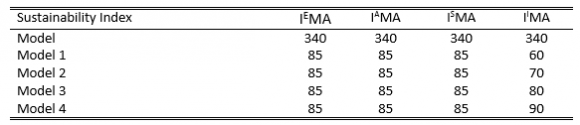
6. Table Nº1: Models and Index
7. Analysis and Discussion of Results
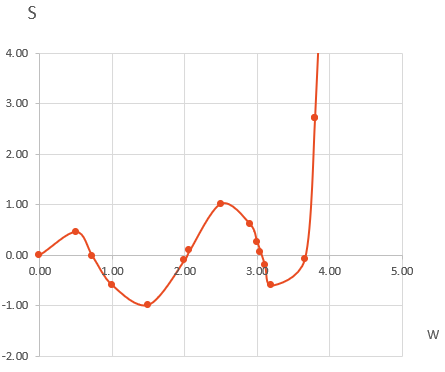
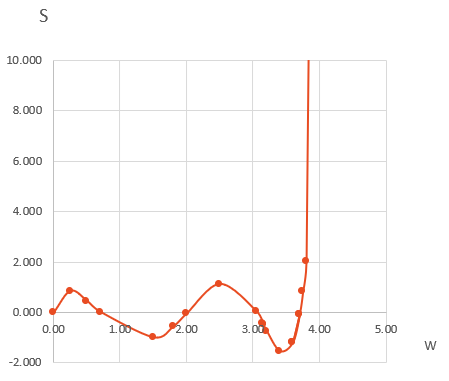
Based on the results of the AGMA research supported by the operational dimensionality of the activity of 340 participants, the SHM analysis was carried out based on the AHM 3 Nº1 and Nº2.
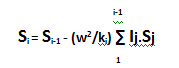
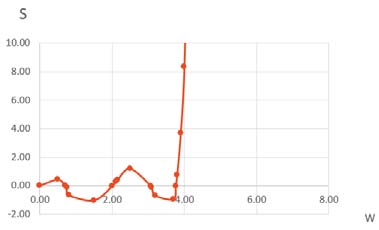
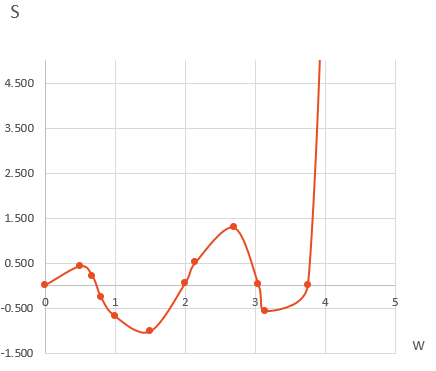
Using the Adapted Holzer Method (AHM) 4 the natural frequencies of sustainability were determined under the condition initial unit S value, and iterated through the following relationship: From the graphs, the natural frequencies of sustainability are determined and are presented in Table Nº3. Likewise, the tabulation of Sustainability Frequencies complies with the Variation and Trend Tests of Natural Sustainability Frequencies. See Table Nº4 and Figure Nº5.



| LSD = SLD A1 + SLD A2 + SLD A3 + ??+SLD An | |||||
| LSD ? SLD AX | |||||
| SL= B(S AX ) | |||||
| Involving the advance of other economic | |||||
| activities in the local geographical area, with which in | |||||
| this context Local Sustainability is measured in function | |||||
| to Activity Sustainnability by the following recursive | |||||
| equation: | |||||
| Where: | |||||
| B: Between 0 and 1 | |||||
| B = 1 greater predominance of activity X | |||||
| Having, | |||||
| S L = f (S L E , S L S , S L A, S L I ) | |||||
| S AX = f (S AX | E , S AX | S , S AX | A, S AX | I ) | |
| In unambiguous correspondence there is: | |||||
| S AX = f (S AX | E , S AX | S , S AX | A , S AX | I ) | |
| The following relationship is established in a matrix: | |||||
| [S i L ] =µ [S ij AX ]. [S i L ] | (i) | ||||
| For i=j i=1,2,3,4 | |||||
| Where: | |||||
| [S ij AX ]: Sustainability Matrix | |||||
| III. | |||||
| V. |
| 90 |
| Volume XXI Issue IV Version I |
| ) |
| ( |