1. I. Introduction
ublic policy goal should be ageing with dignity. It implies that a person should be ageing-in-place, staying at home to the maximum number of years as possible, and have access to a bundle of services, especially affordable and accessible health care.
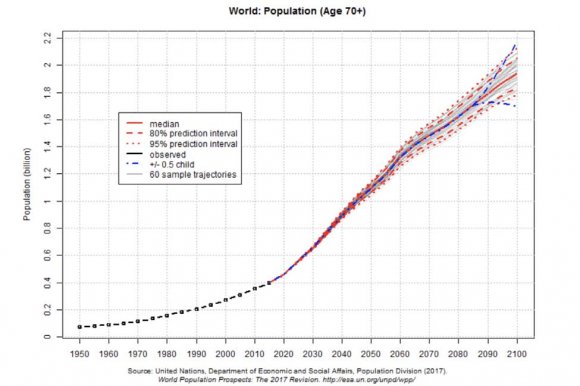
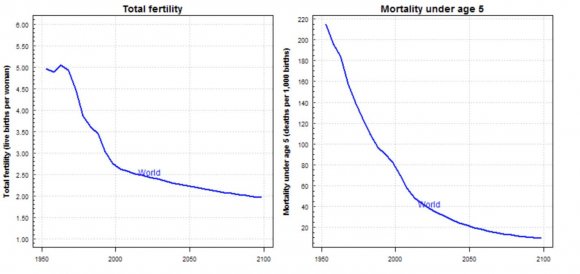
According to UN projections, the number of persons over-60 years of age will increase from 205 million in 1950 to 2.1 billion by 2050.
"Given the deficiencies of storing current production, the only way forward is through claims on future production. What matters, therefore, is the level of output after I have retired. The point is central: pensioners are not interested in money (i.e. colored bits of paper with portraits of national heroes on them) but in consumption -food, heating, medical services, seats at concerts, etc. Money is irrelevant unless the production is there for pensioners to buy."
So the focus should be on household welfare and accessible bundle of services to the elderly. Each society should decide on what is the bundle of services needed in its current context, and be prepared to change as demographic conditions and expectations change.
The aim is to enable purchases of bundle of goods, services and assets on a life-cycle basis ? Yet retirement or withdrawal age from provident funds in many countries have remained below 60 years.
? Four examples of challenges in financing ageing:
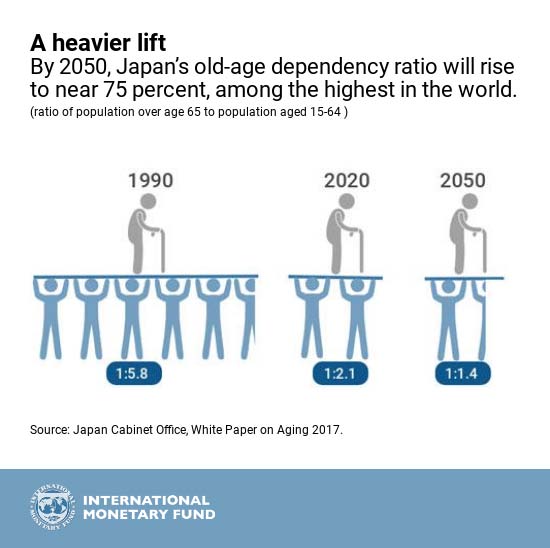
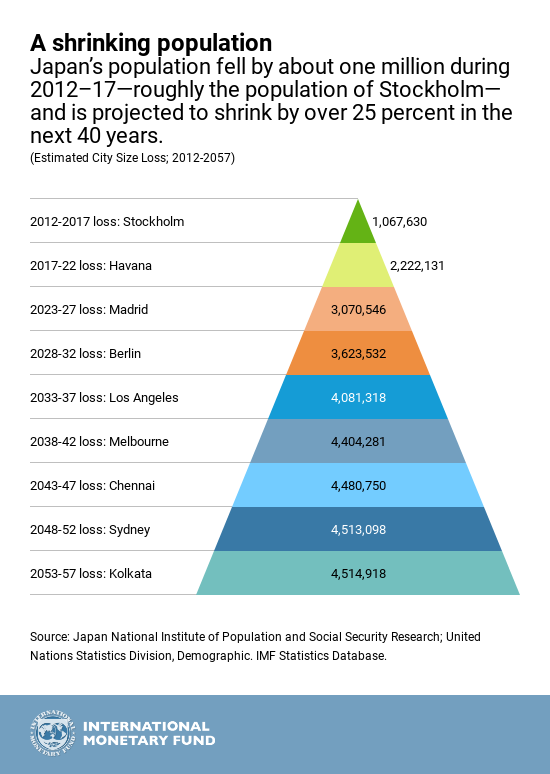
The first example is Japan.
? The second example is Brazil in which pensions expenditure use up more than half of the federal budget and are growing at a rate four percentage points above inflation. ? This reflects the non-conducive political economy in pension arrangements. ? The third example concerns Taiwan where the ruling party, in response to official reports warning that an unreformed civil service and military pension systems could be bankrupt by 2020, has legislated significant cuts in their pension benefits to be implemented gradually over a decade. ii. Increasing longevity and reduced fertility rates; iii. Volatility in financial markets and prolonged low interest rate regimes; iv. Changing labour markets with a growing role for disruptive technologies; v. The increasing importance of the digital market place.
? The following findings of the study are particularly relevant: i. Nearly half of the people surveyed globally think that current retirement arrangements will make them worse of in terms of retirement income security. ii. Declining physical health is the most often cited retirement concern globally. Only a fifth of those surveyed confident of health care in retirement. Many stop working before retirement due to own or family member's ill health. So healthcare should be an integral part of financial preparedness for old age. iii. Only a quarter of those interviewed think they will achieve mean expected proportion of current earnings of 68% in retirement. Various avenues making up this 68 percent depends on many factors, including country's pension system.
? However, the recommendations for a New Global Retirement Model suggested by the AEGON study are relatively modest.
2. Main Characteristics of Asian Pension Systems/1
? There are large variations in the robustness of Asian pension systems. Nevertheless, the following broad characteristics apply to them as a whole. 1. There has been less than adequate policy focus in Asia on financing arrangements; on developing professional provident and pension fund organizations, with appropriate governance and regulatory structures. These have resulted in high administrative and investment management costs; mis-selling of financial products; and less-thanadequate systems of coping with financial frauds which are increasingly directed at the elderly. 2. The above has resulted in lower coverage of the population with access to pensions (and to healthcare); lower number of risks being addressed, and when addressed, limited benefits are provided. This means that trade-offs between the adequacy of benefits, coverage of the population, and the extent of risks that are covered must be made for any given level of resource allocation to healthcare and to pensions.
3. Main Characteristics of Asian Pension Systems/2
In most Asian economies, a large share of healthcare expenditure is financed out-of-pocket, with limited risk pooling, though there is some progress towards social risk pooling, particularly in India and Indonesia. Thus, the focus should be on ensuring adequacy across all three dimensions, focusing only on the number of beneficiaries or statutory coverage is not very useful. 1. The main risks in retirement financing are:
? Inflation risk -the risk that the real values of retirement income decreases with the inflation rate relevant for the consumption basket of the elderly); ? Longevity risk -risk that retirement income may be inadequate in view of longer-than-anticipated life spans; ? Survivors' risk -risk that survivors, particularly women and children, may not be adequately provided for.
In managing these risks, sufficient social risk pooling arrangements are essential as society, rather than individuals, are better able to bear them. In many Asian countries, this aspect is inadequately recognized by policymakers.
Societies as well as households need to rely on multiple sources from which financing for retirement is derived.
4. Main Characteristics of Asian Pension Systems/3
1. The financial and capital market development has been relatively limited. This has restricted investment options by provident and pension fund organizations, and by individuals. This increases investment risk both when retirement savings and social security contributions are made during working years; and during retirement periods when macroeconomic risk and annuities market risk need to be managed. 2. There is insufficient appreciation of the need to establish a strong data collection and analytical capabilities relating to pension arrangements, and to retirement behaviour. Regarding these data as a public good to be made available to various stakeholders should be accorded due priority. Such a practice would also enhance trust in the statistical systems and in provident and pension fund organizations. These are essential to undertake needed reforms with public support. 3. There is a strong case for establishing retirement behavior and pension research centers in most Asian countries, such as the Social Wellbeing Research Centre (SWRC) at Universiti Malaya. Such centres could address the issue of pension and healthcare policies being based on insufficient empirical evidence and policy research. 4. In many Asian countries, the political economy is not conducive to long-term and sustainable pension, retirement and healthcare policies. As a result, organizational, institutional, and regulatory arrangements which are conducive to long-term savings by households with confidence are relatively weak.
5. There is relatively less emphasis in promoting financial literacy among pension and provident fund trustees and staff, among policymakers, among households, and other stakeholders. 6. Asia has a large number of cross-border workers.
They have very limited access to retirement income and healthcare benefits. Even when access is available, the costs are often prohibitive.
5. Select Issues in Financial Preparedness/1
Financial Literacy ? The importance of basic financial literacy has been recognized in helping to make appropriate choices for retirement income security. A Assuming real wage growth of 2.1 percent and a real annual return on investments of 4 percent. With a larger difference between the rate of return and the wage growth rate, the charge ratio with annual management fees is slightly larger, and conversely.
Select Issues in Financial Preparedness/2 ? It is not just the administrative costs that matter, but also cost of complying with the regulations, including receiving benefits without undue hassle costs and side payments. ? Compliance costs estimates are a relatively neglected area of research as well as of governance focus in Asia. ? Lowering compliance costs could improve adequacy for same level of monetary benefits; as well as improve fairness and organizational effectiveness.
6. III. Concluding Remarks
? The progress towards greater financial preparedness for old age will require all concerned pensioned related organizations, be it regulators, asset managers, service providers, as well as individuals and households to implement or to address the PHUI: -Purpose of the organization -shifting from process to outcome orientation; -Habits of stakeholders, including of officials of provident and pension fund organizations, as well as their trustees; and of individuals who will need to exhibit greater financial literacy. -Using emerging technologies more competently and purposefully for record-keeping, lowering of administrative and compliance costs, and lowering investment management costs. -Incentive structures for the organization, the officials, and the members to behave in a manner consistent with financial preparedness, and to enhance transparency and accountability.

| ? These examples suggests that high middle income | ||
| (Brazil), and high income countries such as Japan | ||
| and Korea are required to m tough decisions to | ||
| address the pension challenges of an ageing | ||
| society. | ||
| ? The middle income countries could study these | ||
| examples and draw context-specific lessons from | ||
| them. | ||
| II. Demographic Trends and Their | ||
| Implications | ||
| Demographic trends pertain to all the persons | ||
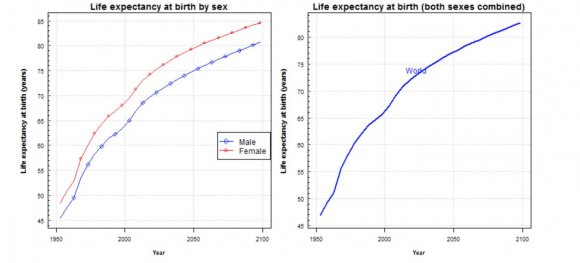
| Volume XIX Issue IV Version I 62 Year 2019 | cantered https://asia.nikkei.com/Spotlight/Asia-Insight/No-on poverty of the elderly. country-for-old-Koreans-Moon-faces-senior-poverty utm_medium=daily%20newsletter%20free&utm_so link Source: World Population Prospects, 2017 Revision. Accessed on 16 December 2018 Corporations and Companies Government (Roy, 2018) urce=NAR%20Newsletter&utm_content=article%20 Households Individuals crisis?utm_campaign=RN%20Free%20newsletter& in the world, and to their characteristics as consumers, workers, savers, and investors. It affects income statements, and balance sheets in the world for: | |
| E ) | ||
| ( | ||
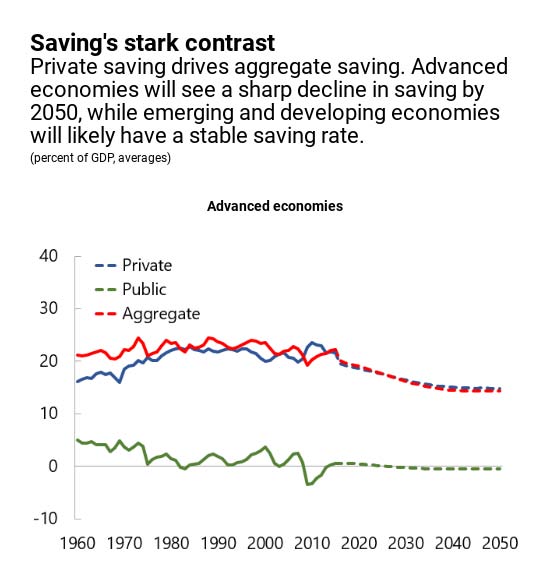
| Global Journal of Human Social Science - | Source: World Population Prospects, 2017 Revision. Accessed on 16 December 2018 ? Globally, proportion of retirement income derived: a) For Savings ? 46% from Government -suggests importance of sustainable public finances; ? 24 % from employer -suggests need for attractive retirement in the 21st century. https://www.aegon. com/contentassets/6724d008b6e14fa1a4cedb41811f 748a/retirement-readiness-survey-2018.pdf ? How much individuals or households need to save through employer or by themselves depends on the | |
| business climate, and flexible labour market | country's pension system. (David Amaglobeli, Era | |
| arrangements with reasonable growth in real wages; | Dabla-Norris, and Vitor Gaspar, 2019). | |
| ? 30 % Own saving and investments -suggests the | ||
| importance of sound long term saving policy and | ||
| regulatory environment, and well-developed capital | ||
| markets | ||
| © 2019 Global Journals | ||
| Financial Preparedness for Old Age | ||||||||||||||||
| Demographic Indicators, Select Countries | ||||||||||||||||
| Total Fertility Rates (TFR) | Sex Ratio (SR) | |||||||||||||||
| 2015 | 2025-30 | 2045-50 | 2015 | 2030 | 2050 | |||||||||||
| World | 2.47 | 2.39 | 2.24 | 101.8 | 101.6 | 101.0 | ||||||||||
| China | 1.63 | 1.69 | 1.75 | 106.3 | 106.1 | 106.0 | ||||||||||
| Japan | 1.48 | Demographic Indicators, Select Countries 1.58 1.70 95.5 | 94.8 | 94.8 | ||||||||||||
| Republic of Korea | Population (mn) 1.32 | 1.46 | Population> 65 (mn) 1.63 | 100.2 | Population> 80 (mn) 99.5 97.4 | |||||||||||
| World India Indonesia | 2018 7632.8 | 2030 8551.2 2.3 2.32 | 2050 9771.8 | 2018 680.9 2.10 2.12 | 2030 996.9 1.86 1.90 | 2050 1546.1 107.6 101.5 | 2018 141.8 | 106.8 100.3 | 2030 201.9 | 2050 424.7 104.7 98.3 | Year 2019 | |||||
| 64 | China Japan Malaysia | 1415.0 127.2 | 1441.2 121.6 2.01 | 1364.5 108.8 | 158.4 34.9 1.86 | 245.9 36.8 1.74 | 358.9 39.6 106.9 | 26.7 10.6 | 104.7 | 40.8 15.2 | 111.0 16.3 102.6 | 65 | ||||
| Volume XIX Issue IV Version I E ) | Republic of Korea India Indonesia Malaysia Philippines Singapore Thailand Viet Nam Philippines 1354.1 51.2 266.8 32.0 106.5 5.8 69.2 96.5 Singapore Thailand Viet Nam | 52.7 1513.0 295.6 36.8 125.4 6.3 69.6 106.3 2.88 1.26 1.46 1.95 | 50.5 1659.0 321.6 41.7 151.3 6.6 65.4 114.6 | 7.4 83.6 14.5 2.1 5.2 0.8 8.2 7.2 2.60 1.30 1.43 1.92 | 12.6 128.0 24.4 3.6 8.4 1.5 13.5 13.2 2.21 1.37 1.59 1.90 Source: World Population Prospects, 2017 Revision 17.8 1.7 3.0 7.2 222.7 13.2 19.6 43.0 24.4 2.0 2.7 7.4 6.8 0.3 0.6 1.6 14.9 0.7 1.1 2.7 2.2 0.2 0.3 0.9 19.0 1.7 2.7 6.6 24.7 2.0 2.4 7.5 101.5 100.1 98.2 97.6 97.6 96.7 95.4 93.8 93.1 97.9 97.7 96.8 | Volume XIX Issue IV Version I E ) | ||||||||||
| ( | Philippines World China Japan Republic of Korea India Indonesia Malaysia | ? Universal access to robust retirement savings system; ? Greater financial literacy; ? Affordable healthcare; ? The recommendations do not suggest what transitory steps and capacities will be needed to progress towards implementing 0.7 0.9 1.8 their Demographic Indicators, Select Countries 6.7 9.8 Share of aged 65+ in total population (%) 4.9 Share of aged 80+ in total population (%) 2018 2030 2050 2018 2030 2050 8.9 11.7 15.8 1.9 2.4 4.3 11.2 17.1 26.3 1.9 2.8 8.1 27.5 30.3 36.4 8.4 12.5 15.0 14.4 23.9 35.3 3.2 5.6 14.3 6.2 8.5 13.4 1.0 1.3 2.6 5.5 8.3 13.8 0.7 0.9 2.3 6.5 9.7 16.3 1.0 1.6 3.7 | ( Global Journal of Human Social Science - | |||||||||||||
| Singapore | 13.6 | 23.2 | 33.6 | recommendations. 2.7 | 5.2 | 13.3 | ||||||||||
| Thailand | 11.8 | 19.4 | 29.0 | 2.5 | 3.9 | 10.2 | ||||||||||
| Viet Nam | 7.4 | 12.4 | 21.5 | 2.1 | 2.2 | 6.5 | ||||||||||
| © 2019 Global Journals | ||||||||||||||||