1. Introduction
mong the various types of tourism in Ghana, cultural tourism is the largest in the tourism industry. Festivals of all kinds, an offshoot of cultural tourism are celebrated within the ethnic communities. If "sustainable" means to acquire plenteous in the present generation that would give room for plenteous for the future without compromising them, then the Amu (brown rice) Festival, the festival of the people of Ava time Traditional State stand to bean area which would be harnessed to shed off its old look in order to serve as a sustainable means of development in Ghana. The Amu festival, fully supported by stakeholders, would stand as amajor driving force behind economic advancement in Ghana. It would foster job creation, stimulateeconomic diversification and boost foreign exchange earnings (IPU, 1999). What is Amu? How is it celebrated, what is its relevance to cultural tourism and sustainable development?
The paper examines the role of Amu festival as a mechanism for sustainable development in Ghana.
2. II.
3. Methods of Research
The method of this study dwells on descriptive survey and written documents. Ali (1996) posits descriptive survey as events as they are without manipulation of what is being observed. The study (Personal observation & participation alongside random in-depth interviews with visitors and residents alike) was carried out at Vane the traditional capital of the Ava time Area in Ho West District, Volta Region. This community is noted for hosting the festival in the Ava time traditional State. Sequel to this, data was sourced from key/official personalities in the community including the Ok usie (chief) of Vane, the chief fetish priest and the senior linguist of the traditional area purposively. Data were collected based on the research questions administered orally. Data collected were in the siya & Ewe language through tape recorder which were carefully, translate din to English language. Relevant scenes during the festivity were captured digitally.
4. III.
5. Result and Discussion
Results of the findings are in a descriptive format below: a) Amu festival: History and Concept According to ethnographical sources Amu festival (Amu fest) is celebrated in lieu of the agricultural activities forming the major economic activity of the Ava time Traditional Area with Amu (brown rice) cultivated as a staple. The people migrated centuries ago from ancient Ahanta a locality in present day Western Region of Ghana to Oxulosu a site in present day Ava time, the last stoppage and initial settlement of the "Kedorne" as a group. It is believed that it is from this site that the cultivation of Amu (brown rice)the only crop seed carried and preserved in containers called 'cupim' or 'lugo' from ancient Ahanta begun. It is the peculiarity of this Amu (brown rice) to Ava time that gave rise to its Festival. The crop serves is a staple one and portrays their true that they spread out in the area first as families which have grown into seven communities each with a different name: Amedzofe, Gbadzeme, Vane, Dzogbefeme, Biakpa, Fume and Dzokpe. The festival aims at fortifying the kinship /ancestral links between them. Itemphasizes the commonality of the rice culture as a heritage and identity. The festival is mainly associated with farming / rice farming with farmersas the major celebrants. They are the brain behind sustenance of the rice cultivation culture since it is celebrated to mark the harvesting of the staple. Not only farmers celebrate, artisans, traders and scholars also celebrate. It is jointly celebrated every year through the week leading to, and on the first weekend in the month of November by the seven communities with the aim to collectively take stock, development-wise. In the contemporary time, the quest for tourism boom has enhanced renowned festivals such as the Fetu Afakye of Cape Coast and Homowocultural festivals to modify to international standard. Amu Festival (Amufest) is another rich common heritage and agricultural festival that has international quality which needs to beretouched by stakeholders due to tourism activities. Amufest, instead of celebrating to appease the god of fertility (Ayamapor) for successful rice cultivation in the past, is now celebrated for sustainable development activities. The change is to incorporate people of all persuasions to suit with modernity. The world today is not static; hence 'Kedorne' cultural festival is also no longer static. "The fastest way to destroy tradition is to leave it unchanged" (Awedoba 2001:19) Before the planting season, the fetish priest's orbunetee must perform certain traditional rites and formally announce the beginning of the sowing season. The priest of Ayamapor andGadzo receive the signal from the priest from Dopome-Amedzofe who is regarded as the custodian of the land. He watches the movement of the stars and the moon and announces to the priests when the new moon appears in June or the middle of the year.
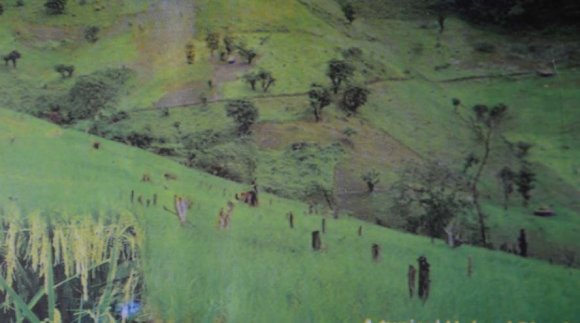
When the new moon is sighted, the priest pour libation with fresh palm wine at the shrines to announce the imposition of silence and ban drumming, felling of trees and shouting in the land for four weeks. When asked how residents react to their orders this is what the Ayamapor priest has to say: These days because of democracy and Christianity a few Pentecostal churches flout our order and we are rendered almost powerless. Figure 1 : A typical Rice (Amu) Field in Ava time At harvest time, similar customary rites are performed by the priest of Ayamapor and Gadzo. The chief priest of Ayamapor is the first to harvest some of the rice from his farm. After the performance of the rites, he hangs a bundle of some of the harvest at the entrance of his shrine. This rite is similarly performed in all royal stool houses called 'ligbolekukame'. The harvest season is climaxed with a rite performed in the Asafo shrine in Amedzofe followed by an Asafo dance traditionally performed at night. The dance is symbolic as it ushers in new grain and New Year of prosperity. Besides, it spiritually cleanses the community of all evil spirits. The Festival itself is a period of merrymaking and a way of uniting the people of the Ava time community through the festival. c) Amu Festival as a Mechanism for Sustainable Socio-Economic Development Tourists are curiosity seekers, looking for what to snap and take home. African heritages and similar cultural heritages are laudable and unquantifiable. African culture of the past is classified as heritage industry and is used in both tourism industry and in making available the medical, agricultural and technological experiences of past societies, some of which are relevant to the present (Renfrew and Bahn, 2000:542). The relevance of Amu cultural Festival is in its touristic opportunity as well as the enactment of some vital virtues in the field of socio-economic drifts, religious attributes, technological experiences and educational glide.
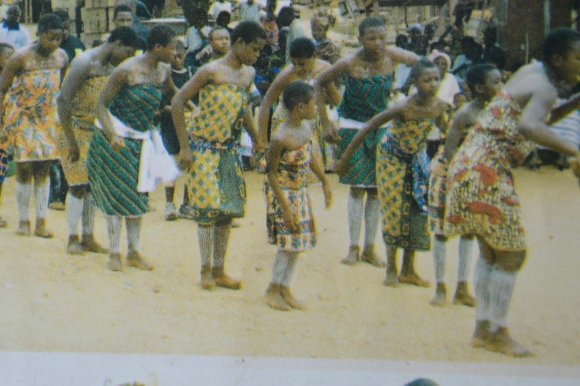
i. Touristic Opportunities Amu Festival of Ava time, with its laudable cultural content, has its footing with the aim of Agenda 21 Global Earth Summit Conference in Brazil. The Summit emphasizes the achievement of sustainable development and the continuity of improving the living standard. It requires and mandates nations to make a revolution into economic and social policies in order to tourism product which operates in harmony with the local environment, community, and cultures become the permanent beneficiary not the victim of tourism development (WTTC, WTO, EC 1995). Amu Festival is one of the tourism products in Ava time that standsas an option in sustainable development. It is a cultural festival that was inherited from Ava time ancestor's and projects with the dynamic outlook and performance in this present era. The packaging of the celebration has also changed to shade the fetish practices of the past. Figure 3 : A cultural display at the festival ii. Socio-Economic Drift Bakudie (2006) observes that the Amu Festival accords people a nice forum for interaction and peacefulco-existence The truth about Bakudie's observation is that the festivity happens to be the period that the sons and daughters of Ava time community returns en-mass from far and wide, as well as friends, inlaws and other dignitaries from various parts of the country and beyond. The visitors are welcomed because of the Ava time hospitality gesture. Festivals serve as a means of fostering love, brotherhood and hospitality among the various ethnic groups (Kofigah 2008). Hence the Amu Festival can be used as tourism imperative for development. What is needed is support of the Stakeholders. Economically, the Festival has helped to strengthen the wealth of the community and it's environ. The gate fees collected from the entrance of the arena of some fascinating events including the beauty pageant contest is profitable and local products in the form of crafts and arts works made by the indigenes of Ava time and neighboring towns are sold to tourists. The Amu Festival is a festival that can be seen as a vehicle for cooperation. People are encouraged by the micro-finance bank in the form of soft loans to produce attractive products for tourists.
iii.
6. Technological Experiences
Technology brings continuity of culture to endless situation. Traditional costumes and artifacts of the past have some economic lessons and advantages. The techniques of the past, especially in the case of Adewu (battle dress) had been modernized to serve as one of the decorative objects of the present time. Other artistic inclinations featuring masking during the Amu Festival depicts a highly organized and cooperative society. Music and dance from the beaten instruments are also highly technical which moves the environment in high density as well. Inspiring also at this time is the charged atmosphere created by the beating of drums and the corresponding ovations and movements generated from songs coupled with the firing of musketry (Bakudie2006). Tourists are seen in a frenetic mood through dances and chanting of songs and dramatic acrobatic displays. The Amu Festival portrays iv. Religious attributes This is part of yearly observations made by the writer during the festival; that is clash between Christi and enomination's and the traditionalists. Oral traditions revealed that a threat from Christian believers was revealed to boycott the Amu Festival. These days, the conflict was stopped by a colloquy on "Religion and Culture" made by Osie Adjatekpor VII (sitting paramount Chief) during his outdoing. After his colloquium, the insurgence was controlled and the festival features peacefully. But somehow the Pentecostal fraternities still subtly resist the featuring of the Amu Festival because according to them it is fetish.
v. Educational glide Amu fest lectures from eminent citizens and traditional rulers of the area are seen as a catalyst to cultural revival of the traditional state. A colloquium is held to brainstorm on culture and tourism. The festival attract tourists, dignitaries, students and people from far and near as a result of the colloquium. The 2014 edition of the festival attracted thousands of people to the community which has helped deepen unity and coexistence. The festival will also help researchers who wish to research Ava time culture, especially as it pertains to cultural systems and processes. It has also helped students in the tertiary educational institutions mostly studying humanities and culture to document Ava time culture and Anthropology. Here, oral tradition will serve as a methodological approach in gathering information (Okonkwo, 2007).
IV.
7. Conclusion an d Recommendation a) Conclusion
Amu fest has a bright future based on the active role of the citizenry in its celebration. The result above shows it has inspired awareness from all walks of life. It offers leisure and happiness and helps to relieve onlookers of the burden of the bustle and hustle of life. It has also act as an aspect of national integration and wealth creation through culture. In essence, it has helped to boost Ava time cultural heritage, thus acting as a viable vehicle for social mobilization and sustainable development.
8. b) Recommendation
It is suggested that the organization of the festival should be broadened beyond the Ava time Traditional Council to effectively include the Ho West District Assembly, the local business community, the Ghana Tourism Authority, development agencies, and civil society organizations lovers of culture to help promote it nationally and internationally and raise its standard. They should see the cases of China's Festival, Fetu Afakye Festival etc., so as to reap the benefits accruing from tourism. The current community park used for the celebration in Ava time should be renovated with recreational facilities, museum and cultural Coliseum. The transport system and lodging facilities should be erected and maintained in all Ava time Communities. These amenities would help to accommodate tourists during the weeklong festival. Tapping the rich local cultural heritages/products would aid in the promotion of a viable tour is mind us try in Ghana hence, Christendom should be educated on the values of the rich cultural heritage as well as civic roles towards our heritages. If our heritage is cherished then conservation and management becomes the watchword and so as to avoid cultural extinction.