1.
Abstract-This study investigated the factors militating against the implementation of computer education in secondary schools in Ondo State South West, Nigeria. The study investigated availability of computer resources in the schools, the budgetary and funding of computer education in schools, availability of trained manpower in teaching computer education in schools, the attitude of the school community towards the teaching and learning of computers in schools, adequacy of time for computer lessons on the timetable and Remedies to ensure computer education is fully implemented in schools. The descriptive survey design was used for the study. The population consisted of all the teachers and principals of the secondary schools in Ondo State. The sample consists of 500 teachers and 50 principals randomly selected from 50 secondary schools in Ondo States. A selfdesigned questionnaire tagged "Computer Education for Secondary Schools (CESS)" was used to collect the data for the study. Data collected for the study were analysed using frequency counts, percentage scores and bars. The study revealed that computerresources were lacking in schools. Moreover, the study revealed that budgetary and funding constraints militating against computer education in schools; there is lack of trained manpower in teaching computer education in schools; the school community show positive attitude towards the teaching and learning of computers in schools; there is no adequacy of time for the computer lessons on the timetable. However, despite the above constraints, the study also revealed some remedies that can be put in place to make sure computer education is fully implemented in schools: school authority shouldsource for funds and computers from well-wishers: Government to provide funding to schools for computer procurement; Invigorating the training of manpower to teach computers in schools; Teacher education institutions to incorporate computer education into their curriculum; Government to make it compulsory for schools to offer computer education; There should be regular in-service training for computer education.It was therefore recommended that government should increase the funding of the education sector. There should also be periodic training for teachers on computer skills acquisition.
2. Introduction
omputer education is of paramount importance to national development and it is on this premise that the Federal government of Nigeria sought to introduce computer studies in the education system from primary through to secondary schools. Education systems around the world face formidable challenges that are taxing conventional strategies. Fresh approaches are needed to address persistent problems of the past and provide students with an education appropriate to the needs of a modern, informationbased global economy. Now, after more than two decades of unfulfilled promises to revolutionize education, computer and communication technologies are finally able to offer opportunities to significantly improve teaching and learning. In any educational system, the level of available resources places a restriction on the degree to which any new subject can be introduced into the school curriculum, especially where only the most basic facilities have so far been provided. But ICT is of such importance to the future industrial and commercial health of a country that investment in the equipment, teacher education, and support services necessary for the effective delivery of an ICT-based curriculum should rank high in any set of government priorities. The curriculum proposed takes account of these resource issues and specifies minimum requirements for effective delivery in different circumstances (UNESCO, 2004). Reasonable computer studies are yet to start in Nigerian secondary schools, the computer-student ratio is small, funding by government has not been encouraging, computer education syllabus is unpopular among students and parents and thus hardly implemented, and teachers are inadequate to implement computer education (Jegede & Adelodun, 2003). Teachers in Nigerian secondary schools cannot implement computer education because majority of the teachers are not competent in basic computer operation and in the use of simple application software (Yusuf, 2005b).
Teachers require access to information and communication technology (ICT) infrastructure for a number of reasons. These include their need to live as citizens in a world undergoing rapid and major transformations as a result of increased use of ICT, their need to embed ICT use in their teaching and administrative duties and, increasingly, their need to use ICT in their professional studies (Burnip, 2006).
One of the millennium development goals of the Nigerian nation in the education industry is that schools must be Information and Communication Technology (ICT) compliant. In response to this goal, government procured and distributed computers to schools. Those computers are now stored in principals' offices unused in our schools nationwide. Mkpa (2007), has confirmed this in our secondary schools. In the wake of this, computer education and ICT compliance cannot be achieved.
According to a study by Bukaliya and Mubika (2011), the qualifications of the majority of the teachers are farfrom being satisfactory due to lack of exposure to college curriculum that does not cater for ICT training. Theteachers have poor practical skills in ICT usage since the majority of them could not even use the basic softwarein computers for the delivery of their lessons and indications are that the teachers lack the necessary skills andknowledge of computers in basic software usage. Studies byYa`acob et al ( 2005) and so and Swatman (2006) on teachers` readiness for ICT generally, suggest that there isstill a long way to go before schools can embrace on modern technology. Due to the existing constraints in computer education implementation, remedial action needs to be taken.
Lauand Sim (2008) propose the need to put in place measures to ensure that adequate access to technical supportis provided. Lau and Sim (2008) established that teachers needed training which should be offered on a continuous, ratherthan a one off basis so that their computer knowledge is upgraded over time.
3. II.
4. Statement of the Problem
Due to the fact that computer education has failed to take off in the majority of schools in Nigeria, fears are that technological development may be a pipe dream for the country. Given this scenario, it is necessary for this study to look into factors militating against the implementation of computer education in secondary schools. The question to be answered by this current study is: What factors have impeded the implementation of computer education in schools? III.
5. Purpose of the Study
This study is designed to investigate the factors militating against the implementation of computer education in secondary schools.
Specifically, the study examined: ? Availability ofcomputer resources in the schools ? Availability of trained manpower in teaching computer education in school. ? The attitude of the school community towards the teaching and learning of computers in schools ? Adequacy of time for computer lessons on the timetable. ? Remedies to make sure computer education is fully implemented in schools.
IV.
6. Research Questions
The following research questions were raised to guide this study:
1. Are the computer resources available in the schools? 2. Do you have trained manpower to teach the subject in the schools? 3. What is the attitude of the school community towards the teaching and learning of computers in schools? 4. Is time adequate for the computer lessons to be incorporated on the timetable? 5. What remedies can be put in place to make sure computer education is fully implemented in schools?
V.
7. Methodology
The descriptive survey design was used for this study. The population for the study consisted of all the teachers and principals of the secondary schools in Ondo State. The sample for the study is made up of 500 teachers and 50 principals randomly selected from 50 secondary schools in the state. A self-designed questionnaire tagged "Computer Education for Secondary Schools (CESS)" was used to collect the data for the study. The instrument was validated by research experts in educational technology, Computer Science and test and measurement. The questionnaire was administered by the researchers with the help of research assistants in the state. Personal contacts of the researchers with the respondents enhanced good and prompt response from the respondents. Data collected were analysed using frequency counts and percentage scores VI.
8. Results
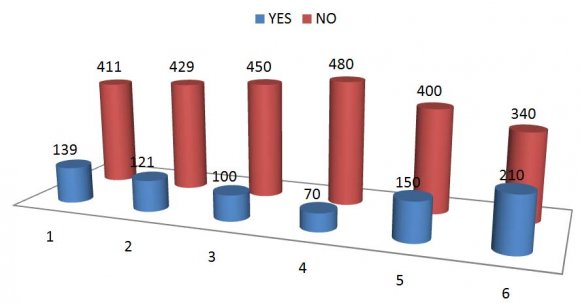
Research question1: Are the computer resources available in the schools? Table 2 showed that the majority 411(75%) acknowledged that there were no teachers to teach computers in the school. Only 139(25%) stated that teachers were available. However, where the teachers were available, the majority of the respondents, 429(78%), indicated that the teachers were not qualified to teach computer education with a minority of only 121(22%) stating otherwise.
Teachers' lack of computer literacy as being an obstacle to their using computer education implementation in schools. This obviously militated against the implementation of computer education in schools. A majority of 450(82%) stated that teachers were not willing to teach the computer as a subject in their schools. Asked if there were any in-service computer training programmes for teachers in the schools, 70 (13%) said yes against a majority of 480 (87%) who indicated otherwise. Ya`acob et al (2005) and so and Swatman (2006) concur by remarking that teachers` readiness for ICT is a significant factor the attempt to embrace on modern technology in the schools. In concurrence, Bukaliya and Mubika (2012) noted that the qualifications of the majority of the teachers are far from being satisfactory due to lack of exposure to college curriculum that does not cater for ICT training. The teachers have poor practical skills in ICT usage since the majority of them could not even use the basic software in computers for the delivery of their lessons and indications are that the teachers lack the necessary skills and knowledge of computers in basic software usage.
Research question 3: What is the attitude of the school community towards the teaching and learning of computers in schools? Table 4 shows that computer education was timetabled at most of the schools that offered the subject as anexaminable course at JSSCE level. Asked if computer education was accorded the same number ofhours per week as other subjects, a minority of 212(39%) said yes whereas 338(61%) thought otherwise. 121(22%) agreed that computer timetabling was given priority in the school as other subjects but the majority of 429(78%) disagreed. Majority of the schools 387(70%) do not register for computer studies in an external examinationat JSSCE leve while minority 163 (30%) register for it. Roszell (1995) as quoted by Bukaliya and Mubika (2012) concurs by suggesting that the time factor surrounding theimplementation process is viewed by teachers as being a major barrier in the implementation of computereducation in schools.
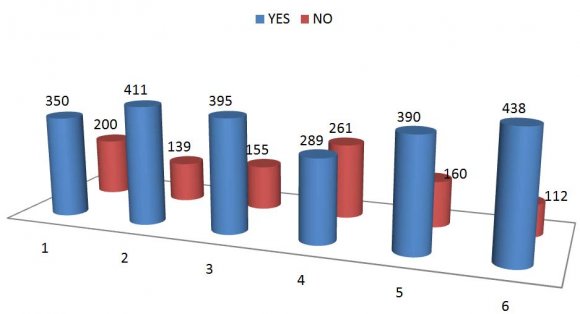
Research question 5 : What remedies can be put in place to make sure computer education is fully implemented in schools?olue: A majority of 423(77%) thought that sourcing for funds and computers from well-wishers would contribute significantly to the implementation of computer education in schools. Majority disagreed thatGovernment should charge levies for computer education while all the respondents 550(100%) suggested that Government to provide funding to schools for computer procurement. Invigorating the training of manpower to teach computers inschools was suggested by an overwhelming majority of 453 (82%). According to 389(71%), teacher educationinstitutions must incorporate computer education into their curriculum. Majority of the respondents 512 (93%) indicated that Government should make it compulsory for schools to offer computer education.
Majority of the respondents 398(72%) suggested that teacher support through in-service for computer education teachers should be regularized. This is in agreement with the findings by Krysa (1998) who identifies administrativesupport as enabling successful implementation of computer education in the school system. STEPS (2007)concurs with the findings of the present study by remarking that the education policy should be tailor-made to increase, improve and diversify teacher education and support and attempts should also be made to build computer education into general educational policies.
9. VII.
10. Conclusion
The results obtained from the analyses of the data gathered in this research indicated that majority of the schools do not have computer resources. This is because the computer facilities are not available for teacher and student access. The IC Tresult showed that there is notrained manpower to teach Computer education as a subject in the schools. The finding further revealed that teachers' lack of computer skills hinders the effective implementation of Computer education in secondary schools. The study also shows that time factor is a major barrier in the implementation of computer education in schools. School authority Source for funds and computers from well wishers.
Effective implementation of ICT in secondary schools brings about effective teaching and learning and contributes to the performance of the students. The finding of the study also revealed that few ICT components especially computers supply to the schools are not sufficient to go round the students and this deny the students of complete access to them.
11. VIII.
12. Recommendations

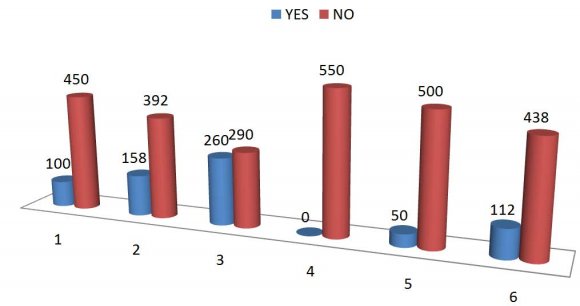
| S/N | ITEMS | YES % NO % | ||
| 1 | Do you have computer laboratory in your school | 100 | 18 450 82 | |
| 2 | Computers are available in your laboratory | 158 | 29 392 71 | |
| 3 | Computers in the laboratory are functioning well | 260 | 47 290 53 | |
| 4 | Computers in the laboratory are adequate | 0 | 0 | 550 100 |
| 5 | There are enough computer accessories in your school laboratory 50 | 9 | 500 91 | |
| 6 | Computer textbooks are available in my school | 112 | 20 438 80 | |
| S/N | ITEMS |
| S/N ITEMS |
| S/N | Remedies |