1. Introduction
tylistics and literary criticism are very important concepts in the field of textual analysis. Stylistics in the literal sense means the application of linguistic principles and methods to the study of literary and non-literary texts. Widdowson (quoted in Oladosu 2003:217) sees stylistics as the "Study of literary discourse from a linguistic orientation". He explains further its relationship with language, linguistics, literary criticism and with literature both as a subject and as a discipline. Leech (1970:119) in his opinion relates linguistic description with critical interpretations. He explains three characteristics of literary criticism which represent different dimensions of meaning. These are cohesion, foregrounding and cohesion of foregrounding. M.A.K Halliday (quoted in Adebayo Lawal (2003:31) defines linguistic stylistics as "the description of literary texts by methods derived from general linguistic theory and within the framework of a description of language in question and comparison of such texts with others by the same and different genres".
It is quite obvious that stylistic draws insights from linguistics, which is concerned with how language is used in a text. It tries to describe and later goes on to provide an objective interpretation of texts. Therefore, style is seen as a systematic study of literary work; the meeting ground between literature and linguistics.
It should be noted that style does not occur in vacuum: it has meaning when language is used for proper activation. Babajide (2000:125) observes that a person's style is informed and shaped by the aggregate of his social and political background, religious inclination, cultural values, experience, educational attainment, geographical location, and exposure. Ogunsiji (2010:133) also explains style as "the manner of expression, execution or realization of thoughts through spoken or written language". He expatiates further that style is often analysed in terms of the distinctive expression peculiar to a speaker, writer or author, or that which is characteristic of a particular period in a given setting. Stylistics studies language in a given text and draws significantly from linguistics. The study of style is essentially a kind of description based on verifiable linguistic structures and their distribution in a text. Lawal Adebayo (2003:29-30) listed six levels of stylistics (linguistics) analysis which are: Graphological level, Phonological level, Morphological level, Syntactic level, Lexico-semantic level and Discoursal level.
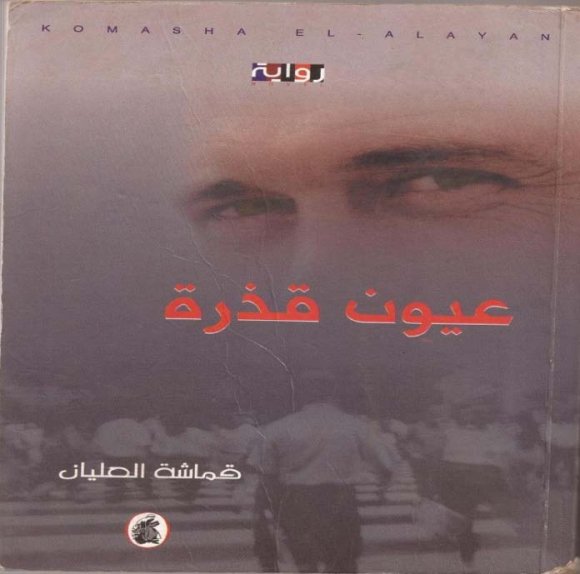
The application of the linguistics to literature is our primary concern in this study because stylistics is the meeting point of literature and linguistics. We therefore, explore how linguistic resources are mobilized in the text, Uy?nu al-Qadhrat to project meanings and effects by relating linguistic forms to their artistic functions. It is also our aim to exhibit the literary text of Arab female writer from Arab land (Saudi Arabia). The kind of stylistic analysis intended in the study of al-Ulay?n's text sets out to explore graphological and phonological levels of linguistics.
2. II.
3. Theoretical Framework
This study focuses on a functional use of language. We shall adopt M. A. K. Halliday's systemic functional grammar as the theoretical model for the analysis. The interest of this grammar is not only in describing the structure of language, but also in explaining the properties of discourse and its functions. It revolves around the work of J.R. Firth in general and M.A.K. Halliday in particular. In Hallidayan (1971) perception, a formal feature is stylistic if it has a particular meaning, effect or value. This notion emphasizes how language functions in texts and the nexus between language and what it is used for, or to achieve. The critical point here is that, whatever linguistic resource that is worth describing must be put to use, in the sense that the description and interpretation are necessarily based on the situational variables that prompted its use. In Systemic Functional Grammar, language structure is analyzed along semantic, phonological, lexical and grammatical lines. Language function, on the other hand, is examined from three angles: ideational, interpersonal and textual meaninigs. These are referred to as the metafunctions of language.
In embarking on this research, our study will serve to show that linguistics can offer precise tools for the literary analyst, and can be used to meet the conditions of accuracy, sensitivity to linguistic patterns and clarity of expositions.
4. III.
5. Marginalisation of ARAB Women Literature
It is in literature, more than in any other domain, that Arab women have an identity, a recognisable voice, a long history recorded, of excellence. Yet, even though feminist movements, women's studies departments, and women's presses in the west have unearthed an impressive heritage of women's writings, such an undertaking has barely begun in the Arab World. Most Arab literary critics are men, and they have ignored, misinterpreted, or marginalised women literary writers. Like African critics, they have for the most part dominated the scholarly tradition that controls both the canon for society. Thus, Arab women writers can enter this field as honorary men or are criticized for writing specifically for their own sex and within the tradition of their women's culture.
The trivialisation of Arab women's writings, therefore, has been undertaken largely under the pretext that their scope and imagination are limited. Arab literary critics often repeat and reinforce each other's judgements about Arab women's writings, which, they claim, fail to extend the boundaries of home, children, marriage, and love and thus do not explore the social and political paradigms of their countries. The limited scope of that criticism reflects critics' misperception of the value of the topics that these women writers have addressed.
In tune with this argument, which informs the bulk of the criticism of Arab women's writings, the phrase women's literature remains a largely pejorative term. This negative, narrow view may serve to explain why many Arab women literary writers continue to resist the classification of their literary work as women's literature. Latifat al-Zayy?t (quoted in Ashanti 2006:10), a pioneering Egyptian writer, critic, and educator states that she has always rejected the term women's literature because in both Arab and other literary criticism the term suggests "a lack of creativity and a depreciation of women's literary productivities". Al-Zayy?t stresses, however that this popular understanding of the term cannot be based on a thorough examination of Arab women's literature. Rather it is simply a prejudgement made on the basis of the gender of the author and not of the written text". Candid about her role as an innovator, al-Zayyat reveals, "I have always refused to distinguish between men's and women's writings despite my deep sense that men and women write quite differently" (Ashanti 2006: 11). Her stance was dictated by the fear that such a terminology would only help to keep women in second place in literature as they had been kept in a second place in life. It had constantly been surprised by some women literary writers who seemed to disparage their literary contributions, and perhaps even their own existence by insisting that they are not women writers but simply writers. (Ashanti 2006:16).
Another question worthy of an answer is: why Saudi Arabia literary writer? Saudi Arabia in this twentyfirst century seems to be suited to literary criticism and linguistic analysis studies. It provides an excellent opportunity for examining the effects of language on literary writings such as poetry, short stories, novels and drama. In relation to women, however, Saudi Arabia has developed a reputation for being more restrictive of women's mobility and public activity than other Arab societies. Our claim is that many women in this society participate in the creation of culture by acquiring a powerful device, such as poetry, fiction, while remaining physically invisible.
6. IV. A Short Biography of the Author
Qumash?h al-ulay?n (born in 1961 in Riyadh, capital city of Saudi Arabia) is a prolific writer and journalist. She gained her degree at the King Saud University, Riyadh where she obtained a bachelor degree in chemistry (1983). She was engaged as an instructor and student adviser, and also as a journalist for the Kuwait Magazine; al-Majalis al-Kuwaitiyya. Qumashah, a novelist per excellence, is a member of women charity organisation of Gulf Society, Saudi Arabia Society for Culture and Art, United Arab Scholars in Syria, Editorial staff of fawasil magazine in Saudi Arabia and she is currently editor in chief of hayatuna assihiyat. She is a story writer who has many publications to her credit both at the local and at the international levels.
Qumash?h al-Ulay?n may rightly be considered as one of the most important Saudi Arabia women novelists in the twentieth-century. As a feminist, she has mastered the sociological novels, both thematically and artistically. She has been a prolific writer since the publication of her first short story kullu 'al-'usra (All the Family) published in United Arab Emirates. Events take place in Saudi Arabia and London. People fluctuate between Saudi and London absorbing the impact of both places. The heroine and hero in the story are siblings of the same parents. Faysal is a student in one of the universities in UK, though the writer does not mention the name of the institution. There he studies for four days and works for twenty hours in a week. During the course of his study in London, he meets a young Lebanese Arab girl, Kate. They work together in the same restaurant at the city of London. Sarah, a young lady of twenty and an undergraduate student at King Saud University Riyadh, visits her brother Faysal on summer holiday. After few weeks of her arrival in London, She fell in love with a young man, Robbery who takes her out every weekend. Sarah gets pregnant without her knowing it. On getting back to Saudi Arabia, she tells her cousin, Layl?, who is also expecting Faysal to be her husband when he returns from school. This was arranged by the two families before he left Saudi to London. Not later than a month after the arrival of Sarah, her suitor, Abd al-Az?z comes to ask for the wedding day and the bride price. The issue of arranged marriage is a common phenomenon in Arab land especially in Saudi Arabia.
S?rah and Layl? are troubled by this unwanted pregnancy days and nights. They look for solutions all around the city of Riyadh. According to the narrator, Kate is also pregnant for Faysal in London. What will Sarah and Layl? do, as all their efforts to terminate the pregnancy proved abortive? Faysal is preparing to come back home to see his family. What will he tell his parents about his girl friend's pregnancy? This is an abomination in the kingdom of Saudi Arabia, where Shariah, as a law, is being practiced.
In al-Ulay?n's novel, the topics of love, marriage, divorce, disappointment, patriarchy and sexuality are of great significance. Her novel deals with the subjects of women as victims of brutal sexual exploitation. In this regard, her use of language is important in that she makes use of very explicit vocabulary in her depictions. The taboo of sexuality is presented in a forthright manner that often verges on the crude. Al-Ulay?n's purpose is not always to achieve absolute authenticity. However, the heroine named in her title comes very much to the fore, while the plot within which she is placed sometimes seems contrived. By using the technique of first person narrative, al-ulay?n manages to depict effectively the acute suffering of her hero and heroine, who are often young ones. Theoreticians of narrative suggest that the use of a firstperson narrative is of existential relevance to the firstperson narrator (Sabry 2007:65). Within such a narrative framework the reader is directly confronted with this existential relevance. In her story she assigns a central role of social ills among the young ones mostly within the context of a discussion of the problems facing the Kingdom (Saudi Arabia). One may conclude that Al-Ulayan's literary contribution goes hand in hand with the apparent changes in women's status as far as literary creativity in Kingdom of Saudi Arabia is concerned.
7. c) ???????�"? ???????? Graphological Features
Graphological simply means the study of graphic signs in a particular language (Chris Baldick, 1990:93). According to Babajide (2000:131) he explains that "graphological analysis is concerned with the description of the physical appearance of the literary text-visual devices used". These include Punctuation Marks, capitalisation, italicisation, spelling, hyphenation, understanding, paragraphing. The use of any of the above listed devices shows the point of emphasis of the author. According to Pink and Thomas (1979) "there is no rigid system of punctuation universally used". They maintain that even though certain rules are generally observed, practice varies with different writers. A writer can then deviate from what a lot of other writers may call the norm. However, it is safe to give some uses of the punctuation marks to achieve meaningful and effective writing.
8. d) ??????????? (Punctuation Marks)
The food is delicious.
????.? ?????? ???????? (124 ) Questions are always directed to the female folk in the text because women hardly ask questions or challenge the authorities of men. Al-Ulay?n exhibits this device to show the women subjugation in her story.
I9. I shook my head to say "Yes"
) " ????? " ???? ??? ? ??? ? ??? ? ??? ???? ???? ????? 8 (
10. e) ??????�"? ?????Omission of the Full Stop
In our text, the omission of the full-stop where it should be is observable in the word of Sarah while she is in saloon.
11. ??????? ????? ????? ?�"?? ???????�"? ??????�"? ?�"?? ??????? ?????? ??????? ???�"?? (125)
12. I stood in a corner of the salon looking at my hair and face in the big mirror f) ?????�"???? ????�"? ?????Omission of the Question Mark
13. Are you going to dance with me
14. How is London
The omissions of the full stop and question mark in the above sentences are deviations from the norm indicating the style of Al-Ulay?n in her text. This could be the speed with which the speakers utter their statements on those various occasions.
15. g) ???�"??�"?Paragraphing
This is another graphological device explored by the author in her text. The maturity of Al-Ulayan and what she writes determine the length of each paragraph. We record 1,516 paragraphs in the text. There are short and long paragraphs exhibits in the story. The shortest paragraph in the story is a sentence and longest of them all contains a whole page. The instance of the shortest paragraph is mentioned below.
16. ?�"???????)? ?????�"? ????? ????? ?????? ???? 8 (
17. If my brother sees me without veil, he will kill me.
The expression here is simple and the paragraph is only a sentence. This indicates the fear women have for their male counterparts. The line suggests male dominance and female subjugation.
It should be noted that graphological features in the text under study constitute an important aspect of the text style, which helps to produce certain stylistic and artistic effect and strengthens thematic meaning.
18. h) ???????�"? ?????? ?????? Phonological Features
The word "phonology" is derived from the combination of two Greek words "phono" (sound) and "logy" (study). In a technical sense, phonology according to Yule (2003: 54) is essentially the description of the systems and patterns of sounds in a language. It is broadly described by Baldick (1990: 168) as the branch of linguistics concerned with the analysis of sound system as they function on languages (rather than with physical sounds as such, as in phonetics).
As a novelist, Al-Ulayan exploits sound devices to achieve certain effects and create aesthetic beauty in her story 'uy?nu al-Qadhrat'. The examination of how this is done is our pre-occupation in this section.
19. i) ?????????? ???????? Alliteration
This is the repetition of the same sound especially at the beginning of closely connected words. The deployment of alliteration in a particular discourse situation is usually for aesthetic and functional purposes. In Al-Ulay?n's uy?nu al-Qadhrat, we observed that the text displays alliteration all over for stylistic effect. For examples:
He is a renowned western writer Sarah walked in to her room
????? ????? ??? ? ??? ??? ? ??? ? ???? ??? ? ??? ?????? ????? 130) ( ???�"???)? ????? ????�"? ?????? 256 (In the extract above, we see the way Al-Ulay?n alliterates the / ??? / voiced bilabial nasal sound. This is a strong voiced sound and it can be said that the author has used it consciously to capture that aspect of meaning i.e. it suggests the strong feelings that the words are meant to express. The second example alliterates the/sound that is also used for the same stylistic effect and meaning.
20. j) ????????? Word Repetition
Repetition is also a stylistic device under phonology in which parallel words are repeated in lines to draw the reader's attention to what the writer is actually saying. It is also intended to intensify meaning as well as being an aspect of a particular thesis i.e. using it in a logical way to present content as real. When some words are repeated, they add rhythmic effects to the lines in which they occur. Therefore, Al-Ulay?n has used this device not only to achieve realism but also as a decorative device to add beauty and aesthetic effects to the work. We shall now present some aspects of repetition from the text to illustrate our views.
21. Yes, yes, I will buy this toy.
) ??????�"? ????? ???????? ????? ????? 45 (
22. Never, Never, I can only look at my brother's face
23. ????)? ????? ????? ????�"? ???�"?? ?????? ?????? 12 (
The word ????? repeated by Sarah when she gets to London demonstrate how much interest she has in purchasing the toy. The word is to emphasize the meaning and create sound effect. Specifically, the repetition makes the lines catchy.
Secondly, the word ?????? is also used to create sound effect and meaning by indicating the refusal of the heroine to look at another man's face.
24. k) ??????? Rhyme
This is a similarity of sounds in the final syllable of poetic lines. Rhyming patterns can also be found in the text. This is explored by Al-Ulay?n in order to create some special effects and facilitate the conveyance of his or her message to the reader. The instances of this are given below: or does money change the minds ????ï»?"??? ?????? ???ï»?"???? ???? ???? 90) ( Oh Lord! Do not rebuke me because I have realised my mistakes.
25. ????? ????? ???? ??????? ????�"? ** ?�"???? ???????? ??? ??????
There is no way for me except that I have hope in your forgiveness and with my good conscience.
26. ??????**? ???? ????�"? ???? ????? (165) ????? ?????? ??�"??? ???? ???�"???
The poem that Al-Ulay?n quotes in the text has a stimulating effect by the rhythmic approach of the words in the lines to bring out specific sounds and meanings. And also in the same poetical composition, Al-Ulay?n has applied foregrounding approach to the conventional forms of the meters by deviating from the norm. This is to create effect and to show the gender of the speaker.
V.
27. Conclusion
In this study we have applied the insights and methods of functional linguistics to examine the role fact is that language is the singular medium of literary communication and a given writer inevitably selects his mode of presentation or signification in a given context to catch the attention of the reader in particular ways.
This study is a contribution to the existing works on literary texts and to the existing body of knowledge in linguistic stylistics. It is also the study of female writer and the analysis done is not exhaustive. We therefore recommend that further interesting studies should be carried out on the text. This will enhance our knowledge on how linguistics contributes to the effectiveness of language use in a text.

| ( | ) ?????? ??????? ????????? 138 | ||||
| ( | 149 | ) | ???????? ???????? ????? ?????? ?????? ?????? ???? ????? ??????�"? ????? ??????? ????? ??�"???? ???? ??????? ??????? ? ???? | ||
| Sarah, you are so beautiful ? | (163) | ... ????�"? ???? ????? ?????�"? ????? | |||
| I don't know ? as regards the situation ? | ... ???????? ????? ... ?????? ??? (177) | ||||
| How are you? | (12) | ??? ?????? ????? | |||
| My love, what's wrong with you? | (133) | ??? ???????? ???? ???? ???? | |||
| Sarah, what's your opinion? | (141) | ??? ????�"? ???? ?????? ???? | |||
| What do you prefer? | ??? ????? ? ??ï»?"??? ?????? (126) | ||||