1. Introduction
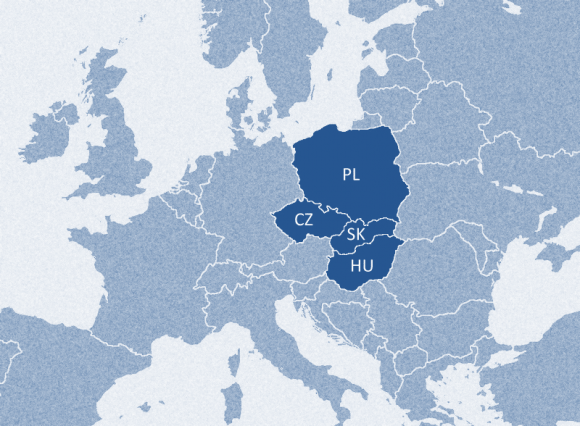
his article analyzes the core elements of the energy status in Slovakia, Czech Republic, Poland, and Hungary, beginning in 1990. It compares the primary energy components in these four countries, collectively referred to as the VisegrádGroup (V4), and argues that V4 countries can enhance the security of its collective energy future in two ways, (1) the diversification of energy sources, and (2) reconsidering its energy policy to make energy security a central pillar within the context of its own strategic multilateral relations. The main topics of this research are the concept of energy security, the regional security complex, the V4 as an energy security community, energy dependence and crises of the V4, and the viability of an integrated energy security future for these four countries. 1 The topic of this article forms part of the current scholarly debate and geopolitical discourse about the concept of energy security for the V4 by assessing the current challenges of V4 countries, including their collective interests and opportunities for enhanced cooperation to meet the security of energy supplies that lie in the present day and that potentially lie well into the future. Among the extent literature in this field, Andrej Nosko, Anita Orbán, Wojciech Paczy?ski, Filip ?ernoch, and Jakub Jaro? authored a policy paper in 2010, through the Visegrád Security Cooperation Initiative (VSCI) -a project organized by the Slovak Atlantic Commission -that identifies energy security challenges shared by all of the four members of the V4 and presents readers with a range of policy options and recommendations to strengthen internal V4 cooperation in order to promote their mutual and prominent interests in the field of energy security. This article proposes to build on their concept of energy cooperation among the V4, suggesting that V4 countries come together and form a coherent energy security syndicate that effectively coordinated their combined position on meeting the demands of their domestic consumers, and working in concert to mitigate the uncertainty and negative impact of energy dependency -their access to vital sources, difficulty in importing sources, and establishing reserves.
The primary aim of this article is to use the idea of an energy security community that is rooted in the concept of the regional security complex to insulate the group from uncertainty and risks associated with external dependence on energy, including rising energy costs, political pressures to adopt certain energy policy and form relationships with particular states, and nullify the economic disadvantage stemming from dependency on the major players in the oil and gas arenas. A field of question marks begins to surface as a result of the backdrop of this article. To what extent might major suppliers of energy be perceived of as threats to the energy futures of importer states? Can trustful interplay between V4 countries influence that define the interaction or relations of other countries in the EU on an energy level? Can existing partnerships and social contracts be determinants of or signal a move to more secure production and distribution of energy within the V4? These questions highlight some of the common and major themes arising from the literature and discourse presented herein. After exposing the weaknesses of V4 countries energy mixes, the idea of creating an energy securitycommunity is then applied to the domestic situations to the V4 as a whole. The analysis of this article and the subsequent theory of energy security in Central Europe presented explains not only the need for enhancing energy cooperation among groups within the EU-27 (soon to become the EU-28 with the inclusion of Croatia into the EU club -and beyond, but also the exigency in states fundamentally diversifying their energy mixes to formulate more robust and sustainable domestic energy structures. If we myopically see the rising demand of energy dependence simply as a manifestation of market trends without considering the long-term need for energy diversification, regions such as the V4 will inevitably become one of the great losers of the energy market in the 21st century.
The conceptual framework of this article is based on the concept of the Regional Security Complex Theory (RSCT) advanced by Barry Buzan and Ole Waever (2003) 2010), among others, who have applied these dynamic security theories to regions of Europe, Eurasia, Africa, and Central Asia in addition to a host of geopolitical concerns elsewhere around the globe. After briefly discussing the Visegrád Region and the concept of energy security, this article touches upon an understanding of the RSCT and the theory of Security Communities as tools constructed for the analysis of security more generally. The following section discusses the empirical data, which subsequently informs the theoretical component of the analysis. The conclusions are discussed in the final section.
This article analyzes energy security for the current members of the V4 group in Central Europe as well as the security of the V4 in the wider context dependency involving the EU and Russia as predominant energy suppliers and actors in the region. This article does not deal with the other members of the EU-27, other than Poland, Hungary, Slovakia, and the Czech Republic; nor does it address aspects of the other countries understood as belonging to the region of Central Europe, including Germany, Austria, Switzerland, Liechtenstein, and Slovenia, or peripheral areas sometimes regarded as part of Central Europe, within the underlying conceptual framework presented in the following pages. Hence, the information presented in this article is a comparative analysis of four countries that are treated as part of a political grouping known collectively as the V4, while touching on other issues in an among Europe as they related directly to the group.
2. II.
3. Data
The data analyzed in this article are taken from the European Commission and Eurostat while drawing upon data from the International Energy Agency (IEA) and the Organization for Economic Cooperation and Development (OECD). The data utilized in the writing of this article is represented in Tables 3, 4, 5, and 6, and depicted further in Figures 2, 3, 4, 5, 6, and 7 in order to reveal the strengths and weaknesses in each of the V4 members' respective energy fields.The database consists of values indicating the primary energy supply, domestic production, imports, gross inland energy consumption, and generation of energy for solid fuels, oil, gas, nuclear energy, renewables, and other miscellaneous forms of energy for each of the members of the V4.I specifically focus on oil, natural gas, solid fuels, nuclear energy, and renewable sources of energy. These are the areas that suggest the greatest potential in building cooperation between members and areas in which national policies could be most successfully integrated. They also present the greatest areas of opportunity for the simple reason that they are amongst the weakest links within all of the four members' energy markets and policy structures.
The time period of the article loosely covers approximately two decades of energy transition amongst the members between 1990 and 2012. This period includes a constellation of vicissitudes in European geopolitics, particularly in the post-post-Soviet era or what those from the Russian side might refer to as the neo-Soviet period, including the two major enlargements of the EU (2004 and2007), and the Russia-Ukraine gas disputes of 2005-2006, 2007-2008, and 2008-2009. However, it is beyond the scope of this article to cover all of the geopolitical events that characterize these two very transforming decades. As such, some of the primary events of these timeframe will be used to inform the analytical framework of this article, while an effort is made to mentioned limit this to those that have the most significant effect on the V4.
4. III.
5. The Visegrád Four
Taking into account the high diversity among countries of Europe and the EU with respect to degree and nature of development, which are unequivocally linked to geographical, political, and economic characteristics, the Visegrád Group (also known as the "Visegrád Four" or simply "V4") is a very distinct group for the constituents' common cultural, religious, and intellectual roots and traditions in addition to its shared political and economic qualities and interests. The Visegrád Declaration was signed by former-Czechoslovakian President VáclavHavel, Polish President Lech Wa ? ?sa, and Hungarian Prime Minister JózsefAntall on February 15, 1991. The ceremonial signing of the declaration officially laid the foundations of the Visegrád Group, which evolved from the Visegrád Three (Poland, Czechoslovakia, and Hungary) to the V4 (with the addition of the newly-formed Slovakia) as it is known today, following the political fragmentation of Czechoslovakia in January 1993.The Central European complex bridged strong lines of divisions through accession to the EU in May 2004. Despite group identification, the V4 did not materialize as an alternative to more predominant EU integration efforts. Although integration with the EU had been defined as the group's ultimate goal, the V4 did not simply disappear following accession. Rather, the leaders of each state following their accession to the EU in order to pledge their dedication to collectively meet a new set of objectives. Their geographical position is used as a baseline for cohesion within Europe and the EU, however, the V4 face a number of barriers affecting security. "A practical result of V4 cooperation," according to Czech News Agency (?eská tisková kancelá? [?TK]) (2011):
[?] was the establishment of the Central European Free Trade Agreement (CEFTA) in 1992. The CEFTA, aimed to boost economic contacts afflicted by the disintegration of the Council for Mutual Economic Assistance (CMEA), was gradually joined by other countries of the former Eastern Bloc.
Although the V4 jointly address a number of geopolitical fronts, this article assumes an energy security-related focus with a particular emphasis on energy diversity and the ability of these countries meeting the current and future energy demands of their domestic consumers. A primary objectives of the V4 is the formulation of a "European security architecture based on effective, functionally complementary and mutually reinforcing cooperation and coordination within existing European and transatlantic institutions" (Visegradgroup.eu). It is amid this backdrop that energy emerges as one of the greatest insecurities of the V4. In spite of aims at integrating further into EU structures and attempts to build institutional frameworks, the challenge of cooperation in order to srengthen stability and secuity in the Central European region exists and should be taken into consideration.
Many of the challenges that the Visegrád Four has faced became evident following the states' integration into the EU, or the so-called post-accession period, such as solving the questions of mutual interest amongst the members, group identity, prominance and priority of the group in general in each of the members' respective foreign policies, secuity concerns, and further matters such ascooperation within the spheres of politics, economics, culture, science, education, and environmental issues (Visegradgroup.eu). The extreme deterioration of economoic footings for the members in the wake of the 2008/2009 economic crisis has greatly enhanced the threats and challenges facing the V4.
As the group moves forward in its third decade of existence, despite its consderably positive track record over previous years, pressure is increasing to address the threats that impact all members on the much more practical level as opposed to the comparably notional or ideological problems featured in the past with great effectiveness. This means that the V4 needs to and is expected to implement measures that are specifically designed to address a very precise issue even if that means following the EU model in securing energy independence. Whereas reference used to be made to the crisis of identity of the V4, the current geopolitical environment and future of the group can appropriately be seen as the crisis of energy security. IV.
6. Energy Security
The practice of energy supply, production, and consumption represent different realities for European states. As such, the variation founding amongst such performancesimpacts each state in profoundly different ways even though the more illusory idea of reliable energy supply affects every state in the international system in much the same way. However, it is no wonder that states find it increasingly difficult to agree upon potential solutions and courses of action given the range of competing definitions and interpretations as well asvarious applications of the term "energy security." Indeed, this term morphs depending on where one lies on the value chain.
What is particularly interesting here is the issue of negotiating between discourses and opinions of security as they impact the collective interests of groups like the V4. Agreeing upon a common denominator among experts and policymakers when it comes to policy and strategy that has multiple effects upon state security, including elements within economic corridors, is a profoundly unique front in its own right. Whereas energy security has typically found its roots within the paradigm of economics, many within academic circles have crossed traditional borders of interpretation to apply the concept to a much wider range of scenarios.
To illustrate this point, the World Economic Forum in partnership with the Cambridge Energy Research Associates (CERA) presented a report in which they address the "New Energy Security Paradigm" in which they argue energy security has become the pinnacle of any political agenda. The impact of this new paradigm is so comprehensive that it is now seen as "great significance for developing countries, emerging economies, and energy exporters" (World Economic Forum, 2006: p. 7). In their explication of energy security, the term is seen as an umbrella term, an overarching concept under which a cluster of further items can be found. These groupings are depicted in the following Table. Keeping in mind that the tradition elements of energy security include, in particular, supply sources, demand centers, geopolitics and market structures including the response exhibited by all related institutions, we turn to the some of the competing definitions of the term in question. Paczynski, Cernoch, and Jaros (2010: p. 1) describe the politically contestable concept of energy security as "predictable, reliable access to desired forms of energy at transparently determined market prices." Eng, et. al. (2003) described energy security as a process of:
[?] securing adequate energy supplies to sustain economic performance and growth -and extends this quantitatively oriented definition, again in a fairly conventional albeit less usually discussed direction, to include prices, that is -that of securing adequate energy supplies at reasonable and stable prices in order to sustain economic performance and growth (p. 4). Yergin (1988) commented on the objective of energy security prior to the dissolution of Soviet Communismin which efforts must be made to "assure adequate, reliable supply of energy at reasonable prices and in ways that do not jeopardize national values and objectives" (p. 11).According to the International Energy Agency (IEA), energy security can be described as the "uninterrupted physical availability at a price which is affordable, while respecting environment concerns" (International Energy Agency [IEA], 2012).
The EU has also defined energy security from its own unique perspective. It describes it as the securing of "the immediate and longer-term availability of a diverse range of energy products at a price which is affordable to all consumers (domestic and industrial) while respecting environmental requirements" (quoted in Rousseau, 2012).According to Rousseau (2012), "The European energy security concept is based on two fundamental elements, those of: the accessibility and reliability of the flow of raw materials; and the economic sustainability of these supplies, both of which are dependent on market conditions."The IEA's (2012) approach to the concept of energy security emphasizes diversity and flexibility within energy sectors, and the call is made for countries to become "prepared collectively to respond to energy emergencies."
Definitions of energy security that either complement or conflict with one another have invariably corresponded with the need to look at responding to crises of energy security through collective action on the basis of flexible and sustainable energy policies in order to avoid or at least safely absorb so-called "energy shocks." As noted by CERA:
Yet less visible, and every bit as important as the risks, is a compensating reality. New sources of oil and gas, and technological advances both for energy production and for consumption -and the lessons learned and the institutional development that has come with those lessons -give policymakers the capability to manage "energy shocks" and to weather disasters, whether natural or man-made, that may lie ahead. Relations between producing and consuming countries are generally based much more on interdependence and cooperation than in the past, although new conflicts continue to erupt. Still, these more cooperative relations provide a crucial foundation for handling and minimizing shocks. In the longer term, a renewed commitment to new technologies and energy research and development holds the promise of further diversification, although neither the timing nor the certainty is as sure as some may wish (World Economic Forum, 2006: p. 8).
On the importance of collaboration as a better suited way to approach and potentially solve the puzzles related to energy security, flexibility in any plan can arguably satisfy even greater demands placed on states under pressure to meet energy demands, particularly in the case of the EU and EU member states as they interact with their primary suppliers of vital energy such as Russia. The idea is already shown in the EU model, which seeks to establish conditions by which member states should strive to meet. It is also shown in the export strategies of even the major exporters of oil and gas that hold monopolies over specific geographic locales, markets, and relationships (how relationships or partnerships are defined between two or more states and by which states).
The next section will examine the Regional Security Complex Theoryand Security Communities Theoryand place them in the context of V4 energy dependency. The aim is to provide a basic foundation for arguing in favor of greater integration and collective action among the V4 in confronting their energy challenges.
7. V.
Regional Security Complex Theory (RSCT) and Security Communities Theory
Regional Security Complex Theory by the Copenhagen School, emphasizes an "analytical scheme for structuring analysis of how security concerns tie together in a regional formation" (Waever, 2004) in which we find that the geographical local of the region in question is the critical factor. A Regional Security Complex (RSC) can be defined as:
[?] a set of units whose major processes of securitization, de-securitization or both are so interlinked that their security problems cannot reasonably be analyzed or resolved apart from one another" (Waever, 2004).Taking into account the geographical proximity of the V4 with current and potential energy sources, it is worth underscoring the essential foundation of RSCs, which is "most political and military threats travel more easily over short distances than over long ones, insecurity is often associated with proximity (Buzan and Waever, 2003: p. 11).
More Power to You : Securing Central Europe's Future Energy Supply
8. 2012
9. May
To overcome the challenges of the V4 in an energy context and diffuse the security deficit facing these four countries in Central Europe, consolidating in order to cooperate further and identify themselves as a security complex signifies positive step, not in prescribing a solution to energy security, but in closely connecting the need to identify the V4 as an security community so as to collectively confront the dependency crisis.By viewing the V4 as a security subregion within Europe, these countries could become more aware of their energy vulnerabilities, in which areas they find a lack of awareness and support for becoming "cleaner" users of energy and of more diverse sources of energy, and so they can become adopters of innovative sources of power.
Although analysts and scholars are confronted with the challenge of identifying, defining, and understanding emerging patterns of instability and insecurity, they are simultaneously faced with the difficulty of recognizing new security complexes within existing ones. Daniela (2011) has undertaken this practice, arguing the need to see the South Caucasus as a new regional security complex. A new elucidation of security has emerged as scholars have increasingly identified the Wider Black Sea Region as new security complex as we have moved away from the days of the Cold War and further into the days of multi-polarity. Considering the pressing realities facing every state in the contemporary international system, whether these exist in a political, economic, military, or social context, the RSCT serves as a highly appropriate and dependable tool of analysis within the respective analytical framework of the V4 and Central Europe.
To build on the ideas of RSCs, a security community might be understood as a subcategory of the regional security complex, such as the Baltic Sea Region (B3). Deutch (1957) defines a security community as anarea in which state and non-state actors "settle their differences short of war." He perceived this as a cluster of states that has integrated to the extent that there exists "real assurance that the members of that community will not fight each other physically, but will settle their disputes in some other way" (p. 6). Buzan and Waever (2003) describe such a community as a pattern of security interdependence where the units do not conceive of, expect, or prepare for the use of force in their political relations with each other (pp. 56-58). Although the perspective on security communities by Adler and Barnett (1998) assume a slightly different angle that that of Buzan and Waever, their view is quite salient. Adler and Barnett (1998) define security community as, "a transnational region comprised of sovereign states whose people maintain dependable expectations of peaceful change" (p. 30).
The following analysis is therefore based on the assumption that the Visegrád members are likely, or at least would be well informed, to follow a pathway of peaceful means to address energy security. More importantly, the theoretical ideas presented in this article can be used to stress the importance of further cooperation, and the solidification of a cohesive group that is much better equipped and situated both politically and economically to begin curing the energy security deficit that they face.
10. VI.
11. Energy Dependencies and the V4
The focus is now turned to the state of V4 energy dependence, including energy mixes of each of the four countries in order to provide a nuanced understanding of where each of the countries rests in terms of reliance and being able to meet the current and future needs of their domestic consumers. The V4's growing interest and need to address energy security has been heavily driven by internal and external push and pull factors. Chief among these are progressively higher energy prices, a downward movement in the overall production of energy, and severely disjointed energy market, internally, all of which have fostered anxiety over the members' capacity to meet their own energy demands. Externally, the group's increasing attention toward energy security has been profoundly influenced by rising global demand as a result of growing economies2 such as India and China, insecurity as a result of conflict and political instability in energyproducing regions of the world, the threat of human and non-human elements against vital energy infrastructure, states' willingness to have their energy sources serve their political interests such as the Russian Federation, and fears and anxieties created as a result of the former and mixed with uncertainty.
These combine to form a caustic mixture inclining EU member states to address the issue of energy management, diversification, coordination and policy in an attempt to deal with a critical imbalance in energy production and consumption as well as the issue of climate change. State practices can be seen in the realm of the promotion of the efficient use of energy and fuels, the development of new and more sustainable infrastructures in order to facilitate the use of cleaner sources of fuel, developing renewable energy sources, and reduction of harmful emissions as a result of reliance upon "dirty" source of energy such as lignite, tar sands, oil shale, and liquid coal, among others that also have devastating extraction impacts on the environment. Contemporaneously, the political parties of these states remain under severe pressure to strengthen economic performance, and provide greater economic opportunity for their societies so as to legitimize their decisionmaking and power positions.
During the mid-1970s, oil production from the Organization of the Petroleum Exporting Countries (OPEC) states accounted for a total of 54% of all global . "In terms of oil production capacity," according to the World Economic Forum and CERA, "15 countries dominate the future growth in long-term oil supplies" (World Economic Forum, 2006: p. 13). A rather disconcerting reality for the EU is that none of the current EU member states (including those of the V4) fall within the 15-country category, and are therefore subordinated to the sidelines of energy security. In a sense, the EU can be considered as a cluster of states that are not standing under the umbrella of energy security, as explained previously. The following Table shows which countries form the structural change of oil production capacities. The Czech Republic is currently producing more energy than it consumes, while Hungary and Slovakia's energy consumption exceeds its current production. Poland is currently entering a new phase as its energy security whereby production has been steadily declining from 2006-2009 while its overall consumption has been slowly rising, with a relatively sharp increase for the 2009-2010 period. So Poland will see productionconsumption lines intersect, demonstrating that it will be physically impossible for Poland to provide for its own consumers living within its borders. From a physical perspective, the Polish government will have to look beyond Poland to maintain its needs. Despite the current situation regarding all four of these countries, their overall need to import energyfurther in order to meet consumer demands is forecasted to grow in the coming years. As the Commission estimations of energy consumption illustrate that if current trends persist, then the EU will import approximately 65% of its total energy requirements by 2030, and the V4 will, in relative terms, import around 28% of its total collective energy needs, or roughly 55% of its oil and 36% of its gas (Eurostat, 2011).
The largest suppliers of EU energy are Russia, Norway, the Middle East, and North Africa. At 24%, Germany is currently the greatest importer of Russian gas, with Hungary, Poland, the Czech Republic, and Slovakia importing 6%, 5%, 4%, and 4% of Russian gas, respectively (Eurostat, 2011). Although the values for the V4 countries are comparably small when measured independently, their share of gas imports from Russia, becomes the second highest value within Europe on the Russian natural gas export market (Nosko, Orbán, Paczy?ski, ?ernoch, and Jaro?, 2010). This value is unique because it is relatively low enough for the V4 countries to cooperative in order to bridge this dependency gap while simultaneously countering Russia's use of energy exports for political ends in EU-Russia relations.
As the following figures illustrate, it will become possible to "green" these countries' energy production by simply adjusting energy production methods. In order to become "cleaner" producers and users of energy they will not necessary have to look abroad; there is only a need to consider how they are processing what they already create. This does not mean that new strategies will end energy imports. It does suggest, however, that there is a very critical aspect of energy policy innovation and modernization that can be capitalized on by the V4. The following section 30% 40%
addresses each of the V4 countries' key energy figures. It calls attention to the deficiencies in the current energy mix of each while noting current strengths and areas of opportunity.
12. a) Slovakia
Slovakia has taken steps to diversify its energy mix but has a long way to go in striking a balance in its energy production across the spectrum of energy types. The country'scurrent effort in meeting its domestic energy demand is rooted heavily in its nuclear energy production. This presents a positive note for the longterm production of energy in a way that produces lower levels of harmful emissions. Another positive aspect of its nuclear element is the point that Slovakia has the expertise to further develop its nuclear programs, turning nuclear energy into a core feature of its energy production base.
Solid fuels and renewables also contribute to the country's overall energy creation, which is a less that positive mark because solid fuel use is a method of energy production that is particularly difficult for weaker or smaller countries to break away from. Whereas the former still falls short of the overall national consumption value, the latter sufficiently covers domestic demands, but this cannot necessarily represent a sustainable option for Slovakia's energy future. Overall, Slovakia's nuclear energy and renewable energy production signify very positive avenues for securing future energy demands but the country still relies heavily upon foreign oil, gas, and electricity in meeting the needs of its domestic consumers.
Slovakia's energy mixcan be said to represent diversity when considering select forms of energy, however, the country is still unable to cover all of its current demands. This is palpable within the realms of solid fuels, oil, gas, and even nuclear energy despite nuclear energy being one of Slovakia's strengths. Slovakia's share of oil and renewables in primary energy supply, for example, falls below the EU-27 average. While its energy dependency in percent dropped in 2000, 2005, and 2006, it increased in 2004, and 2007. Thus, the overall trend in energy dependency in all areas, according to Eurostat (2011), should be characterized as a moderate level of fluctuation and is therefore still volatile. Slovakia relies on importing energy to meet roughly 66.4% of the country's overall energy demands (Eurostat, 2011). This puts the country well behind in the match to strike a balance in its production and consumption. According to the European Commission, the Czech Republic was recorded as having one of the lowest energy import dependencies of the EU-27. This is a result of its focus on the production of solid fuels and nuclear energy. As indicated in Table 2, solid fuel production far exceeds the country's final energy consumption, and the same can be said for nuclear energy production. A combination of the two sends mixed signals. On one hand, it is strong in the production of energy that is sustainable, one that emits no harmful emissions, and has the potential for meeting significant demand. On the other hand, the Czech Republic's heavy reliance on solid fuels contradicts the "cleaner" practices that it demonstrates through its nuclear program, even it the use of solid fuels represents a promising avenue for the prevention of increased energy import in coming years. Regarding oil and gas, the data show that consumption far exceeds current domestic production.
In spite of the moderate degree of energy mixing, the Czech republic has shown fluctuation in its overall energy dependency, according to Eurostat (2011). A steady rise in dependency was recorded between 1997-2005, though this movement began to ebb in 2006. The country's overall energy dependency was recorded as being approximately 0.4% higher in 2007 compared to 1997 (Eurostat, 2011).For 2009, Czech Republic was approximately 26.9% dependent upon energy imports (Eurostat, 2011). Even though the increase that the country has shown is still well below the EU average, the Czech Republic has a long way to go in diversifying its energies in order to ensure the security of its future supply.
13. c) Poland
Poland's energy import dependency is currently among the lowest of the EU-27. Much of the country's self-sufficiency in energy production is a result of the government's emphasis on the burning of hard coal, which has had the unfortunate consequence of large CO 2 emissions. Even though Poland's solid fuel energy production far surpasses its final energy consumption, the country falls considerably short of meeting its own consumers' demands in the oil and electricity sectors, and to a lesser extent, the gas realm. Poland's renewable energy production is shown to require further advancement given that the current needs of the country are barely being met. Another area that needs to be addressed is the use of or integration of nuclear energy into the national energy mix.
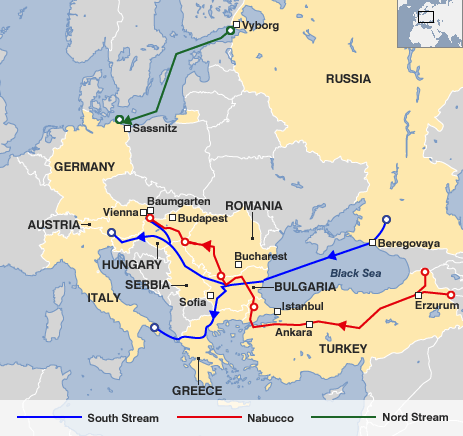
Presently, nuclear energy represents a hole in the energy security fabric of the country, with oil significantly representing a weakness in any hope of Poland achieving long-term security of supply. Although the government is now considering the production of a nuclear facility, it could be another ten years before reactors are put to use to address some of the shortcomings described here. As is the case with other V4 countries, Poland relies heavily on Russian oil and gas and therefore needs to take into accountother means in which foreign oil weakens its energy security. One potential solution is a decreased reliance on Russian oil and an increased dependence on oil shipped from Russia to Germany vis-à-vis the Nord Stream pipeline.
Poland's overall energy dependency, according to Eurostat (2011), shows a disconcerting picture, with a steady rise in dependency having been recorded for the period 1997-2007. Poland's energy import dependency was recorded by the European Commission as 31.7% for 2009.Over the previous decade, Poland's energy dependency has roughly quadrupled despite being one of the least dependent of the EU-27.
14. May d) Hungary
Hungary relies very heavily on the burning of solids fuels to meet its domestic energy demands, which represents a balanced-positive equation when taking into account the solid fuels consumption value. This can be attributed to the emphasis placed on other sources of energy that are produced in order to fill Hungary's energy markets. Aside from partially meeting its energy demands through the use of solid fuels, Hungary is still dependent on energy imports, such as Russian oil, to fill the gaps in its demand but these cannot be considered critically demanding areas when compared to others in the V4. Nuclear energy, natural gas, coal, and oil only partially cover the total consumption now measured in Hungary.
Energy insecurity in Hungary can be seen as significant, especially when compared to other EU member states. Nuclear energy is a vitalelement ofthe state's energy mix, however, this source alone cannot meet the future demands of the country. The construction of more reactors can significantly address the deficiencies in Hungary's energy fabric and even be seen as an avenue for potentially resolving the weaknesses of other V4 members by exporting nuclear energy to Poland, Slovakia, and the Czech Republic.For the period 1997-2007, energy dependency in Hungary has risen roughly 8.6% even though a small reduction in dependency was recorded between the 2006-2007 period.In spire of some of the more promising notions when it comes to the country's production and consumption, Hungary's import dependency for 2009 was well over half and recorded as 58.8% (Eurostat, 2011). ** Percentages represent a portion of national domestic production, imports, and gross inland consumption, respective. The fact that electricity and other miscellaneous forms of energy have not been factored into the national energy mix should be taken into account.
As indicated by the energy mix values in the preceding tables, all four members face similar challenges even despite the fact that their respective composition differ in profound ways. This does not discount the reality that even with diverse or semidiverse energy mixes, demand hovers well above supply. What is interesting to consider is the extent to which each country's strengths might be seen as useful tools for supporting the shortcoming of another V4 state. To this end, it becomes necessary to examine the potential of combining both effects of energy diversification policies and practices with the idea of energy production sharing. The notion of energy shortage is no longer a mere notion. The impact of shortages is made apparent in everyday politics and policymaking. This is evidence by the corpus of literature and empirical data produced by national governments and by EU institutions seeking to address the harsh realities of energy shortages. Although these issues are by no means unique to the V4, energy shortage will ultimately impact regions differently depending on their geographical locale, population sizes, economic markets, and access to energy sources. For the V4, these factors symbolize a potential strain. Energy shortage will be a looming evil over the growth of V4 economies, a bottleneck in development in the long run, and a severe impediment to state capacities for solving future problems such as constructing new and efficient energy infrastructure.
15. V4 Energy Security Future
Drawing upon the competing definitions of energy security, the application of the Regional Security Complex Theory, and the Security Communities Theory, and the analyses made regarding the empirical data illustrated in Section 6, this section aims to build on ideas of greater integration and cooperation economically and politically in response to the bewildering challenges facing the V4 in the energy sector. Since the task of each of the governments of the V4 is to consider the cost, type, and nature of the energy they use to sustain the growth of their respective economies, while ensuring that their decisions fit into a wider regional set of strategies, the task cannot be easy. It is worth mentioning the impact of external factors, such as volatility in world energy markets, mobile populations, growing populations, rapidly changing technologies, and the demand of tackling climate change, the effects of which will also have a considerable impact on how countries are able to and should ultimately decide to address energy security issues. a) A Move to Mix Much of the need for greater diversification in all countries' energy mixes and closer cooperation finds fertile ground in the existing energy policies of the V4. Energy policies in each case have taken aim at the creation of a fine balance amongst its primary objectives, those of: security of supply, economic efficiency, and positive environmental practices. These objectives are fairly universal, and both the EU and the IEA share their corresponding logic and applicability. However, while these aims can theoretically deliver on the reduction of energy import dependence, they retain the potential for actually increasing V4 energy dependence in several ways.
First, while reducing reliance on the imports from Russia, the construction of liquefied natural gas (LNG) terminal in ?winouj?cie, Poland, and another in Omisalj on the island of Krk, Croatia does little more than shift the source of V4 energy dependence from Eastern Europe to the Middle East, such as Qatar. The terminals provide Central Europe with an opportunity to neglect working toward emphasizing other sources of energy. Second, the South Stream project only marginally tips the balance of energy reliance for the V4, which would still be rooted in oil and natural gas, but this time from the Caspian region. Third, Nabucco provides the V4 with a potential supply of energy so long as the source of this energy remains secure in itself. The current security architecture in Iraq ultimately provides Central Europe with little assurance that the energy supplies necessary for meeting consumer demands could be met consistently and without any sort of constraining political conditions attached that might cause complications in other realms such as politics and state relations.
energy for growth. In other words, the V4 cannot simply wait for the EU to solve its collective energy issues, nor can it depend upon the EU acting in the best interest of the V4 countries.Since the former signify strong impediments to a secure and stable energy future the prospect of pursuing a greater sense of energy diversity becomes even more remarkable. The most prevalent justifications for energy diversification and investment in alternative energy sources is the fact that energy security simply costs money. This is a paradoxical notion. Despite the fact that energy diversification projects are costly endeavors, efforts to maintain the supply of fuels that the V4 currently depends upon are just as costly.
A positive aspect of the 2008/2009 financial crisis is found in the level of sympathy that became apparent in the EU toward newer and more vulnerable states who might have feared that they will have to compete, not only with each other, but also with the rest of the EU over finite levels of Russian oil and gas. In this sense, the financial crisis has served well by taking the edge off of the fears of all EU member states that Russia will ultimately fail to provide for or feed EU or European economic growth has in 2005/2006, the new accession state and Soviet-successor states are concerned with being able to afford Russian oil and gas in order to adequately sustain even the most modest of economies. So we can say that the financial crisis and budgetary constraints that ensued has really forced or served as a very strong push factor for governments to reassess their situations and look elsewhere to secure the supply of energy. imports are predicted to sore in coming years, so too are those of the V4. The basic precept thus, should be, "if not now, when?" The energy mix figures of Poland, Slovakia, the Czech Republic, and Hungary all show signs that cooperation and diversification is a very possible pathway to solving their mutual energy dependence. So long as the perspective of the V4 representing an energy security community is taken into consideration and is allowed to act as a guiding light in policymaking, the prospects for securing the supply is likely.
16. c) Avoiding Dependence
As shown by the national energy mixes of each of the V4 countries, one of the first steps to be taken in increasing energy security is the reduction of their dependence on oil and natural gas in their energy mixes. This obviously goes hand-in-hand with the idea of reducing Moscow's ability to coerce the V4 in political negotiation.
Diversifying energy mixes is only a preliminary step. All four economies are very energy intensive, and are all among the eight most energy intensive EU countries. As of 2007, they needed between 2.4 (Poland) and 3.3 times (Czech Republic) more energy per unit of GDP (Eurostat, 2007;Eurostat Pocketbook, 2009). In this sense, not much has changed over the past five years. In general, Slovakia consumes two times the amount it produces, Hungary is in a similar state, and Poland is approaching a somewhat pivotal point as its consumption is now overtaking the country's overall production. The Czech Republic finds itself in a more insulated position as overall production is hovering slightly above inclusive energy consumption.
The Czech situation is still somewhat volatile, however, as external forces could easily tip the balance out of this state's favor.
The current energy compositions of the V4 are quite dissimilar. As Figures 5, 6, and 7 reveal, Hungary and the Czech Republic's energy production is deeply entrenched in the use of solid fuels. V4 reliance on these sources are very much dichotomous with that of Slovakia and Hungary, both of which lean toward the use of renewable sources as well as nuclear energy. The major trend exposed through the mapping of the empirical data is the V4's continued need to import gas and oil to drive their economies and provide their consumers with energy. This is offset, if only slightly, by growing consumption by all of the countries with the exception of Poland. Thus, if the mapping elucidates to one another as competitors. States, even EU member states, will resultantly act in their own interest and in accordance with the stable preference of maintaining profits while providing their economies with necessary b) Coping with Competition Thirty years of uninterrupted energy supply from Russia has convinced the V4 states that energy diversification is not a high priority, if necessary at all. Even as the V4 pushes for the EU to play a bigger role in addressing the energy crisis, even the EU has to deal with Moscow's efforts to maintain Russia's position in the energy markets. Russian energy exports have fallen in the past few years. Events like this will likely promote Russian policymakers' efforts to defend the Federation's position when it comes to supplying energy to EU consumers. Moreover, Russia is intensifying its efforts with oil giants in Germany, France, and Italy, all of which are making note of their own energy needs, and could be putting their domestic consumers before the interests of EU consumers collectively.
This notion is in line with the preceding theories of security whereby the states in question ultimately see
The situation in which the Visegrád core countries currently find themselves cannot be seen as a permanent state. That is, while figures of EU energy the major hole in its energy mix. Greater attention to the use of nuclear energy in Poland would satisfy the needs made apparent in the first factor of reducing the country's reliance on oil and gas. three important factors, they are: (1) the need to reduce reliance on oil and gas; (2) a greater concentration on the production and consumption of energy produced from renewable forms of fuel; (3) and the need for Poland to invest in nuclear energy as a way of plugging increased cooperation in this sense is the risk of Russia perceiving this as a direct threat to its interests within Europe. This has to be considered even though Russia currently supports plans for gas reserve facilities to be built in the region. The same could be said about other EU member states that will also be searching for ways to secure their own place in a future of energy uncertainty.
17. VIII.
18. Conclusion
The V4 or V4+ has the real potential of being an energy player as a whole and with real weight that is driven by a practical and sound raison d'etre. Far from being conceived of as an energy-NATO, these four countries present themselves as an entity that acts on real and genuine motives that seek to implement technological improvements, institutional development, and with environmental concern that is not so big as to instill fear of non-dependence in states like Russia, or play a fundamental and influential role in evolving and modernizing V4 infrastructure and EU models and conceptions of energy security.
The main conclusion of this article is that the V4 appears to be fertile ground for implementing efforts for greater cooperation that would serve to bridge the energy deficit that exists in such areas as solid fuels, oil, gas, nuclear, and renewable sources of energy for Poland, Hungary, Slovakia, and the Czech Republic, collectively known as the Visegrád Four. This energy deficit has grown over time. Since the 1990s, all four countries have found themselves in increasingly precarious positions with respect to securing sources of energy in efforts to meet the demand so their respective consumers. Moreover, while the scarcity of sources of oil, gas, and other solid fuels is likely going to increase over time, the need for meeting growing energy demands will increase at the same time.
From a theoretical perspective, this article constitutes a successful attempt to illustrate the current and prospective shortcomings in V4 energy security, and steps that might be taken to mitigate the insecurity that each of the V4 countries face. The mapping of the empirical data finds a place within the currently scholarly debate and should be considered in jointly with the theoretical framework in which this data and analysis is presented. From an empirical perspective, this article presents clear and cross-national evidence that the V4 individually face a serious challenge to energy security while collective their exist areas of opportunity to moderate the impact that is now being felt from a number of internal and external sources. In spite of pessimistic assumptions, the path to energy security for the V4 is full of promise, and ultimately the governing authorities of these four states have a great deal of agency in deciding the fate of their energy future.

| Energy Security |
| Security of Infrastructure |
| Prices |
| Supply Diversity |
| Investment Regimes |
| Security Margin |
| Risks of Terrorism and War |
| Security of Supply |
| Security of Revenue |
| Access to New Reserves |
| Energy as a Weapon |
| oil production. This figure took a sharp dive over the | |
| next decade to hit a | low in 1985. The figure |
| currently stands at approximately | |
| 2012 | |
| May | |
| Rank | Country | 1995 | 2005 | 2015 |
| 1 | Saudi Arabia* | 10.2 | 11.1 | 13.2 |
| 2 | Russia* | 6.2 | 9.5 | 11.3 |
| 3 | Iran* | 3.7 | 4.2 | 5.2 |
| 4 | Iraq* | 2.1 | 2.3 | 4.0 |
| 5 | Canada | 2.4 | 3.5 | 5.3 |
| 6 | Venezuela* | 3.0 | 2.9 | 3.4 |
| 7 | UAE* | 2.3 | 2.9 | 3.5 |
| 8 | Kuwait* | 1.6 | 2.5 | 3.2 |
| 9 | Nigeria* | 2.1 | 2.9 | 3.7 |
| 10 | Kazakhstan | 0.4 | 1.2 | 3.3 |
| 11 | Algeria* | 1.4 | 2.2 | 3.1 |
| 12 | Libya* | 1.5 | 1.8 | 2.6 |
| 13 | Brazil | 0.8 | 1.8 | 2.7 |
| 14 | Angola | 0.6 | 1.3 | 2.5 |
| 15 | Azerbaijan | 0.2 | 0.4 | 1.1 |
| Total Top 15 | 35.9 | 47.0 | 62.8 | |
| Share of World Liquid Capacity | 50% | 54% | 58% | |
| Key Energy Figures, 2009 | |||
| Mtoe | Domestic Production | Imports | Gross Inland Consumption |
| Solid Fuels | 0.65 (11%) | 3.38 (21%) | 3.88 (23%) |
| Oil | 0.36 (6%) | 6.88 (43%) | 3.45 (21%) |
| Gas | 0.09 (1%) | 4.82 (30%) | 4.42 (26%) |
| Nuclear | 3.69 (11%) | 0 (0%) | 3.69 (22%) |
| Renewables | 1.22 (20%) | 0.05 (0%) | 1.21 (7%) |
| Total | 6.06 | 15.91 | 16.81 |
| Key Energy Figures, 2009 | |||
| Mtoe | Domestic Production | Imports | Gross Inland Consumption |
| Solid Fuels | 20.85 (67%) | 1.83 (9%) | 17.52 (41%) |
| Oil | 0.34 (1%) | 10.38 (49%) | 9.55 (23%) |
| Gas | 0.15 (1%) | 7.93 (38%) | 6.73 (16%) |
| Nuclear | 7.04 (23%) | 0 (0%) | 7.04 (17%) |
| Renewables | 2.59 (8%) | 0.11 (1%) | 2.42 (6%) |
| Total | 31.17 | 20.98 | 42.29 |
| Source : (Eurostat, 2011). | |||
| Key Energy Figures, 2009 | |||
| Mtoe | Domestic Production | Imports | Gross Inland Consumption |
| Solid Fuels | 56.42 (83%) | 6.54 (15%) | 51.49 (54%) |
| Oil | 1.06 (2%) | 27.51 (64%) | 25.03 (26%) |
| Gas | 3.68 (5%) | 8.16 (19%) | 12.01 (13%) |
| Nuclear | 0.00 (0%) | 0 (0%) | 0.00 (0%) |
| Renewables | 6.03 (9%) | 0.24 (1%) | 6.27 (7%) |
| Total | 67.89 | 43.09 | 95.31 |
| Key Energy Figures, 2009 | |||
| Mtoe | Domestic Production | Imports | Gross Inland Consumption |
| Solid Fuels | 1.56 (14%) | 1.11 (6%) | 2.57 (10%) |
| Oil | 1.44 (13%) | 7.86 (44%) | 7.20 (28%) |
| Gas | 2.29 (20%) | 7.91 (44%) | 9.15 (36%) |
| Nuclear | 3.99 (36%) | 0 (0%) | 3.99 (16%) |
| Renewables | 1.85 (17%) | 0.07 (0%) | 1.85 (7%) |
| Total | 11.20 | 17.89 | 25.31 |
| Source : (Eurostat, 2011). | |||
| Qatar; Ghana; Mongolia; Iraq; China; Turkmenistan; |
| Haiti; Ethiopia; India; and Papua New Guinea (IMF, |
| 2011; Global Finance, 2011; and World Economic |
| Outlook Database, 2011). |